Hohe Mark Nature Park, Protected nature park in North Rhine-Westphalia, Germany.
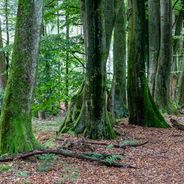
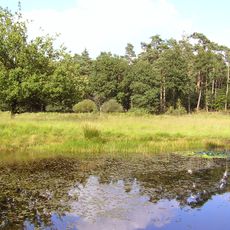
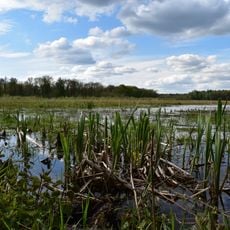
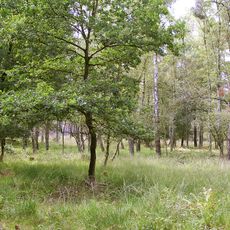
Hohe Mark Nature Park covers 1,978 square kilometres from Bocholt and Wesel in the west to Datteln and Lüdinghausen in the east, and from Bottrop and Oberhausen in the south to Gescher in the north. Its core is the wooded Hohe Mark ridge with the Rekener Berge and Die Berge, joined by the Haard and Borkenberge; the Stimberg in the Haard reaches 156.9 metres. The Lippe, Stever, Issel and Bocholter Aa cross the park, and the Halterner Stausee is its largest lake.
Hohe Mark Nature Park was founded in 1963 and covers 1978 square kilometres, making it one of the largest nature parks in North Rhine-Westphalia. It spans the Lower Rhine, the south-western Münsterland and the northern Ruhr area, from Bocholt and Wesel in the west to Datteln and Lüdinghausen in the east. In 2021 the 158 km Hohe-Mark-Steig long-distance trail was added, certified as a quality route and built by the Regionalverband Ruhr.
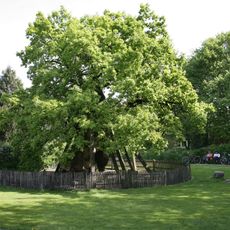
The park's name comes from the Hohe Mark forest ridge, its core, made up of the Rekener Berge and Die Berge. Near Heiden stands the Hünengrab De Düwelsteene, a megalithic grave at the southern slope of the Rekener Berge, and in Erle the Femeiche, a protected ancient oak. The Schwartensandstein quarried here was used locally as building stone, for example at the parish church of Recklinghausen.
The park has an information center in Raesfeld where you can get your bearings before exploring. Marked hiking and cycling trails run throughout the entire area, making it straightforward to navigate and discover different sections.
In the Merfelder Bruch, a wet woodland and meadow area west of Dülmen, lives one of Central Europe's last herds of so-called wild horses, the Dülmener Wildpferde. The herd roams this part of the park, which visitors can look for in the fenced pasture area.
The community of curious travelers
AroundUs brings together thousands of curated places, local tips, and hidden gems, enriched daily by 94,946 contributors worldwide.