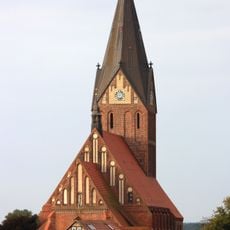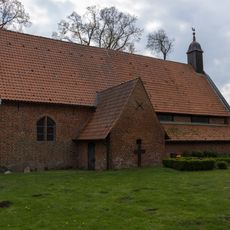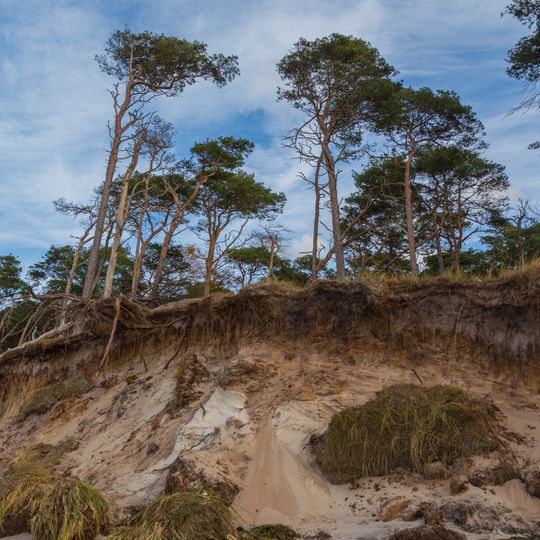
Western Pomerania Lagoon Area National Park, Protected coastal area in Mecklenburg-Vorpommern, Germany
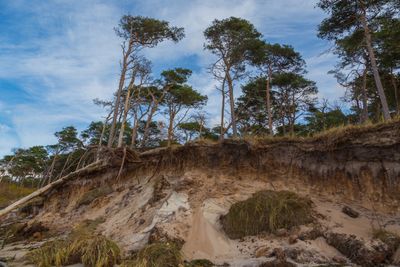
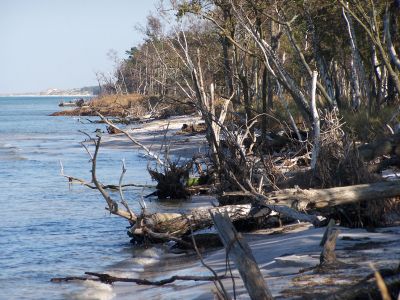
The Western Pomerania Lagoon Area National Park extends along the Baltic Sea coast and encompasses peninsulas like Darß, islands including Hiddensee, and shallow waters mixed with reed beds and varying forest types. The terrain forms a mosaic of wetlands, sandy ridges, and expansive water surfaces where freshwater meets salt water.
The park was established in 1990, protecting Germany's most important coastal ecosystems along the southern Baltic shore. Its creation followed the collapse of the German Democratic Republic and marked a shift toward new environmental conservation in the region.
The park's name refers to the Bodden, the shallow lagoons between the Darß, Zingst, Hiddensee and Rügen. Each autumn around 60,000 common cranes stop here between September and November, resting on the shallow water beside the wind-watts, mudflats exposed when offshore winds push the water away. The crane migration is the park's best-known seasonal event.
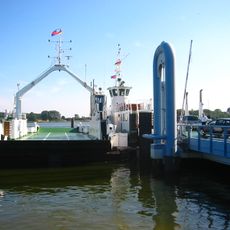
The park is reached from villages such as Born, Prerow, Wieck, Zingst and Schaprode, and by ferry to Hiddensee. The national park boundary in the Baltic Sea follows the ten-metre depth contour. Shallow areas can fall dry when offshore winds push water away, so check conditions before walking on mudflats.
Unlike the tidal Wadden Sea, the park's shallow flats are exposed by offshore winds, not tides. These wind-watt areas, north of Darßer Ort, south of Bessin and between Gellen, Bock and Pramort, are where up to 60,000 cranes roost between September and November, one of Western Europe's most important sleeping places on their migration.
The community of curious travelers
AroundUs brings together thousands of curated places, local tips, and hidden gems, enriched daily by 95,051 contributors worldwide.