Weilheimer Menhir, Bronze Age menhir in Tübingen, Germany
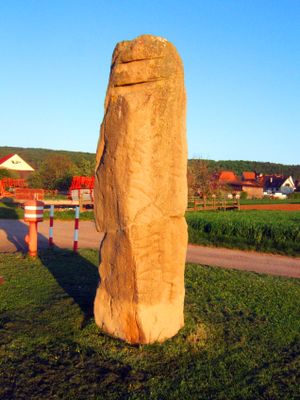
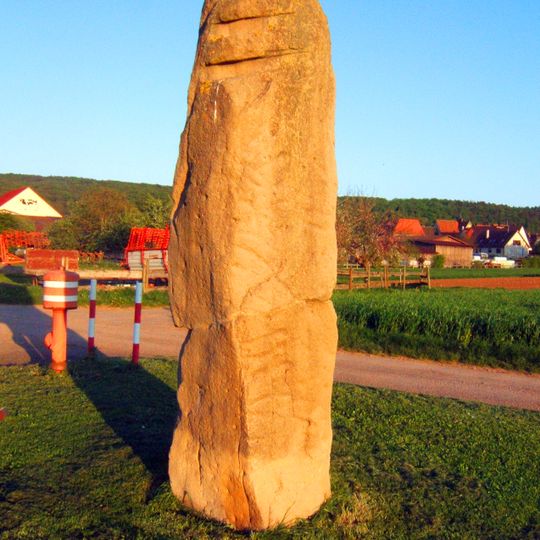
The Weilheimer Menhir is an upright stone from the Bronze Age made of local sandstone with carved designs on its surface. The original broke into pieces, but an exact replica now stands at the discovery site while the original fragments are kept in a museum.
The stone was discovered in 1985 during construction when fragments emerged from about 5 feet (1.5 meters) underground. This was a rare find that revealed much about early communities in the region.
The western face shows five halberd carvings that indicate its role in Early Bronze Age ceremonies or territorial marking. Such markings helped communities express their identity and presence in the landscape.
A full-size replica stands at the original discovery location and can be viewed free of charge. The preserved original pieces are housed elsewhere if you want to see them in greater detail at a dedicated museum.
This is the only known monument of its kind north of the Alps, with similar stones found only in South Tyrol and Northern Italy. The find shows that cultures from these distant regions communicated in similar ways during the Bronze Age.
The community of curious travelers
AroundUs brings together thousands of curated places, local tips, and hidden gems, enriched daily by 91,402 contributors worldwide.