Pont-Neuf, Stone arch bridge in Toulouse, France
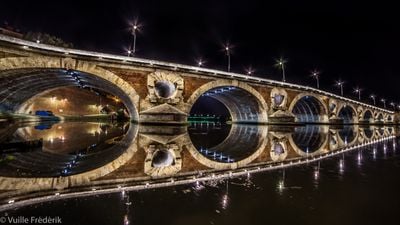
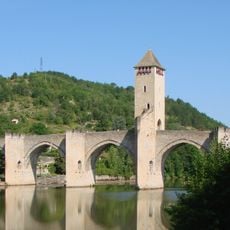
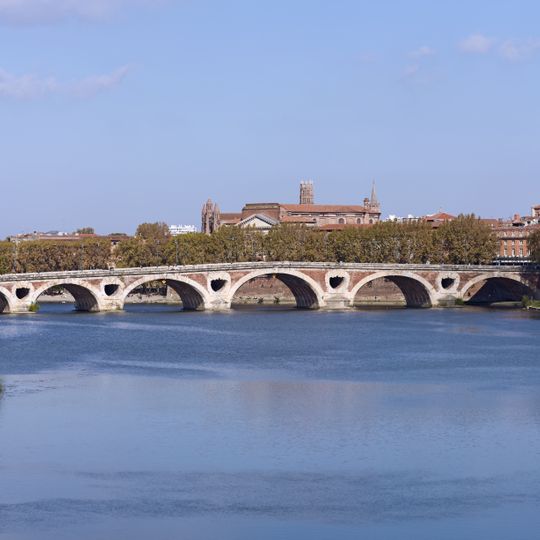
The Pont-Neuf is a stone and brick bridge over the Garonne in Toulouse, 220 metres long with seven arches resting on thick piers. Six full arches are visible, each pierced near the top by a small circular or oval opening, and a low stone parapet runs along the deck. The arches are lowered and the bridge is not symmetrical, the longest arch being the third from the right bank.
Begun in 1544 under the direction of Nicolas Bachelier and completed in 1632, the bridge took nearly a century because of Garonne floods and unstable subsoil. Jacques Lemercier finished it with lowered arches and pier openings modelled on Roman and Italian bridges. Louis XIV inaugurated it on 19 October 1659; a triumphal arch of 1642 was removed in 1860.
Locals call it Pont de Pedra or Pont Nòu in Occitan, and the bridge has long been a crossing point between the left bank's place du Pont-Neuf and the rue de la République. Its name means "New Bridge" even though it is the oldest bridge in Toulouse still spanning the Garonne. Look for the circular openings above the piers, meant to let floodwater through.
The bridge links place du Pont-Neuf on the left bank to rue de la République on the right bank, downstream of the Pont Saint-Michel and upstream of the Pont Saint-Pierre. The deck is not symmetrical: the left bank stands several metres lower, and the longest arch is the third from the right bank. The parapet is continuous, so crossing on foot is straightforward.
The bridge is not symmetrical: the left bank sits several metres lower than the right, and the longest arch is the third from the right bank. The openings through the piers were originally meant to show the face and mane of a lion. A triumphal archway added in 1642 narrowed traffic and was removed in 1860.
The community of curious travelers
AroundUs brings together thousands of curated places, local tips, and hidden gems, enriched daily by 92,913 contributors worldwide.