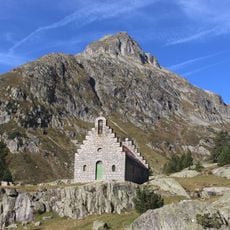
Great Peak of Tapou, Mountain summit in Pyrénées National Park, France
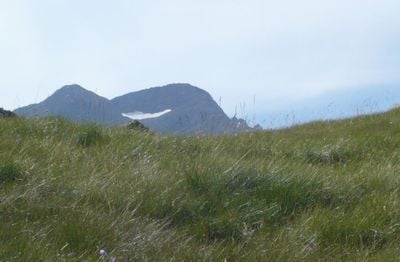
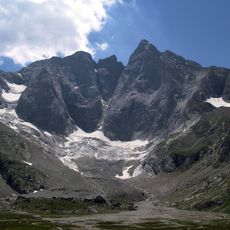
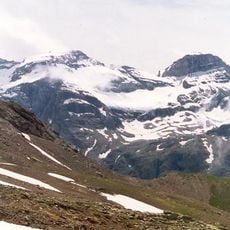
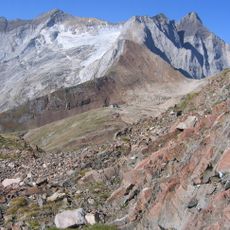
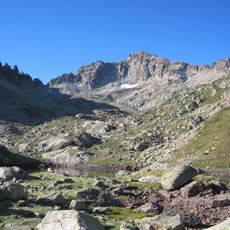
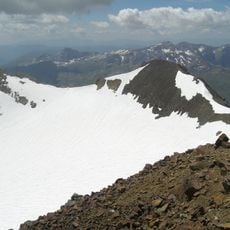
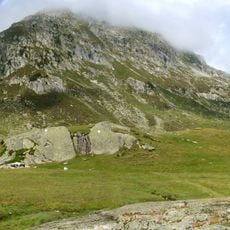
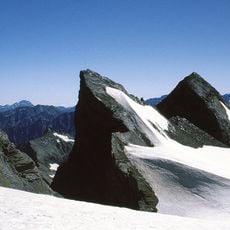
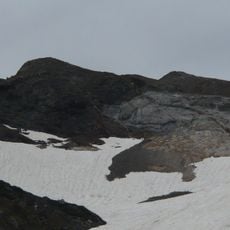
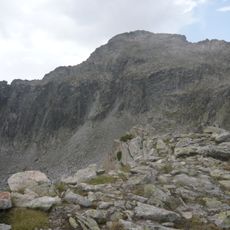
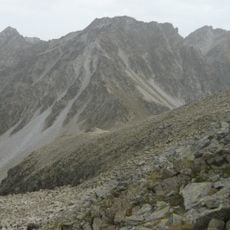
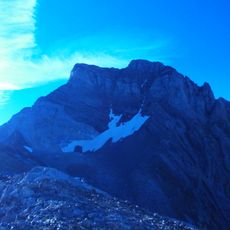
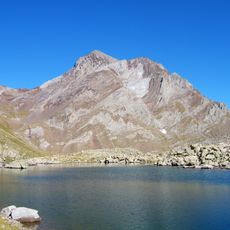
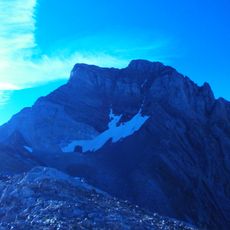
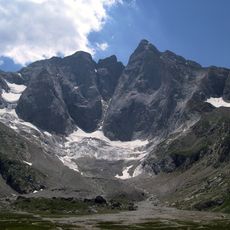
The Great Peak of Tapou is a 3,151-metre summit in the Vignemale massif on the French-Spanish border, with a prominence of 44 metres. Its dark grey and brown rock rises above a foreground hill covered in tall green grass, and a thin white cloud often lies across its left flank. The French side falls within the Pyrenees National Park above Cauterets and Gavarnie-Gèdre; the Spanish side lies in the Ordesa-Viñamala Biosphere Reserve, in Torla-Ordesa, Huesca.
The first recorded ascent was made on 1 August 1883 by mountain guides Haurine and Pierre Pujo, who led explorer Henry Russell to the summit. The climb took place during Russell's campaigns in the Vignemale massif, where he had a cabin built at the Ossoue glacier. The 3,151-metre peak rises on the Franco-Spanish border.
The peak's names come from three languages of the border: French Grand pic de Tapou, Aragonese Punda de Tapón Gran, and Catalan Grand Tapou. The Aragonese name uses punda, the local word for a summit, while tapón refers to the plug-like shape of the mountain.
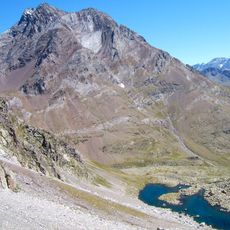
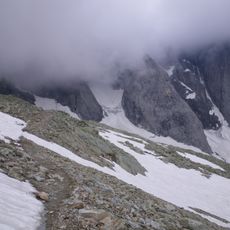
Climbers start from the Ossoue Dam and follow marked routes past the Montferrat Lakes at high altitude above 3000 meters. Proper mountaineering equipment, rock climbing skills, and stable weather are essential, as conditions can change rapidly in this exposed environment.
The summit marks a hidden water divide where rain falling on one side flows toward the Atlantic through the Adour basin, while rain on the other side goes toward the Mediterranean via the Ebro basin. This invisible boundary is a natural watershed that determines where every drop of water eventually ends up.
The community of curious travelers
AroundUs brings together thousands of curated places, local tips, and hidden gems, enriched daily by 94,758 contributors worldwide.