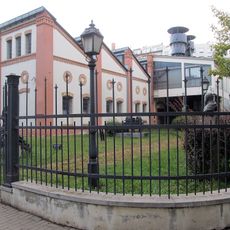
Rose Hill, Budapest, Residential hill in District II, Budapest, Hungary
Rose Hill is a residential area in Budapest's 2nd district, on the Buda side, rising into the Buda Hills. It is built up with early-20th-century villas, some now serving as company headquarters, private clinics or embassies, alongside green-belt apartment blocks. From its higher streets there are views over the Buda Castle Quarter, the Parliament, the Danube and Margaret Island.
Rózsadomb takes its name from legends that Gül Baba's roses were planted on the then untouched hillside during the Ottoman occupation. Building began late, from the late 19th and early 20th century, first as a resort area of weekend plots and summer houses. Around the early 20th century wealthy entrepreneurs, merchants and factory owners built spacious villas; after World War II the state confiscated these and mostly assigned them to high-ranking communist officials, earning the mocking nickname "Káderdülő".
The name Rózsadomb (Rose Hill) comes from legends that Gül Baba, a Bektashi dervish and poet, planted roses on these hills during the Ottoman period. His tomb, the Gül Baba Türbe, stands on Mecset Street; orientalist Gyula Germanus lobbied in the 1960s for its return to Turkey.
The area is served by trams 4, 6 and 17 and buses 11, 91, 111, 191 and 291. The serpentine of Rómer Flóris utca, renamed Ankara utca in 2016, was built between 1911 and 1914. Main roads are Bimbó út, Szemlőhegy utca and Keleti Károly utca. Margaret Island, the Mammut shopping centre and Széll Kálmán tér are close by.
After World War II the state confiscated the villas and mostly assigned them to high-ranking Communist Party officials, which earned Rózsadomb the mocking Pest slang name "Káderdülő" (cadre allotment). Some of the century-old villas now serve as company headquarters, private clinics or embassies.
The community of curious travelers
AroundUs brings together thousands of curated places, local tips, and hidden gems, enriched daily by 94,667 contributors worldwide.