Pauline Monastery on Jakab Hill, Monastery ruins in Kővágószőlős, Hungary
The Pauline Monastery on Jakab Hill, near Kővágószőlős, is a ruined monastery whose walls stand mostly at shoulder or waist height. The late Gothic sanctuary with its rib vault and the Romanesque side walls of the small church survive, while the Baroque reconstruction added a cloister and a refectory. The site was conserved in 2006–2007.
Bishop Bertalan of Pécs gathered the hermits of the Mecsek mountains here in 1225, making this the first house of the Pauline Order, the only monastic order founded in Hungary. Documents mention the monastery in 1234 and 1252; in 1334 robbers drove the monks down to Patacs, but by 1369 they were back on the hill. Around 1500 a new polygonal choir with buttresses replaced the Romanesque apse. The monks left before the Turkish wars, by 1543 at the latest; provost Sándor Fonyó had the building restored for hermits in 1736, and by 1828 it stood empty again.
The hill takes its name from the medieval village church dedicated to Saint James, whose excavated apse and cemetery lie near the ruins. The Pauline Order, the only monastic order founded in Hungary, kept the memory of its first house through the chronicle of Gyöngyösi Gergely. A Renaissance window-frame fragment found in the sanctuary walls recalls the rebuilding around 1500.
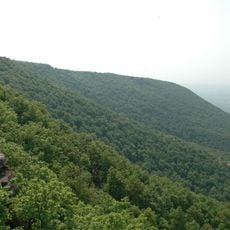
The ruins stand on Jakab Hill above Kővágószőlős, reachable on foot via marked trails from the village. Conservation work in the late 1970s and in 2006–2007 stabilized the walls and cleared the surroundings, so the site is easy to visit today. The surviving walls are mostly waist- or shoulder-high, and the hilltop is exposed, so wear sturdy shoes and bring protection against sun or rain.
The 1978 excavations found medieval denars dated 1225 in graves at the site, which identified the founders' burials and showed that the visible ruins were built over the Pauline monastery of the 1220s. The same digs uncovered the earlier village church with a semicircular apse and western gallery, whose dedication to St James gave Jakab Hill its name.
The community of curious travelers
AroundUs brings together thousands of curated places, local tips, and hidden gems, enriched daily by 93,124 contributors worldwide.