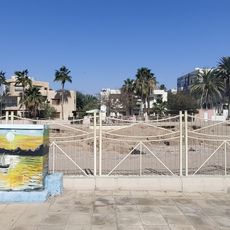
Yotvata Hai-Bar Nature Reserve, Wildlife conservation center in Arava Valley, Israel
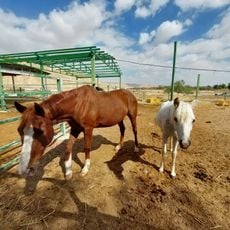
Yotvata Hai-Bar is a 12 km2 fenced breeding and reacclimation center in the Southern Arava near Yotvata, run by the Israel Nature and Parks Authority. Its open desert enclosures hold species bred for possible return to the Negev, among them the Asian wild ass, Arabian oryx, addax, scimitar oryx and red-necked ostrich. Acacia trees form the base of the reserve's ecosystem.
The reserve was established in 1968 by Avraham Yaffe, first director of Israel's Nature Reserves Authority, after Uri Dan of the Ministry of Agriculture proposed the idea in 1961 and a site near Yotvata was chosen in early 1963. Two breeding nuclei were set up, one for Mediterranean-forest animals and one for desert species. In the mid-1980s a further 6,000 dunams west of Route 90 were fenced to protect the world's last population of the Acacia gazelle.
The reserve takes its name from nearby Kibbutz Yotvata; "hai-bar" is the Hebrew term for a wildlife breeding and reintroduction center, the desert counterpart of the Carmel Hai-Bar. Its open fenced area in the Yotvata salt marsh was set up in the early 1970s, and since 2016 the predator center and cage displays have been closed, so animals are seen in large enclosures rather than cages.
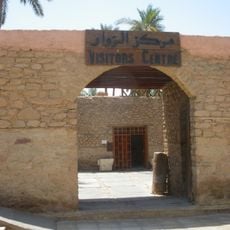
The facility offers guided tours, observation points, and informational displays to understand animal care and conservation work. Visitors should come early in the day when animals are most active, and wear light clothing since desert heat can be intense.
The reserve holds the world's last population of the Arava gazelle (Gazella dorcas acaciae), a subspecies confined to a fenced area of about 6,000 dunams west of Route 90, added in the mid-1980s and monitored continuously. Seven ostrich chicks were sent from here to a reserve in Senegal on 7 August 2023.
The community of curious travelers
AroundUs brings together thousands of curated places, local tips, and hidden gems, enriched daily by 92,947 contributors worldwide.