Church of the Pater Noster, Catholic church on the Mount of Olives in Jerusalem, Israel
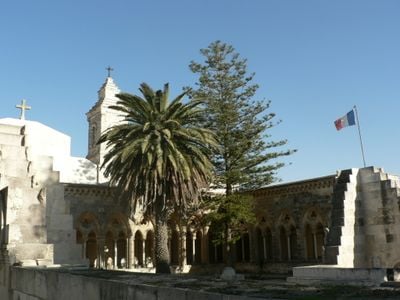
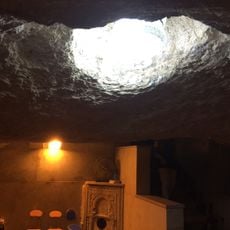
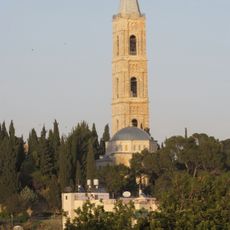
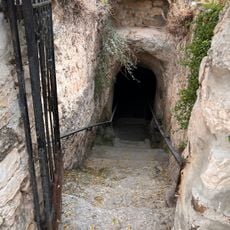
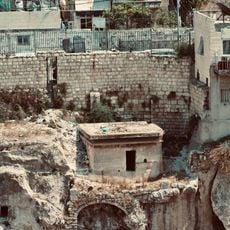
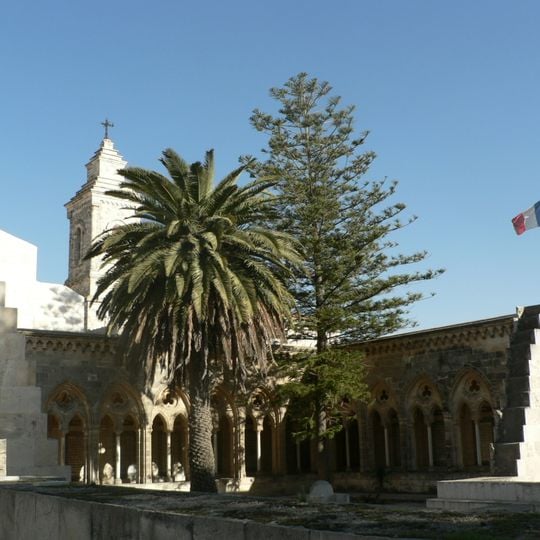
The Church of the Pater Noster is a Catholic church on the Mount of Olives in Jerusalem, next to the partially rebuilt 4th-century Church of the Eleona. The modern convent church, built in the 1870s, stands beside the unroofed Byzantine basilica, whose dimensions match the original and whose south door reveals fragments of a baptistery mosaic. Steps lead down to a grotto, partly collapsed when found in 1910, cut into a 1st-century tomb.
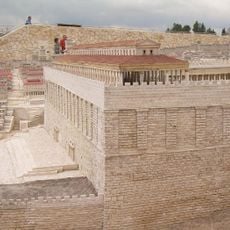
The original basilica was built in the 4th century by Roman emperor Constantine, called the Basilica of Eleona, over a cave believed to be where Jesus prayed with his disciples. The building was destroyed and rebuilt multiple times over the centuries before Carmelite Sisters restored it in the late 19th century and created a new church with versions of the Lord's Prayer in over 70 languages.
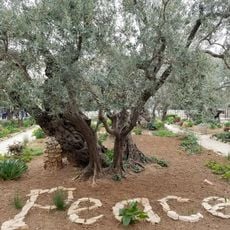
The name 'Pater Noster' refers to the Lord's Prayer believed to have been taught at this location, while the Greek term Eleona refers to the olive trees that once covered the hillside. The ceramic tiles displayed on the walls show the prayer in over 70 languages, connecting visitors from around the world to a shared Christian tradition.
The church has a simple, quiet interior and is open to visitors daily except Sundays during designated hours, with guests asked to respect the religious activities of the nuns. The site includes a cloister with ceramic tiles, maintained gardens, and a staircase leading down to the archaeological remains and cave, which are easily accessible.
The land was bought in the 1850s–60s by Princess Aurélie de La Tour d'Auvergne, born Aurelia de Bossi, on the advice of the convert Marie-Alphonse Ratisbonne. She had a cloister built in 1868 and founded the Carmelite convent in 1872; her remains were brought to the church in 1957. The cave was only found in 1910–11, during excavations by the White Fathers.
The community of curious travelers
AroundUs brings together thousands of curated places, local tips, and hidden gems, enriched daily by 92,629 contributors worldwide.