Tomb of Benei Hezir, Rock-cut tomb in the Kidron Valley, Jerusalem, Israel
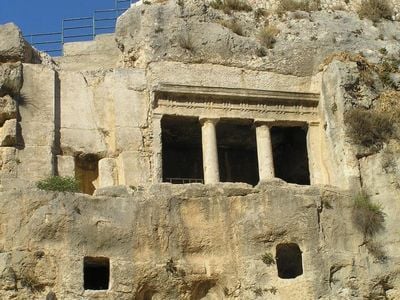
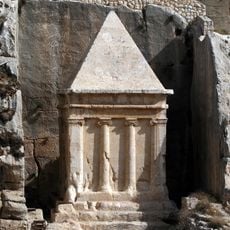
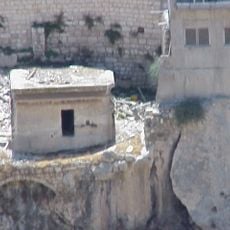
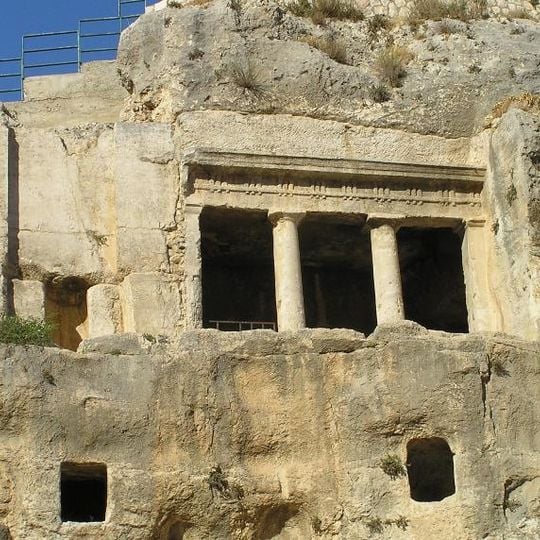
The Tomb of Benei Hezir is a burial cave hewn into the Kidron Valley cliff, its facade set about 6 metres above the cliff base. Two unfluted columns 3 metres high with Doric capitals stand between antae, carrying an architrave inscribed in Hebrew and a Doric frieze of nine blank metopes. Three dark openings sit behind the columns, with small square openings cut into the rough stone below.
The tomb dates to the second century BCE, in the Hellenistic period under Hasmonean rule, and is the oldest of the four monumental rock-cut tombs in the Kidron Valley. A three-line Hebrew inscription carved in the architrave, read by archaeologist Nahman Avigad, names six brothers, sons of Yosef son of Oved, and two sons of Hania, priests of the Hezir family. The cave served several generations of this wealthy priestly household.
The tomb reflects how wealthy Jewish families honored their dead during the Second Temple period by investing in carefully designed rock-cut burial chambers. The carved inscriptions and detailed stonework show the importance placed on preserving family names and identity in death.
Access to the tomb is through an original rock-cut staircase on the north side that descends to the burial chamber entrance. The narrow interior spaces require careful movement, and sturdy footwear is recommended as the stone floor can be uneven and slippery in places.
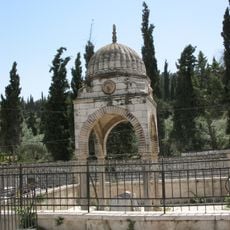
An underground tunnel connects this tomb to the adjacent Tomb of Zechariah, a passage that was carved after the initial construction to create an additional way in and out. This connection allowed two separate burial complexes to function as a single integrated system.
The community of curious travelers
AroundUs brings together thousands of curated places, local tips, and hidden gems, enriched daily by 92,787 contributors worldwide.