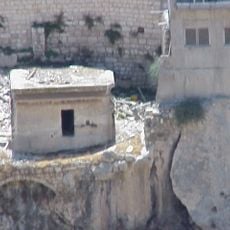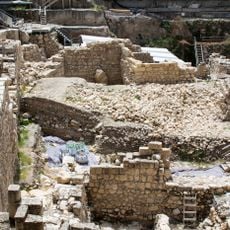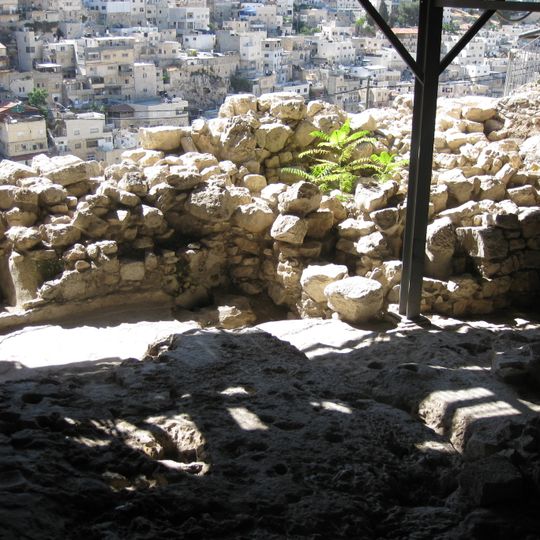
Large Stone Structure, Archaeological site in City of David, Jerusalem, Israel
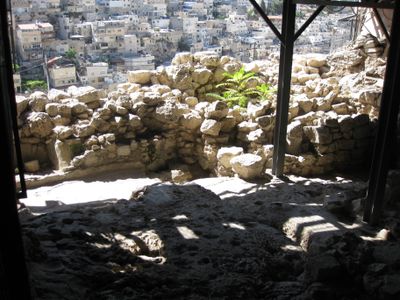
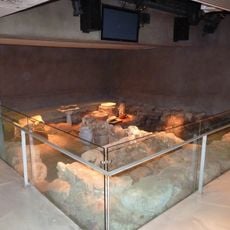
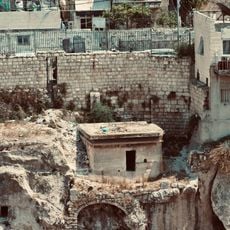
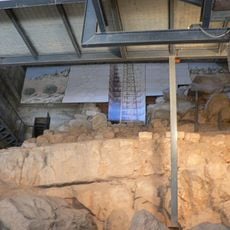
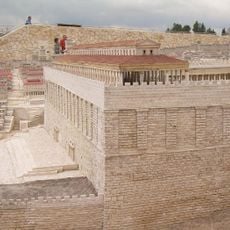
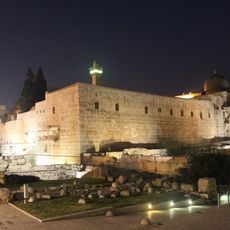
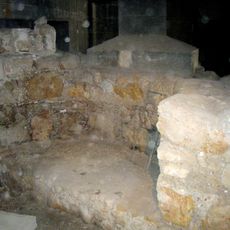
The Large Stone Structure is a set of Iron Age stone foundations in the City of David, Jerusalem, built of large irregular blocks in stepped courses. Its walls are about 2 m thick, and in the adjacent plot they reach 7 m and join the Stepped Stone Structure. Eilat Mazar interpreted the remains as a single public building, possibly a palace.
Eilat Mazar began digging in February 2005 after using 2 Samuel 5:17 to locate the site north of the Ophel. She announced the discovery on 4 August 2005 and dated the walls to the 10th–9th century BCE, calling them King David's palace. Other archaeologists, including Israel Finkelstein, dispute that date. The building stayed in use until 586 BCE.
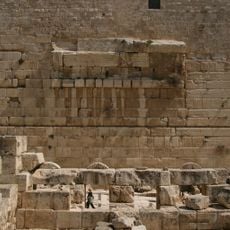
The name comes from its proximity to the Stepped Stone Structure, a curved terraced wall 18 m high uncovered by Macalister in the 1920s, Kenyon in the 1960s and Shiloh in the 1970s–1980s. Mazar argued the two formed one royal complex, linking it to the biblical Millo, a fill-built support mentioned as part of the City of David.
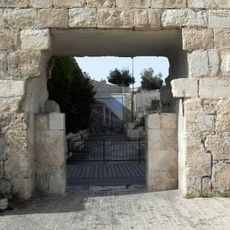
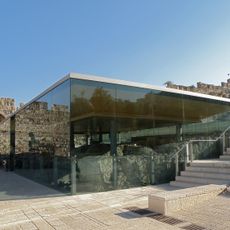
The excavation site is partially inaccessible because modern residential buildings sit above portions of the ancient remains. Check ahead to see which areas are open for viewing.
The two bullae name Jehucal son of Shelemiah son of Shevi and Gedaliah son of Pashhur, officials of the late seventh to early sixth century BCE who appear in the Book of Jeremiah. Both were found in the structure's debris, tying the building to Judah's final decades before 586 BCE.
The community of curious travelers
AroundUs brings together thousands of curated places, local tips, and hidden gems, enriched daily by 92,726 contributors worldwide.