Daughters of Jacob Bridge, International bridge in Northern District, Israel.
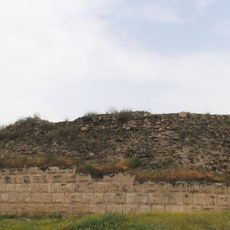
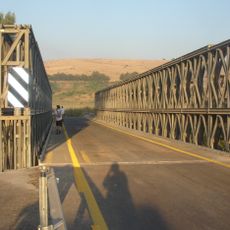
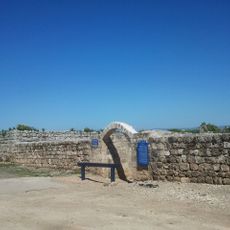
The Daughters of Jacob Bridge is a concrete road bridge with a flat deck and a plain light-grey parapet, carrying Highway 91 over the last natural ford of the Jordan River between the Korazim Plateau and the Golan Heights. A 2007 concrete span replaced two Bailey bridges; one of the old Bailey bridges remains in place, closed, for emergency military use. The medieval arched stone bridge stood further north, and the ruins of the Crusader castle Chastelet lie southwest of it.
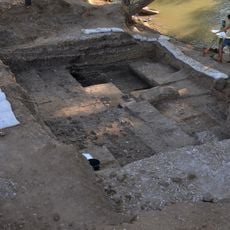
The bridge location contains archaeological evidence of human settlements from around 790,000 years ago, with discovered stone tools and signs of fire usage. These early traces document one of the oldest phases of human presence in the region.
The name comes from a Crusader-era confusion: the nunnery of Saint James (Jacques, from Jacob) in Safed received part of the tolls paid at the ford, so Europeans called it Vadum Iacob, Jacob's Ford. Arabic tradition links the spot to Jacob's grief over Joseph, calling it Makhatat al-Ahzan, the Ford of Sorrow. Local legend says the black basalt stones scattered across the Galilee are the tears the daughters of Jacob wept.
The current concrete bridge, opened in 2007, carries Highway 91 over the upper Jordan between the Korazim Plateau and the Golan Heights. It is a civilian road crossing, not a border post; the old Bailey bridge beside it was closed in June 2009 and is kept for army emergency use. The medieval arched bridge and the Mamluk khan stood further north, near the Crusader castle remains.
Archaeological excavations near the bridge reveal evidence of fire use by early human ancestors. These discoveries rank among the oldest known examples of deliberate fire control by humans in the archaeological record.
The community of curious travelers
AroundUs brings together thousands of curated places, local tips, and hidden gems, enriched daily by 93,451 contributors worldwide.