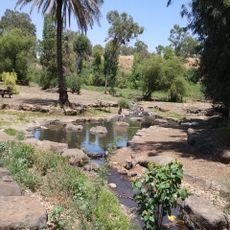
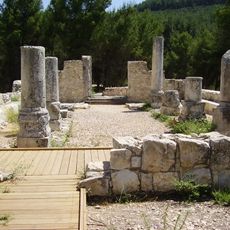
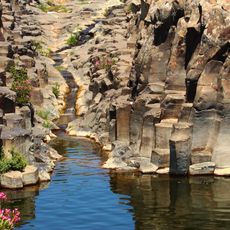
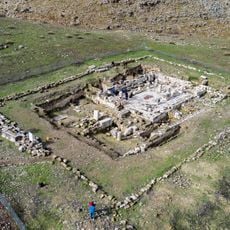
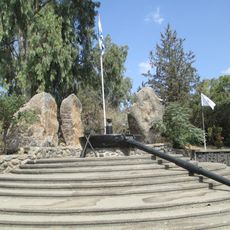
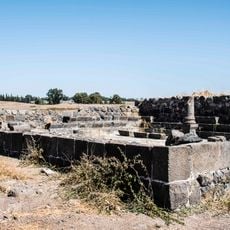
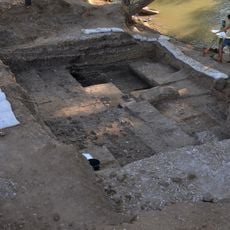
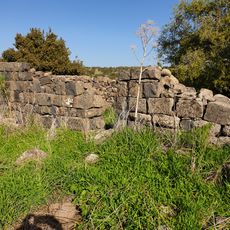
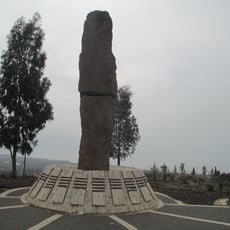
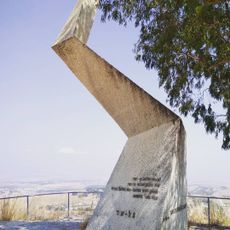
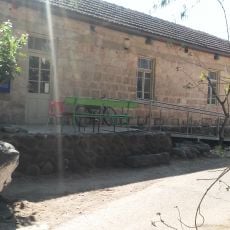
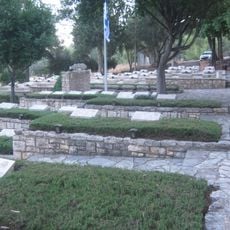
Ateret Fortress, Medieval castle ruin near Jordan River, Israel.
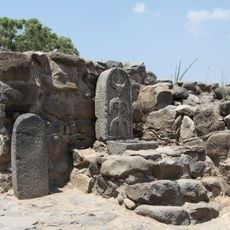
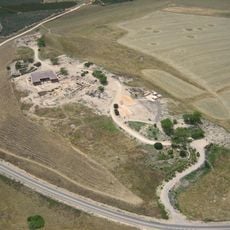
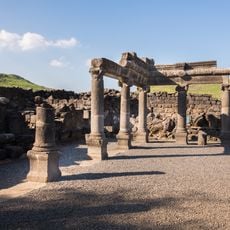
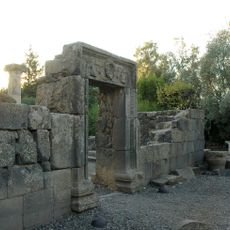
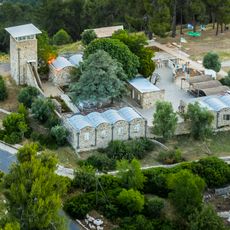
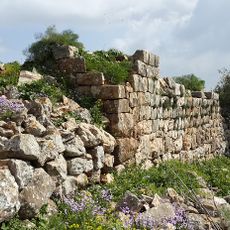
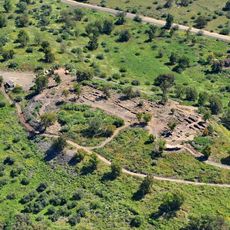
Ateret Fortress is a Crusader castle ruin on the west bank of the Jordan River, about a kilometre south of the Bnot Ya'akov Bridge. Its walls are built of large dressed limestone blocks with a fill of basalt fieldstones. The rectangular enclosure measures 140 by 65 metres, with a square tower at each corner; only the south-western tower projects beyond the wall line. A deep ditch was cut on the south, west and north sides.
Baldwin IV began building in October 1178 at Jacob's Ford, the safest Jordan crossing between Acre and Damascus. Saladin offered 60,000 then 100,000 dinars to halt the works; the king refused. In August 1179 Saladin's miners brought down a tower and the garrison was killed or enslaved.
The Arabic name Bayt al-Ahzān, "House of Sorrows", is said to recall the massacre of the garrison in 1179. The fortress is also called Chastellet, from Old French chastel, and Vadum Iacobi in Latin, after Jacob's Ford. Its Hebrew name, Metzad Ateret, comes from the nearby Ateret fortress.
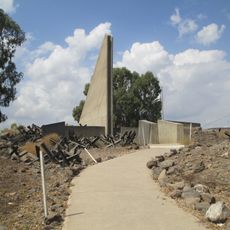
The site lies on the west bank of the Jordan, about a kilometre south of the Bnot Yaakov Bridge and close to Kibbutz Gadot, roughly 20 metres above a river bend. The fortress was restored in 2018 at a cost of 1.6 million shekels, but in November 2024 it was hit by a missile fired from Lebanon. The deep ditch cut on the south, west and north sides is easiest to see from the eastern wall.
The fortress was never finished: when Saladin's sappers brought down a tower on 30 August 1179, scaffolding still stood in the vaults and lime heaps with iron tools and hundreds of arrowheads lay at one gate. Because the site was then abandoned, it preserves a Crusader castle frozen mid-construction.
The community of curious travelers
AroundUs brings together thousands of curated places, local tips, and hidden gems, enriched daily by 92,634 contributors worldwide.