Nahal Hemar Cave, Archaeological cave in Judean Desert, Israel
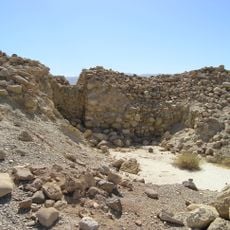
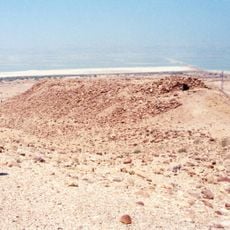
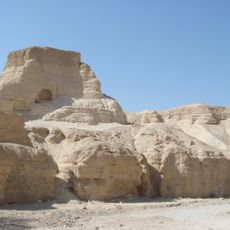
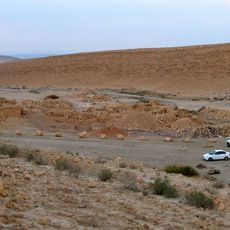
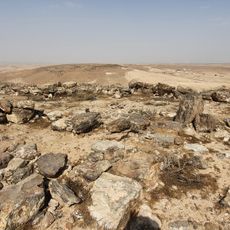
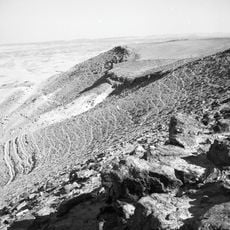
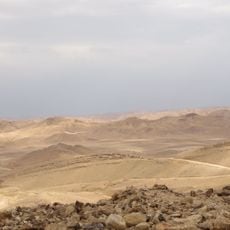
Nahal Hemar Cave is a small karstic cave on a cliff in the Judean Desert, northwest of Mount Sodom and near the Dead Sea. Its single chamber, roughly 30 square meters, held a sealed assemblage of Pre-Pottery Neolithic objects: wooden arrowheads, rope baskets, flax fabrics, decorated human skulls, limestone masks, and plaster statue fragments. The finds were covered by a collagen-based glue.
Excavations in 1983 uncovered a Pre-Pottery Neolithic assemblage from the 7th millennium BC, including wooden objects, rope baskets, decorated human skulls and lime-plaster statue fragments. The finds date to a period before pottery was developed in the region. The plaster used for beads and statues was among the first intentionally produced chemical materials.
The cave displays early textile work with flax fibers processed into yarn, using nalbinding, knotting, and twining methods. These items reveal the practical skills of people who lived in this region thousands of years ago.
The cave is a small, sealed archaeological site on a cliff in the Judean Desert northwest of Mount Sodom, and it is not open to visitors. Its Neolithic finds, including the flax fabrics and lime-plaster assemblages, are held in museum collections rather than displayed on site.
Scientists found the earliest known evidence of crochet work and a sophisticated collagen-based adhesive here, dating to roughly 8310 to 8110 years ago. These discoveries show that people in this early period already possessed complex technical abilities.
The community of curious travelers
AroundUs brings together thousands of curated places, local tips, and hidden gems, enriched daily by 92,814 contributors worldwide.