Sani Monastery, Buddhist monastery and temple in Zanskar, Ladakh, India
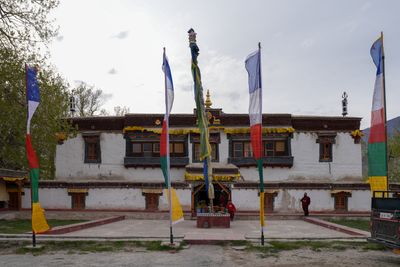
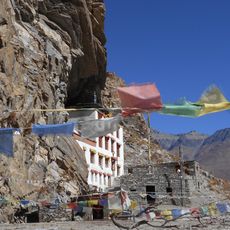
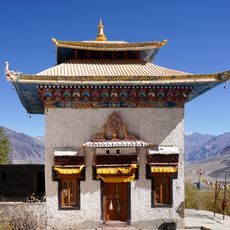
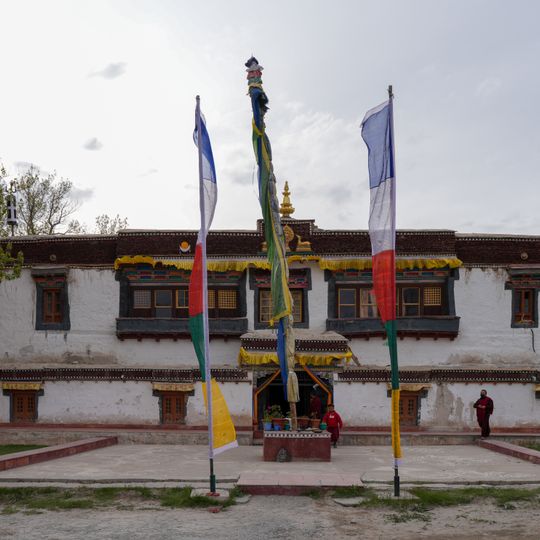
Sani Monastery is a Buddhist monastery and temple in the Zanskar region of Ladakh, India, located on flat ground close to the town of Padum. The compound consists of a central prayer hall, several shrine chapels, and a walled outer area containing stone monuments and smaller religious structures.
The site contains one of the oldest known shrines in the Zanskar valley, associated with Emperor Kanishka from around the 2nd century. This points to the location being used as a place of worship long before the current monastery was established.
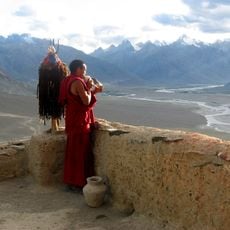
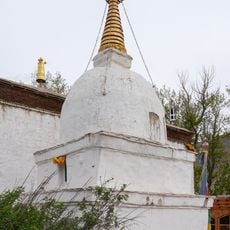
The monastery's name is linked to the Kanika Chorten, a 6 m high stupa of unusual shape attributed to the Kushan emperor Kanishka. Each year in late July or early August, on the eve of the Naro-Nasjal festival, the statue of the yogi Naropa is unveiled; lamas from Bardan Monastery perform masked dances as a ritual offering. In winter the monks hold a Great Prayer Festival, reading the Tibetan canon with firewood supplied by villagers.
The monastery is accessible on foot or by local vehicle from Padum, the nearest town. Roads in this part of Ladakh are generally open from June through September, so planning a visit outside that window can make access very difficult.
Sani holds a stupa that remains intact and stands directly within an active monastic complex, a combination that is rare even in this part of the Himalayas. The stupa is thought to be among the oldest in the entire Ladakh region.
The community of curious travelers
AroundUs brings together thousands of curated places, local tips, and hidden gems, enriched daily by 92,722 contributors worldwide.