Krishnagiri Fort, 16th century hilltop fort in Krishnagiri district, India
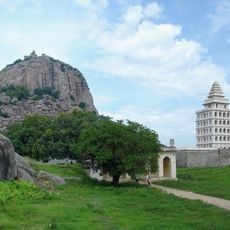
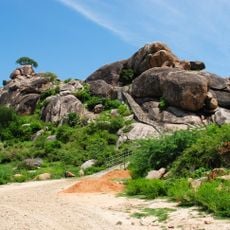
Krishnagiri Fort crowns a granite hill above Krishnagiri town, reached by steps from the old pettai quarter. It is one of twelve hilltop forts the region's name Baramahal, "twelve forts", refers to. The fort was built by Vijayanagara ruler Jagadevaraya I, who was granted the Baramahal territory by Ranga Raya II of Chandragiri.
Krishnagiri Fort was built by Vijayanagara emperor Jagadevaraya I, who was granted the Baramahal region by Ranga Raya II of Chandragiri. In the 1670s Shivaji captured it during his Deccan campaign. Hyder Ali took the fort in the 18th century at the request of Mysore's Chikka Devaraja Wodeyar, and in 1768, during the First Anglo-Mysore War, it surrendered to East India Company forces after a prolonged siege. The Company regained control in 1792 after Tipu Sultan signed the Treaty of Seringapatam.
The local name Krutthinagiri Kottai connects the fort to the region's identity and heritage. It is part of a network of twelve fortifications called Baramahal that shaped this area.
Steps lead from the old pettai of Krishnagiri town up to the hilltop fort, so the climb is on foot. The fort is a protected national monument under the Archaeological Survey of India. The site saw fighting in 1768 and again in November 1791, when Lt. Col. Maxwell's attack cost the British about 50 casualties.
The fort stands on a granite hill reached by steps from the old pettai of Krishnagiri town. The surrounding area was called Baramahal, meaning "twelve forts", because twelve hilltop forts once stood in this region. The fort was built by Vijayanagara ruler Jagadevaraya I, who was granted the Baramahal territory by Ranga Raya II of Chandragiri.
The community of curious travelers
AroundUs brings together thousands of curated places, local tips, and hidden gems, enriched daily by 94,051 contributors worldwide.