Nehru Setu, Railway bridge in Bihar, India
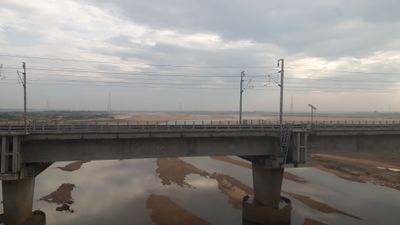
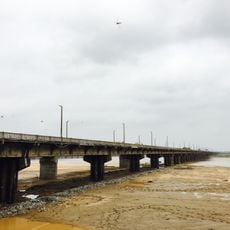
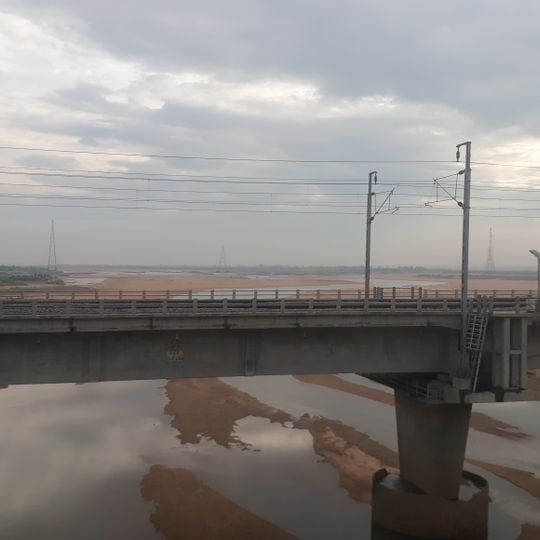
Nehru Setu is a railway bridge spanning the Son River, connecting Dehri-on-Son with Son Nagar across a length of more than 3,000 meters. The structure uses steel girders supported by stone pillars and carries the Grand Chord railway line that links Kolkata and Delhi.
The bridge opened in 1900 and was initially the longest in India until another bridge surpassed it more than a century later. It was built during the period when railways became the backbone of India's transportation system.
The bridge carries the Grand Chord line, the route that shortened the Kolkata–Delhi run by 80 km compared with the older line through Bhagalpur, Lakhisarai, Patna and Mughalsarai. Its name honours Jawaharlal Nehru, and the parallel road bridge of 1963–65 is called Jawahar Setu. The Son below is the river Sir John Houlton described as spreading up to three miles wide opposite Tilothu, with a dry-season channel of barely a hundred yards.
The bridge is best viewed from a train crossing it, as it functions as a railway viaduct not accessible to pedestrians. For ground-level views, the riverbanks nearby offer good vantage points to see the structure and its stone supports.
The bridge's deck rests on 93 stone pillars set about a hundred feet apart, with steel girders carried on top of them. When it opened on 27 February 1900 it was the longest bridge in India and was believed to be the second longest in the world. It stayed the longest rail bridge in India until the 4.62 km Vembanad Rail Bridge opened in February 2011.
The community of curious travelers
AroundUs brings together thousands of curated places, local tips, and hidden gems, enriched daily by 92,991 contributors worldwide.