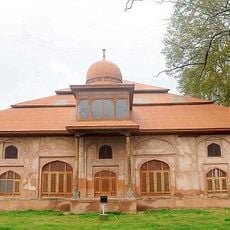
Koh-i-Maran, Sacred hill in Srinagar, India
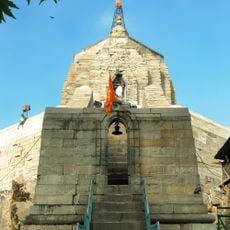
Koh-i-Maran is a hill west of Dal Lake in Srinagar whose lower slopes are covered in dense dark vegetation and whose summit is a flat-topped ridge with steep rocky sides. A long continuous wall runs along the top of the ridge, and the Sharika temple sits on the middle part of the western slope.
Akbar built the first outer wall in 1590 as part of a planned new capital at the site, but the project was never completed. The present fort was built in 1808 under Atta Mohammed Khan, governor of Kashmir for the Durrani Empire. It stayed closed for almost two decades and reopened to the public in 2007.
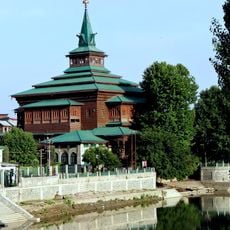
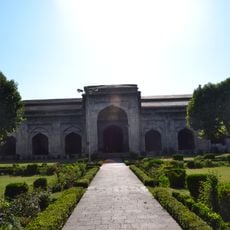
The hill's name comes from the myth that the goddess Parvati dropped a pebble that grew into it. Her temple, Sharika Devi, sits on the middle of the western slope, where she is shown with 18 arms in a Shri Chakra. Below the fort stands a mosque to Shah Badakhshi built by Mughal princess Jahanara Begum, and Makhdoom Sahib honours the Sufi saint Hamza Makhdoom.
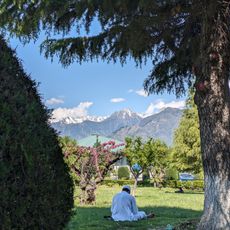
Two gates provide access to the hill: the Kathi Darwaza from Rainawari or the Sangin Darwaza from the Hawal district. Walking is the best way to explore, and the slopes have stopping points where you can rest while looking over the city.
The Sharika temple on the western slope holds a rock said to be the pebble the goddess Parvati dropped on the asura Jalodbhava; it grew until it crushed him, and the hill is revered as that pebble. Inside, Sharika is shown with 18 arms, seated in a Shri Chakra.
The community of curious travelers
AroundUs brings together thousands of curated places, local tips, and hidden gems, enriched daily by 94,667 contributors worldwide.