Cloitres de Monteoliveto, Religious cloister in historic district, Naples, Italy
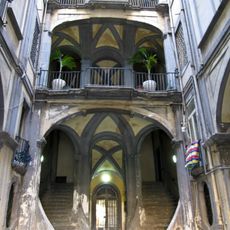
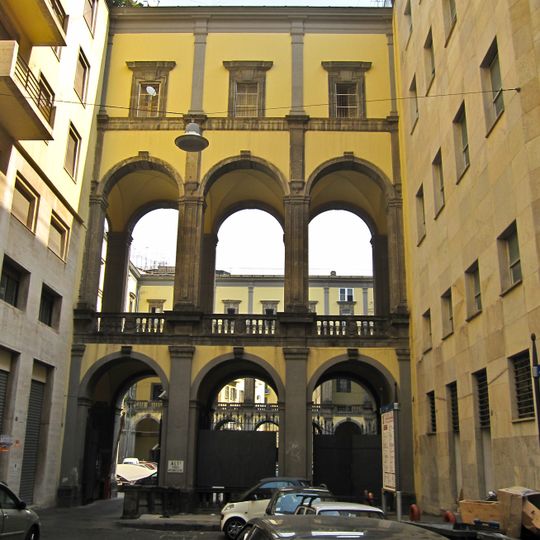
The Monteoliveto cloisters form a religious complex in Naples with multiple courtyards lined by covered arcades featuring arched columns and marble details. The gardens and fountains within these spaces reflect classical Mediterranean design principles and Renaissance construction methods.
Founded in the 14th century by Olivetan monks, this complex grew as a center of monastic life during the Renaissance period. Major transformations occurred after religious orders were suppressed at the end of the 18th century, altering how the spaces functioned.
The complex was founded as a large religious structure with seven open spaces divided into gardens and cloisters. After the suppression of 1799, its parts were split up into private and public dwellings, so the courtyards no longer serve a single monastic community. In the third cloister stands a 17th-century marble well, octagonal in shape, with an architrave carried by two Corinthian columns.
The complex sits in the historic centre of Naples, near the church of Sant'Anna dei Lombardi. The large cloister and the service cloister have been restored, but pollution has corroded their building material, so surfaces may look worn. Parts of the original complex were converted into private and public housing after 1799, so not every courtyard is freely accessible.
The third cloister has nineteen arches, four on the shorter side and five on the longer one, and at its centre stands a 17th-century marble well. The well is octagonal, with an architrave carried by two Corinthian columns.
The community of curious travelers
AroundUs brings together thousands of curated places, local tips, and hidden gems, enriched daily by 94,671 contributors worldwide.