Khirbat Faynan, Archaeological site in Wadi Faynan, Jordan
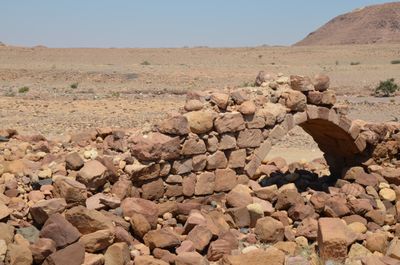
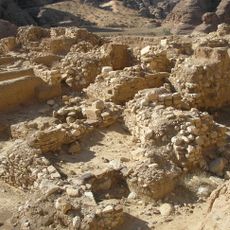
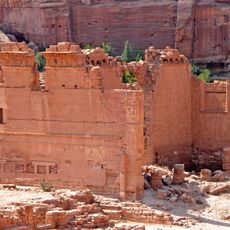
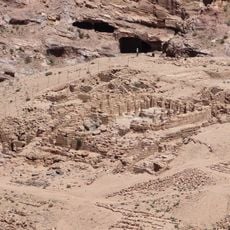
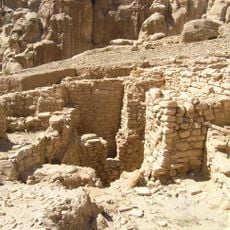
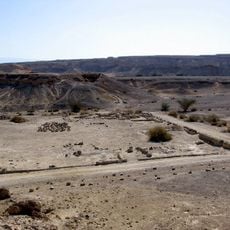
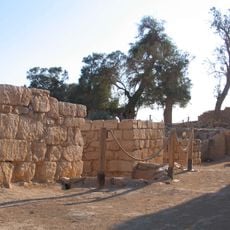
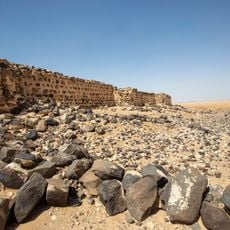
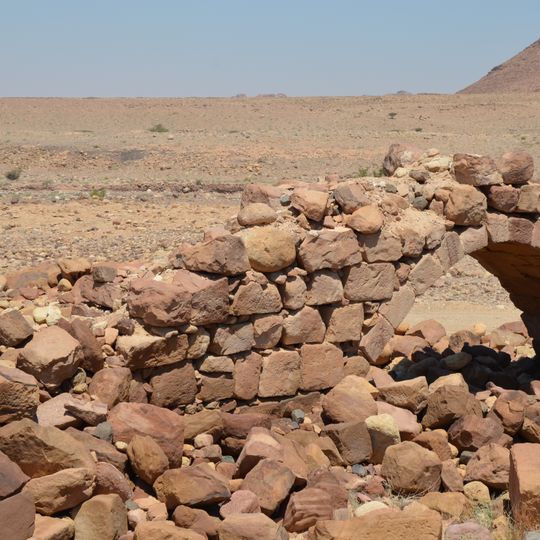
Khirbat Faynan is an archaeological site in Wadi Faynan, about 215 kilometres from Amman, built at the meeting of Wadi Dana and Wadi Ghuwayr. Its surviving stonework includes a thick curving wall of irregular reddish-brown and tan blocks laid without visible mortar, arcing over a rounded niche, with rubble piled at its base. The site was one of the largest copper mines in the Roman Empire.
This location operated as one of the largest copper mining complexes in the Roman Empire, continuously active from around 4500 BCE until about 400 CE. The extended use period demonstrates the economic importance of the copper deposits to successive civilizations.
Early Christian writings mention this place as Phaino, where believers labored under difficult circumstances. This connection to early Christianity shapes how people understand the site today.
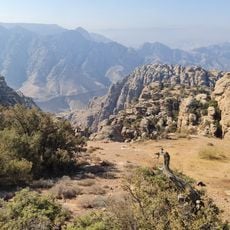
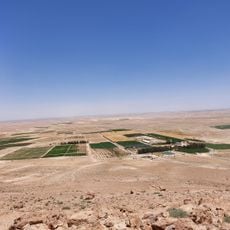
The site lies about 215 kilometers south of Amman in southwestern Jordan between several valley and highland regions. Visitors should be prepared for challenging terrain and bring appropriate gear for exploring mining and settlement ruins.
Skeletal remains from the site's cemetery show high metal concentrations in bone tissue and severe joint disease among mining workers. These physical traces directly reveal the harsh nature of ancient mining labor and its impacts on human health.
The community of curious travelers
AroundUs brings together thousands of curated places, local tips, and hidden gems, enriched daily by 94,663 contributors worldwide.