Urn Tomb, Rock-cut tomb in Petra, Jordan
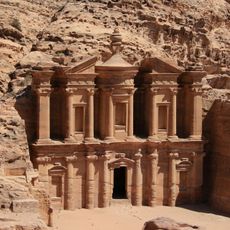
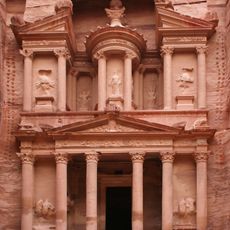
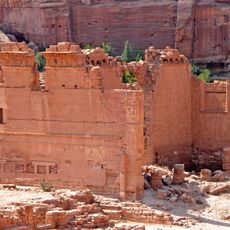
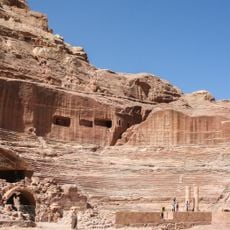
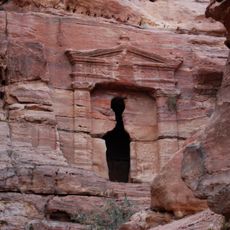
The Urn Tomb is a rock-cut burial monument in Petra featuring a grand carved facade and multiple chambers beneath it. The interior opens into a columned courtyard where burial spaces line the stone walls in carefully arranged niches.
This burial site was built around 70 CE during the Nabataean period as a royal tomb for a king. In later centuries, it was converted into a Christian place of worship, serving religious purposes for different communities.
The name comes from a large carved urn that sits above the main entrance and once captured visitors' imaginations. Today, people walking through notice the layered history visible in the chamber, where different periods left their marks on the stone.
Reaching this site means climbing steep stone steps built into the cliff face. A Petra entrance ticket is required, and visiting early in the day offers a quieter experience with better light for looking at the carved details.
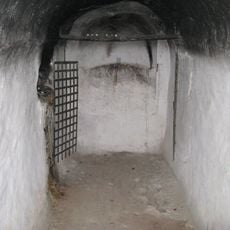
Below the tomb, two rows of underground chambers with arched vaults are known to local Bedouin as As-Sijn, "the prison", a name possibly linked to their use in Byzantine times. A Greek inscription on the facade records that the building was originally a royal tomb.
The community of curious travelers
AroundUs brings together thousands of curated places, local tips, and hidden gems, enriched daily by 93,521 contributors worldwide.