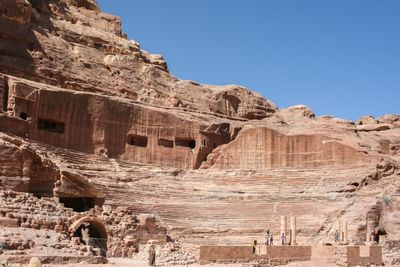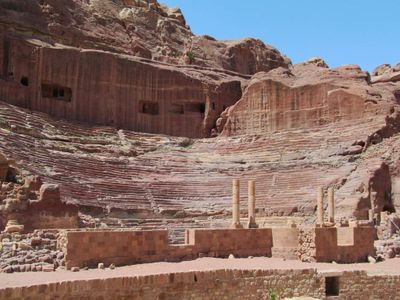
Petra Theatre, Roman theatre in Al-Betrā', Jordan.
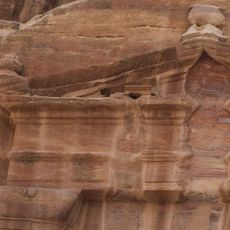
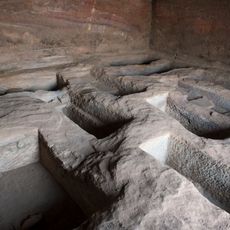
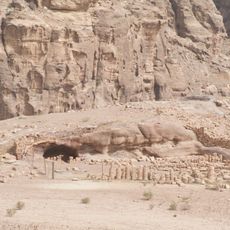
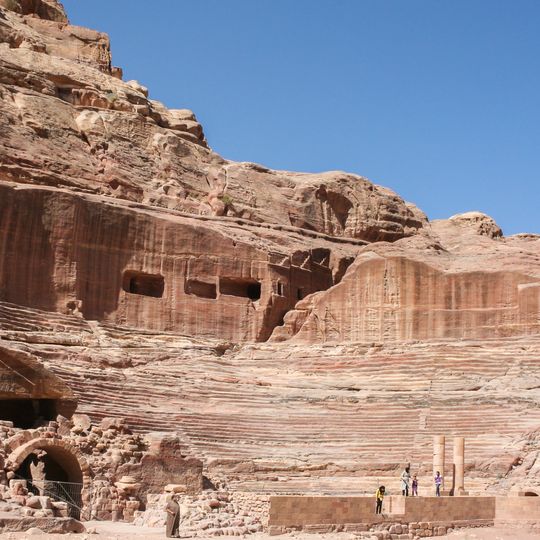
The Petra Theatre is an ancient Roman theatre cut directly into the rock of the Nabataean city. The semi-circular structure features tiered seating areas for audiences and a distinct stage zone carved into the stone.
The Nabataean theatre was built in the first half of the first century AD under King Aretas IV, probably to mark his marriage to his second wife Shaqilath; coins minted for the occasion were found in the theatre during excavations. After the Romans annexed the Nabataean kingdom in 106 AD they made minor alterations and rebuilt the exterior wall. An earthquake in 363 AD cracked parts of the structure.
The theatre displays Nabataean craftsmanship alongside Roman building methods in a single structure. Visitors can see how both cultures combined their techniques in the carved seating and stage areas that remain visible today.
The theatre is reachable through guided tours of the Petra archaeological site, with morning visits offering the best light for photography. Sturdy footwear and water are essential, as reaching the theatre involves climbing stairs and walking through sunny areas.
The theatre was positioned so that spectators could see the greatest possible number of the surrounding rock-cut tombs from the seating. Its floral capitals are a Nabataean artistic element, and the upper tiers were cut from rock left over from earlier tombs.
The community of curious travelers
AroundUs brings together thousands of curated places, local tips, and hidden gems, enriched daily by 93,121 contributors worldwide.