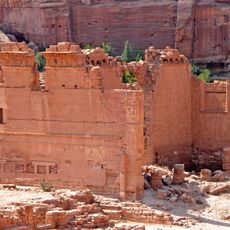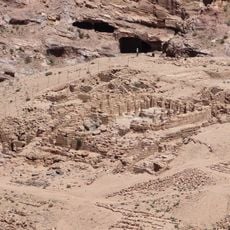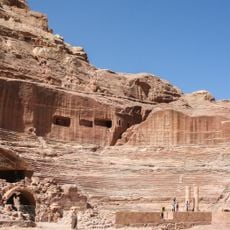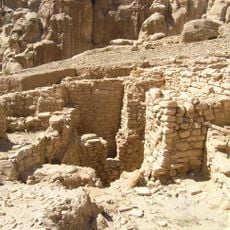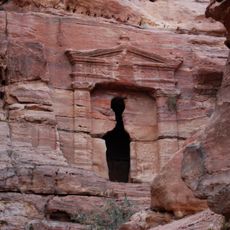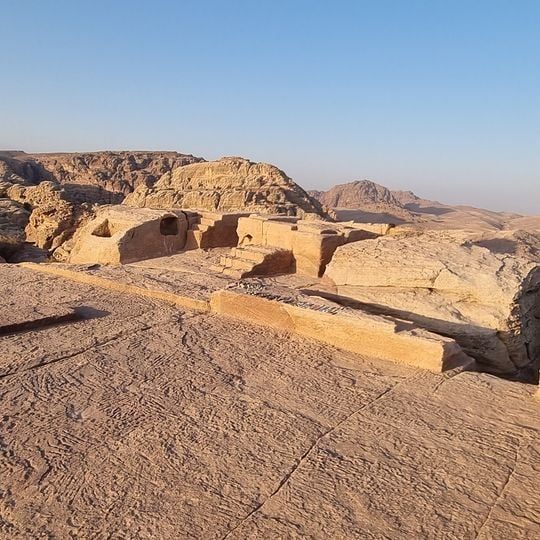
High Place of Sacrifice, Ancient offering site at Jebel al-Madhbah, Petra, Jordan.
The High Place of Sacrifice is a Nabataean cult site on Jabal Attuf in Petra, reached by a pilgrim path with rock-cut stairs that begins after Tomb 70 in the outer Siq. Its courtyard measures 14.5 m by 6.5 m, with a low step around the edge, a 15 cm offering table in the centre, and a 90 cm altar on the west side. Nearby stand two 7 m obelisks aligned east–west, probably representing Dushara and al-Uzza.
The Nabataeans built this sacred site between the 1st century BCE and 3rd century CE to conduct ceremonies and offerings to their deities. The location served as the center for religious practices among these desert trade peoples for hundreds of years.
The low step running around the 14.5 by 6.5 m courtyard may have served as seating during rituals. The courtyard is small enough that large assemblies were impossible, so ceremonies involved few participants. Nearby stand two 7 m obelisks aligned east-west, probably representing the gods Dushara and al-Uzza.
The Nabataean pilgrim route leaves the outer Siq just past Tomb 70, with steps cut into the rock for part of the climb. The courtyard itself is only 14.5 m by 6.5 m, so it cannot hold large groups. A shallow basin about one metre deep lies nine metres south of the courtyard, and the altar stands 90 cm high on the west side.
Beside the courtyard stand two seven-metre obelisks aligned on an east-west axis, probably representing the gods Dushara and al-Uzza. The Nabataeans cut away the surrounding rock to create this level, moving an estimated 3,200 cubic metres of earth and stone.
The community of curious travelers
AroundUs brings together thousands of curated places, local tips, and hidden gems, enriched daily by 94,044 contributors worldwide.