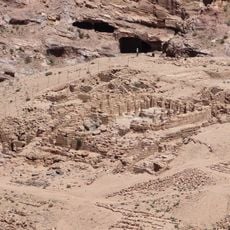
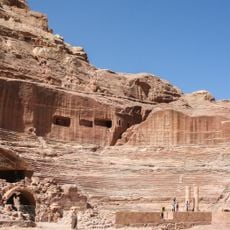
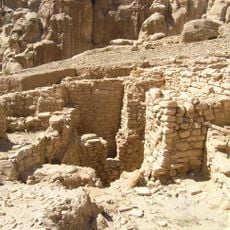
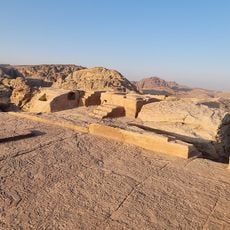
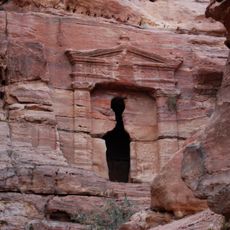
Palace Tomb, Rock-cut tomb in Petra, Jordan
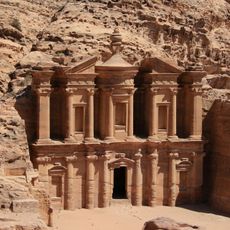
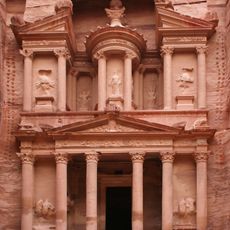
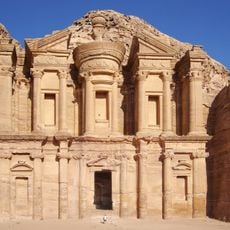
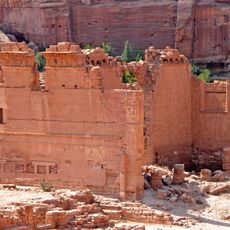
The Palace Tomb has a 49-metre-wide, 46-metre-high facade cut into the east cliff of Petra. Its first storey holds four aediculae: the two central doorways are nearly twice as wide as the outer ones and have triangular pediments, while the outer pair have semi-circular pediments. Above, eighteen engaged columns cross the second storey, and the top-left corner of the third storey is built from ashlar blocks rather than carved.
The tomb was built in the first century CE by the Nabataeans and displays architectural influences from the Roman world of that era. Its design reflects the cultural exchange happening in the region during this period of shifting powers.
The name comes from its palace-like facade with multiple levels and columns that resemble residential buildings. Visitors can observe how the Nabataeans buried their dead in chambers carved directly into the rock face.
The four doorways open onto burial chambers cut into the rock, reached by short ramps and steps; the climb is uneven and there is no railing. The upper storey, partly built of ashlar blocks, is unstable and was consolidated after a 1988 collapse, so it is not open to visitors. The tomb stands on the east cliffs among the Royal Tombs, above the valley floor.
Unlike most other structures in Petra, the upper level of this tomb was built using individual stone blocks rather than carved from solid rock. This different construction method makes it an interesting example of varying building techniques used at this site.
The community of curious travelers
AroundUs brings together thousands of curated places, local tips, and hidden gems, enriched daily by 93,111 contributors worldwide.