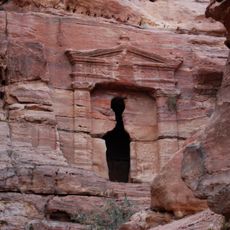
Ba'ja, Neolithic village in Ma'an Governorate, Jordan.
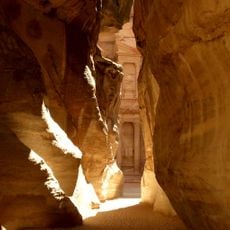
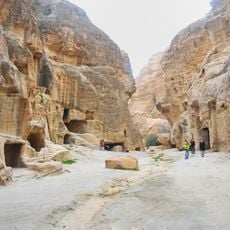
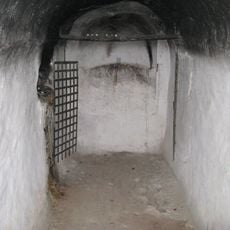
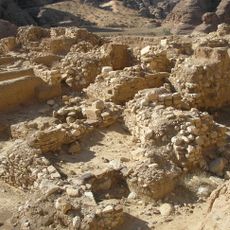
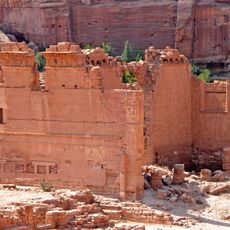
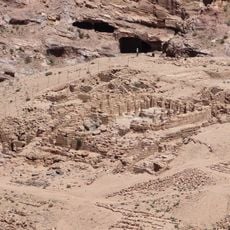
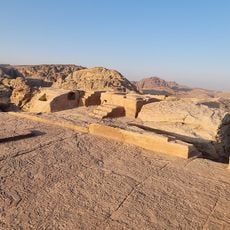
Ba'ja is a Neolithic settlement in southern Jordan with stone structures built on steep slopes and connected by internal staircases. The buildings have thick walls and basement areas integrated into the terrain.
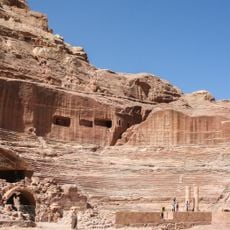
Ba'ja was built around 7000 BC, during the Pre-Pottery Neolithic B period, like the nearby site of Basta. It was discovered in 1984 by German archaeologist Hans-Georg Gebel, who later led several excavation campaigns there. Near the site entrance lies Ba'ja I, an Islamic settlement with two or three layers of an older Nabataean settlement.
The site's name was given by archaeologists, taken from the nearby mountain range; the original name is unknown. Excavations found sandstone rings made locally in every household, probably produced within families and used as barter goods across central Jordan. Many stone axes and bowls were placed ritually between house walls and under floors.
The site sits at 1160 meters elevation in a narrow canyon about 14 kilometers north of Petra and is only accessible by climbing routes. Visitors should bring good footwear and reasonable fitness to handle the climbs.
In 2018 excavators opened a plastered stone cist at Ba'ja holding a child of about eight, crouched against the north slab, her bones stained with red ochre. With her lay at least 2,586 beads of red limestone, white shell, turquoise and hematite, plus fragments of a mother-of-pearl ring; the single necklace was reassembled in 2023.
The community of curious travelers
AroundUs brings together thousands of curated places, local tips, and hidden gems, enriched daily by 93,757 contributors worldwide.