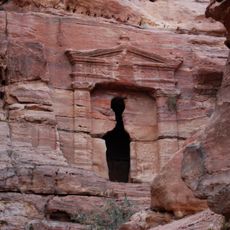
Wu’era Castle, Crusader castle in Wadi Musa, Jordan
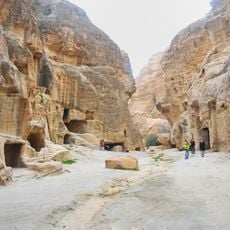
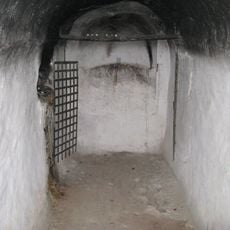
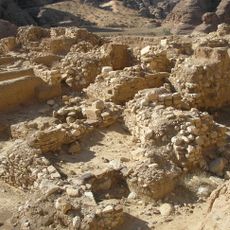
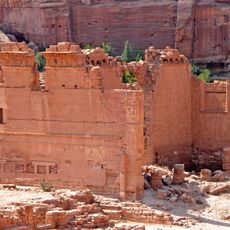
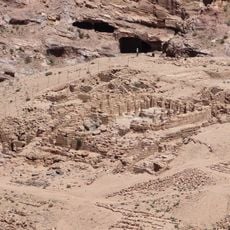
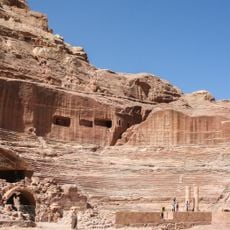
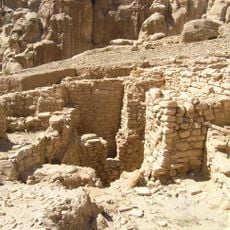
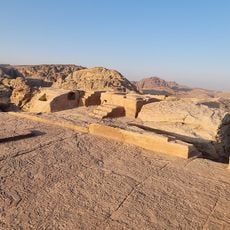
Wu'ayra Castle is a ruined Crusader spur castle on a narrow ridge with smooth sides, about 1 km north of Petra's main entrance. Its rectangular wall has a tower on the northeast side and an entrance on the south; the tower's interior measures 4 by 5 m and has a 120 cm arrow slit. In the northwest corner are the remains of a single-hall church measuring 13 by 6 m, with an adjoining room to the east. A second tower stands in the western wall, and the gatehouse is cut from solid rock.
Baldwin I of Jerusalem built the fortress as an outpost of Montreal Castle at Shoubak, 34 km to the north, to control the trade, military and pilgrimage roads between the Levant, Egypt and the Hijaz. Saladin's forces took it in 1188, soon after Montreal. Yaqut al-Hamawi recorded it in his 1220s Mu'jam al-Buldan; it was then abandoned and known only to local inhabitants.
The Arabic name al-Wu'ayra is the diminutive of al-wa'ra, "the rugged one", after the difficult terrain. The Crusaders called it Castellum Vallis Moysis or li Vaux Moysi, "Castle of Moses Valley", after Wadi Musa. The 13 m by 6 m single-hall church in the northwest corner shows the garrison's religious life.
The castle stands on a narrow ridge with smooth sides about 1 km north of Petra's main entrance, reached over rough ground; sturdy footwear is needed. The rock-cut gatehouse guards the bridge to the south entrance. The site lies about 34 km south of Shoubak and rises to roughly 1,050 m above sea level.
The Arabic name al-Wu'ayra is the diminutive of al-wa'ra, "the rugged one", after the difficult terrain. The castle's most unusual feature is a gatehouse cut from solid rock, guarding the bridge to the south entrance.
The community of curious travelers
AroundUs brings together thousands of curated places, local tips, and hidden gems, enriched daily by 93,110 contributors worldwide.