See the monuments around you in AROpen chests in the app
Around Us is built for your phone — point your camera at the streets and discover the monuments and places around you in augmented reality.Around Us is built for your phone — chests unlock when you walk, explore and capture nearby places.
The Most Beautiful Historical and Natural Sites of Jordan
Jordan's historical sites and natural reserves include ancient temples, medieval castles, deserts, mountains, and biblical locations. The diverse landscapes stretch from the depths of the Dead Sea to the peaks of Dana's mountains, passing through the red sandstone cliffs of Petra and the coral waters of Aqaba. This territory preserves the traces of Nabataean, Roman, Byzantine, Umayyad, and Ottoman civilizations.
The Most Beautiful Historical and Natural Sites of Jordan
Jordan's historical sites and natural reserves include ancient temples, medieval castles, deserts, mountains, and biblical locations. The diverse landscapes stretch from the depths of the Dead Sea to the peaks of Dana's mountains, passing through the red sandstone cliffs of Petra and the coral waters of Aqaba. This territory preserves the traces of Nabataean, Roman, Byzantine, Umayyad, and Ottoman civilizations.
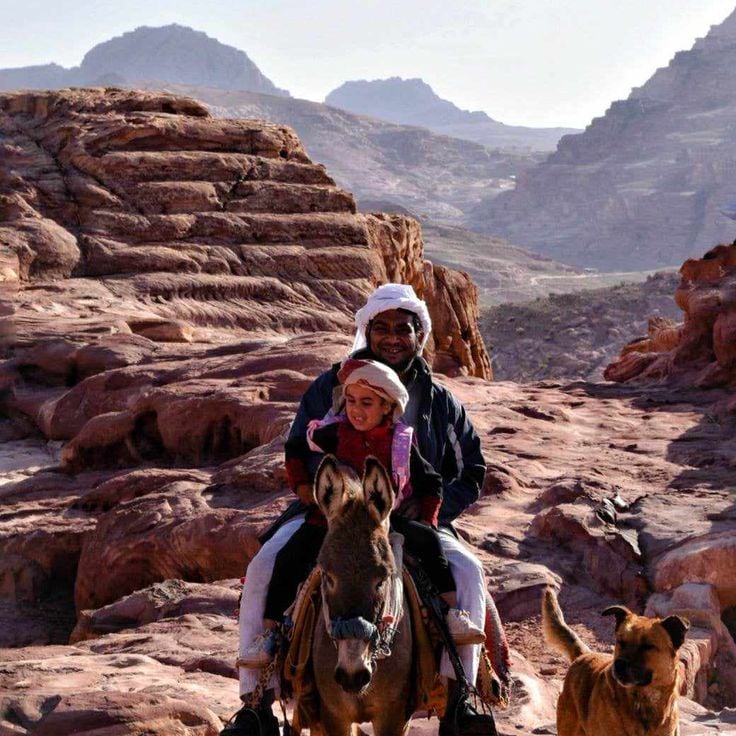
This ancient city from the 4th century BC was carved directly into red sandstone cliffs by the Nabataeans. The monuments cut into rock serve as temples, royal tombs, and treasuries. Petra rises between narrow gorges and open valleys in southern Jordan. Visitors enter through the Siq, a natural rock fissure extending over half a mile (1 kilometer). At the end of this passage, the facade of the Treasury appears with its Corinthian columns. From here the Nabataeans controlled trade routes between Arabia, Egypt, and Syria. Later additions came from Roman, Byzantine, and Islamic builders. Most structures were carved out of the natural sandstone, which ranges in color from pink and orange to violet.
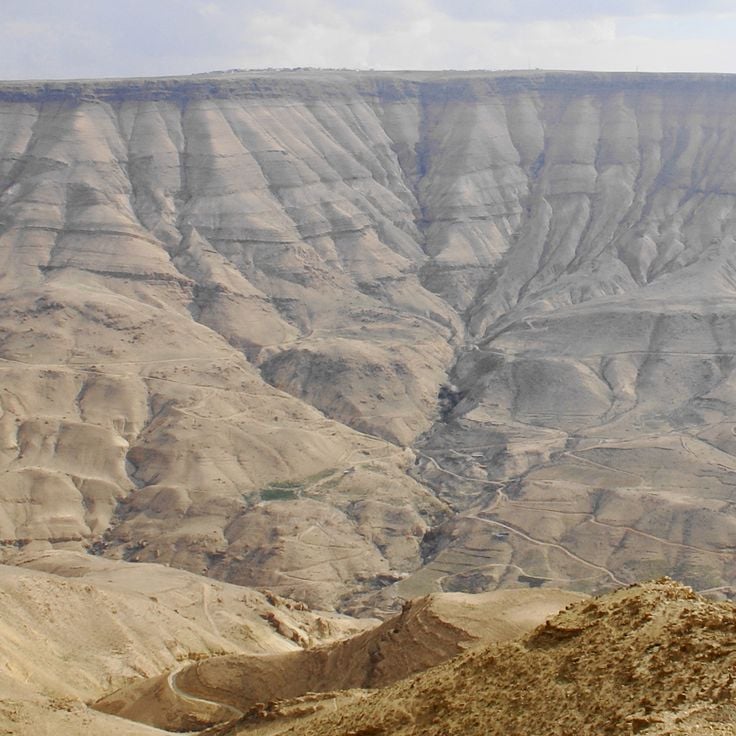
This nature reserve follows the course of the Mujib River, which has carved deep gorges into red rock formations. The walls rise up to 1000 meters and frame a path that descends from the highlands to the Dead Sea. Water has shaped narrow passages and pools over thousands of years, where hikers move through the current. Birds nest in the rock faces while wild goats climb on the ledges. This canyon connects Jordan's highland terrain with its lowest depression.
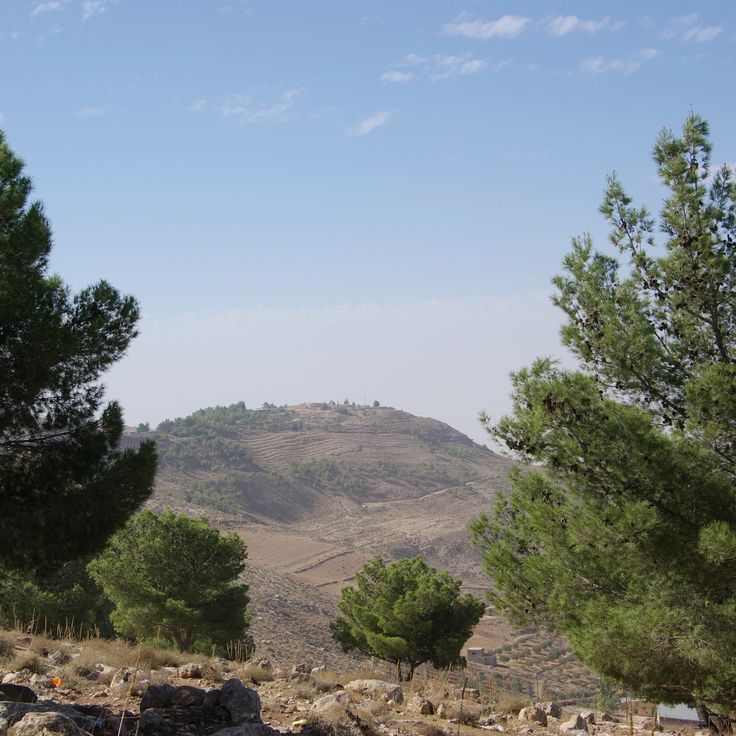
This mountain rises 710 meters above sea level west of Madaba. According to Christian tradition, Moses stood here and saw the Promised Land before his death. The site preserves remains of Byzantine churches from the 4th century. From the summit, the view reaches across the Jordan Valley toward Jerusalem and the Dead Sea. Archaeologists uncovered mosaics in the ruins showing biblical scenes. Pilgrims have visited this place since early Christian times. A modern chapel stands beside the ancient foundations. Wind often sweeps strongly across the bare slopes.
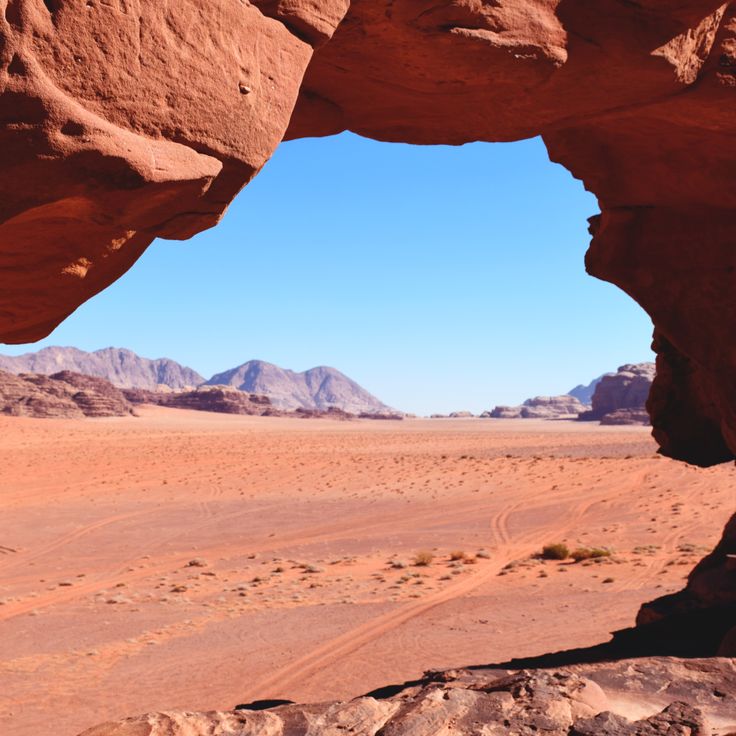
This red sand desert lies south of the ancient trade routes and shows cliffs that rise 500 meters (1,640 feet) into the sky. Canyons cut through the rock, where wind has shaped natural arches and stone towers. Bedouin camps stand between the dunes. Petroglyphs on the walls tell of caravans that passed through here centuries ago. The light changes over the day and colors the sandstone from orange to violet.
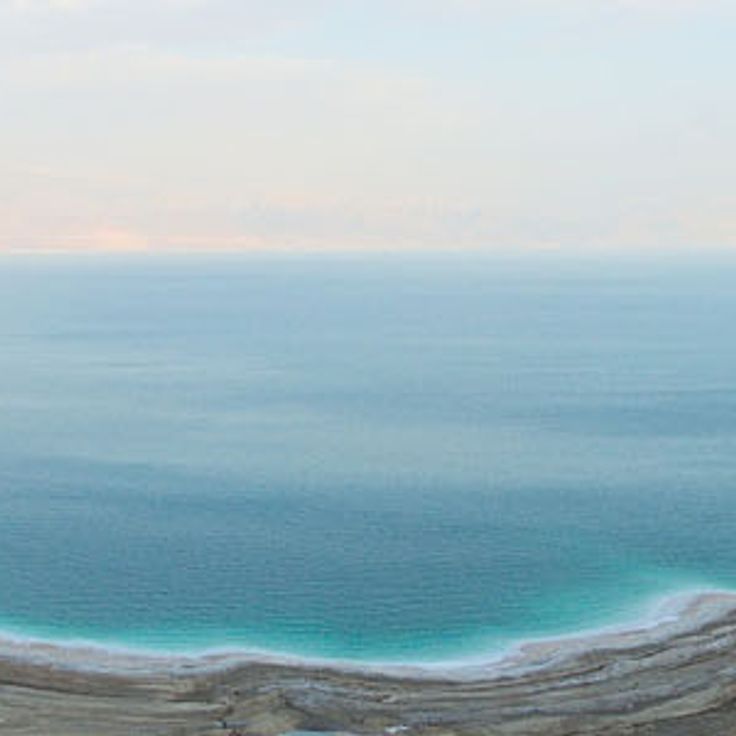
This body of water sits 430 meters below sea level with a salt concentration of 34 percent. The Dead Sea forms a natural border between Jordan and Israel. The high salt density allows bathers to float on the surface without needing to swim. The shoreline shows white salt deposits that shine in the sunlight. The surrounding desert landscape appears dry and bare. The water feels oily and leaves salt crystals on the skin. Visitors come here to test the unusual bathing experience and try the mineral-rich waters that have been known since biblical times.
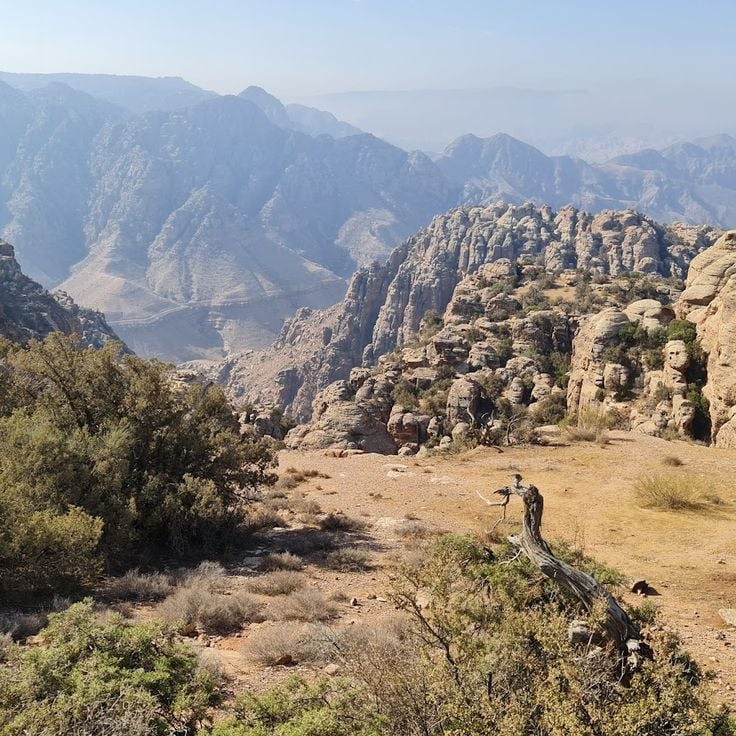
This reserve spreads across mountains, valleys, and deserts south of Tafilah, preserving one of Jordan's most diverse ecosystems. The landscape ranges from sandstone cliffs to deep wadis where acacia trees grow between the rocks. Hiking trails pass through different vegetation zones, from highland forests to dry desert slopes, connecting old stone villages with viewpoints over the Rift Valley.
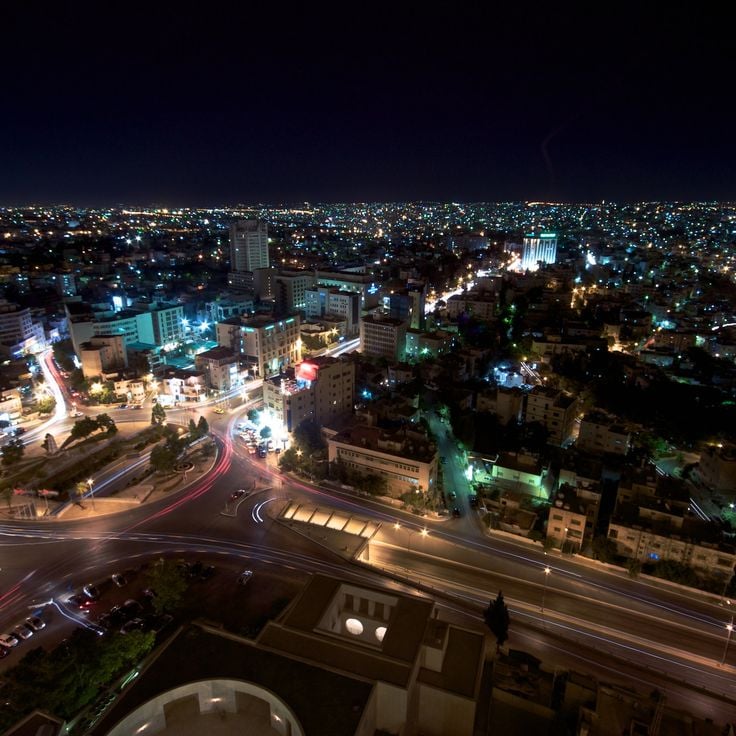
This city preserves a Roman theater from the 2nd century with seating for 6000 people and a citadel on a hill where structures from the Neolithic through the Ottoman era show the layers of Jordanian history. Amman spreads across several hills, where old streets and modern neighborhoods mix together. The citadel ruins overlook the valleys, while the theater sits carved into a natural slope. The streets wind through markets, mosques, and remnants of Roman colonies, telling the story of long settlement at this crossroads between desert and highland.
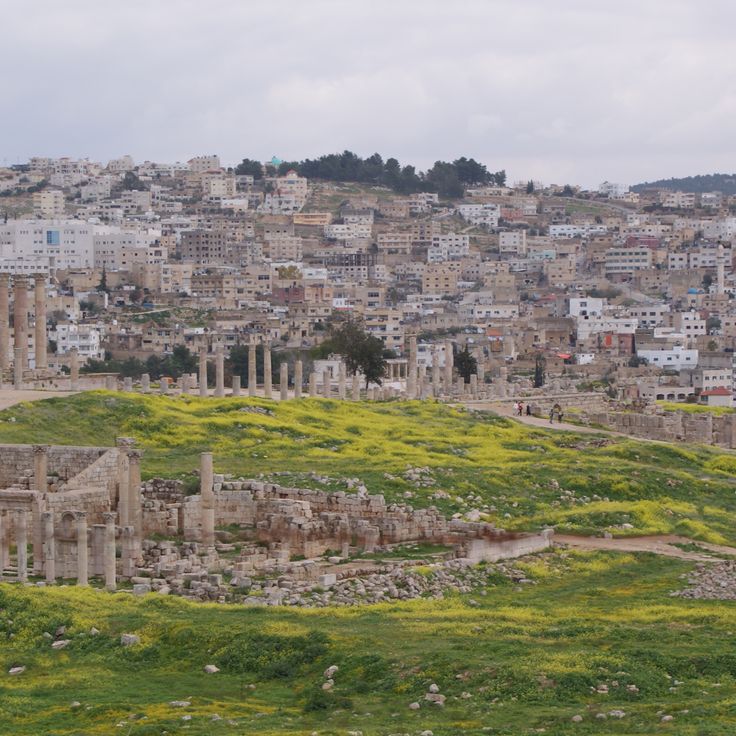
This city holds Roman monuments from the 1st century, including Hadrian's Arch, two theaters, the Temple of Artemis, and an oval plaza ringed by columns. The paved streets lead through a wide area where temple complexes, public baths, and market squares stand side by side. Visitors walk under stone archways and follow the traces of Roman engineering. The site shows how an ancient provincial city worked, with water channels, shops, and religious buildings. Cultural events take place in the ancient theaters during the summer months.
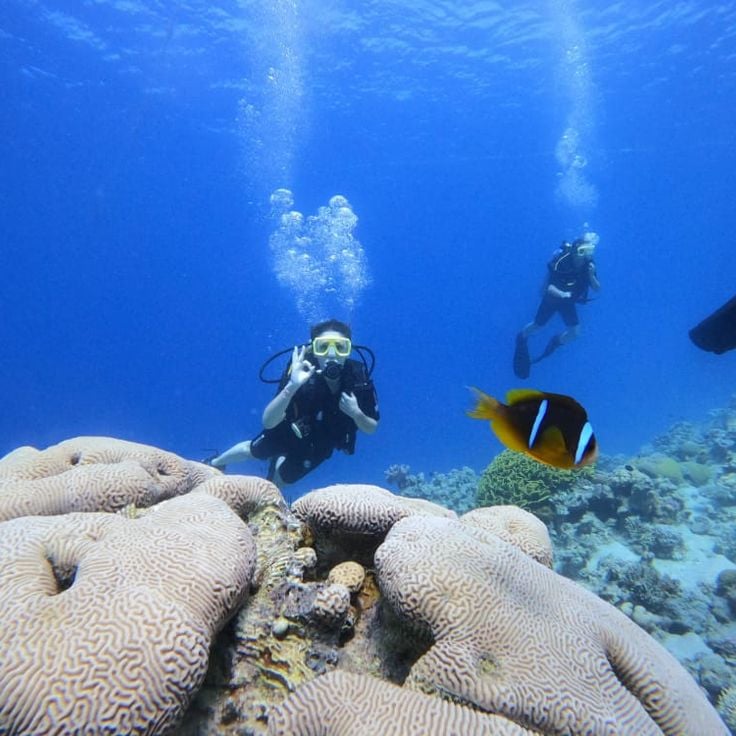
This port city on the Red Sea provides access to coral reefs and sunken ships along Jordan's coastline. Aqaba connects the region's heritage with the warm waters that draw divers and snorkelers. The city serves as a southern starting point for journeys through Jordan and as a gateway to the underwater landscapes of the Gulf of Aqaba.
This town south of Amman preserves the famous Madaba Map, an early Byzantine floor mosaic from the sixth century in St. George's Church, showing a geographic representation of the Middle East with Jerusalem at its center and recognized as the oldest surviving cartographic depiction of Palestine, along with other mosaic churches and the Greek Orthodox tradition of the place.
This archaeological site sits on a hilltop in northern Jordan and preserves the remains of Gadara, a city from Hellenistic and Roman times. Umm Qais shows colonnaded streets, theaters made of black basalt, burial sites, and an Ottoman village built over the ancient foundations. From the hills, you can see three countries at once: the Jordanian plains, the Syrian highlands, and the Israeli territories. The ruins stand among olive groves and open fields. The theater, with its dark stone rows, faces down into the valley. Along the old roads lie toppled columns and limestone capitals. Near the entrance, the stone walls of the Ottoman hamlet now house a small museum.
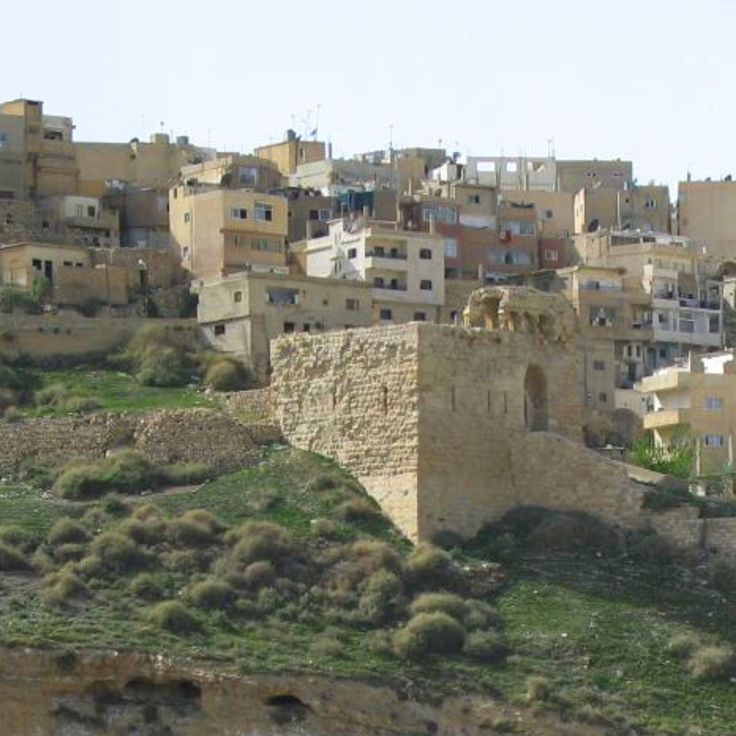
This Crusader fortress from the 12th century rises on a hilltop above the town of Kerak. The stronghold of dark stone preserves a maze of tunnels, arched passages, and defensive structures. Thick walls enclose wide courtyards where soldiers and residents once lived. From the upper terraces, you look out over the surrounding highlands and the Dead Sea in the distance. The compound combines Crusader, Ayyubid, and Mamluk building styles. Visitors walk through underground passages that lead to storage rooms and guard posts. The fortress stands as evidence of medieval warfare and cultural exchange between East and West in this region of Jordan.
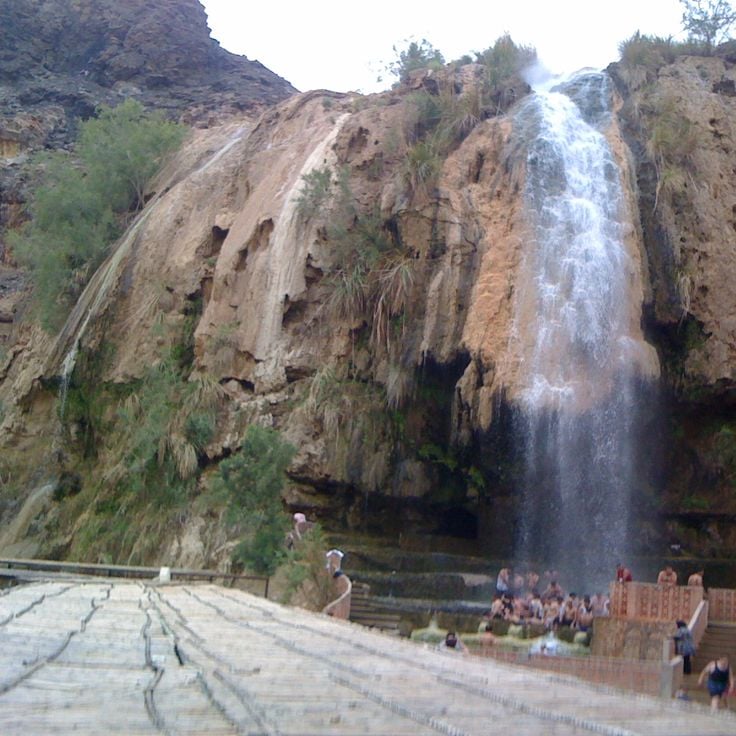
These thermal springs lie in the mountains southwest of Madaba, where hot water emerges from the rock and flows down several tiers. The water reaches temperatures around 60 degrees Celsius and collects in natural pools among rocks and palms. Visitors use the pools for bathing, and the warm water feeds small waterfalls. The springs are surrounded by dry mountain landscape, and access follows a road through arid valleys. Nearby hotels draw on the thermal water.
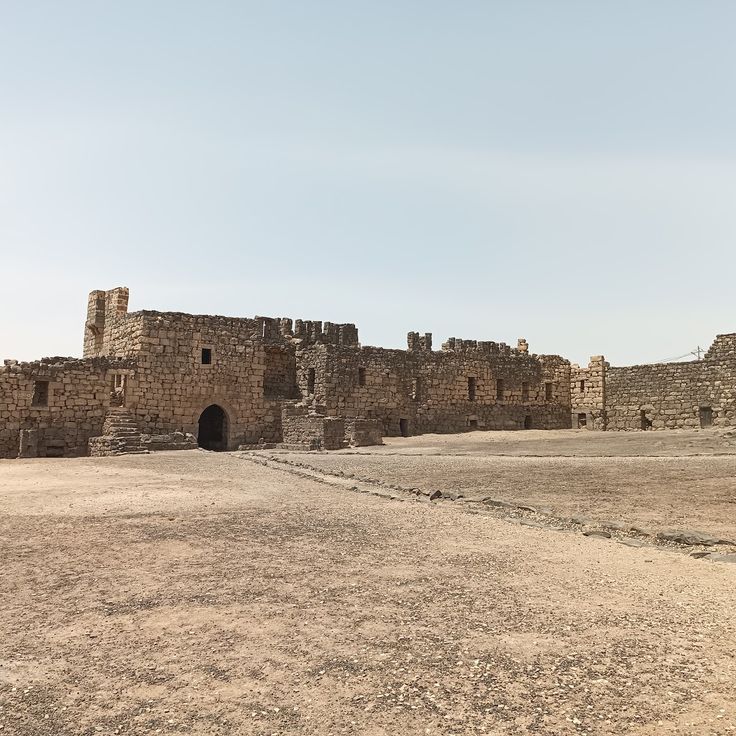
These desert castles from the 7th and 8th centuries are structures built by the Umayyad dynasty across Jordan's eastern steppe. Qasr Amra preserves frescoes depicting courtly life and hunting scenes on the walls of a former bathhouse. Qasr Kharana shows the form of a square fortress with two floors and rooms arranged around a central courtyard. Qasr al-Azraq was built from black basalt and served over time as a caravanserai, Roman fort, and later as a base during the Arab Revolt. The buildings lie scattered across the dry landscape between Amman and the Iraqi border, surrounded by gravel plains and low scrub. Some walls still carry traces of stucco and mortar, while others are marked by wind and sun.
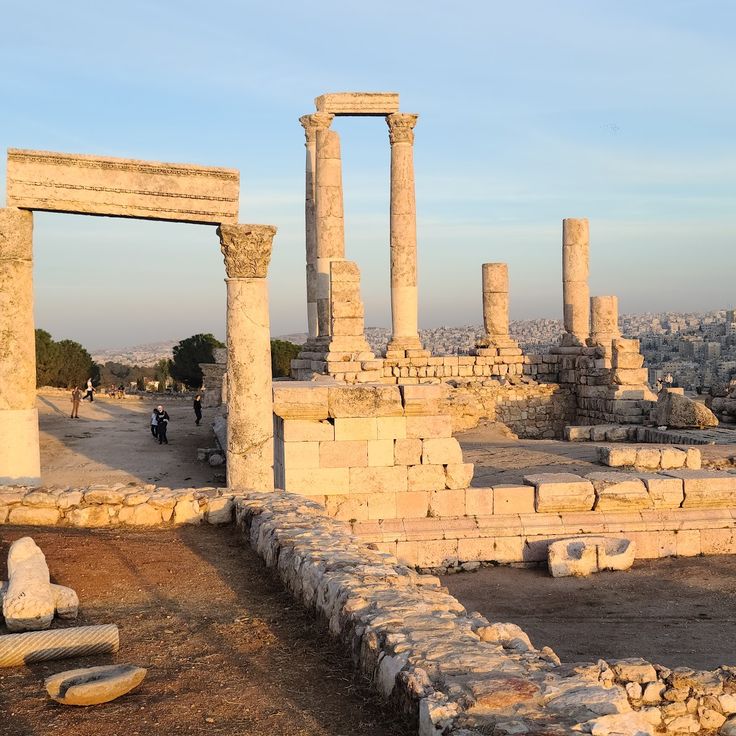
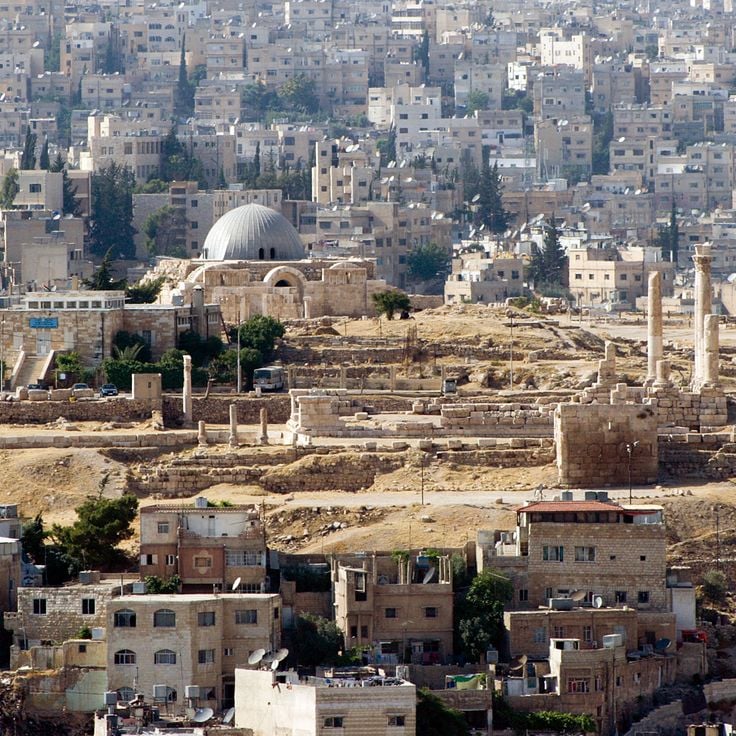
This temple from 162 AD stands on the citadel of Amman and shows six columns of 13 meters (43 feet) in height. Fragments of a monumental statue still lie among the ruins. The Romans built the structure during the reign of Marcus Aurelius as part of the forum of ancient Philadelphia. The columns rise above the modern city and mark one of the highest points in the capital.
This ancient road connects Amman to Aqaba across 335 km (208 miles) through the Jordanian mountains. The King's Highway leads travelers to several historical sites, including Byzantine churches, Crusader castles, and Nabataean ruins. The route winds through valleys and across plateaus, passing villages and agricultural terraces. In biblical times, caravans used this path for trade between Egypt and Mesopotamia. Today, this route allows glimpses into the different civilizations that shaped Jordan, while passing through changing landscapes from desert to green hills.
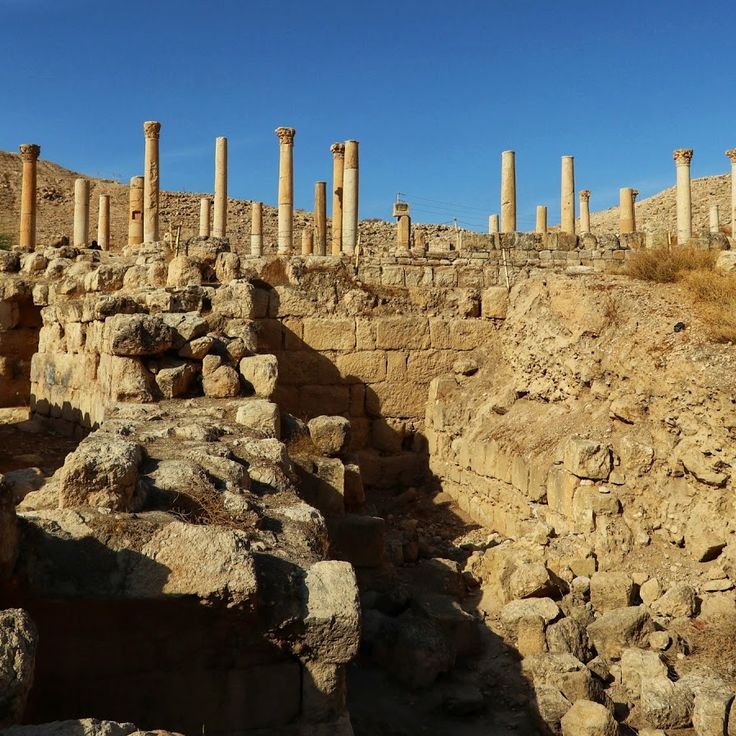
This archaeological site in the Jordan Valley preserves traces of many civilizations, from the Neolithic to the Ottoman era. Pella contains several Byzantine churches, a Roman theater, and remains from different historical periods spread across a hilly terrain overlooking the valley. The ruins sit at various levels and show the long occupation of this location along the ancient trade route.
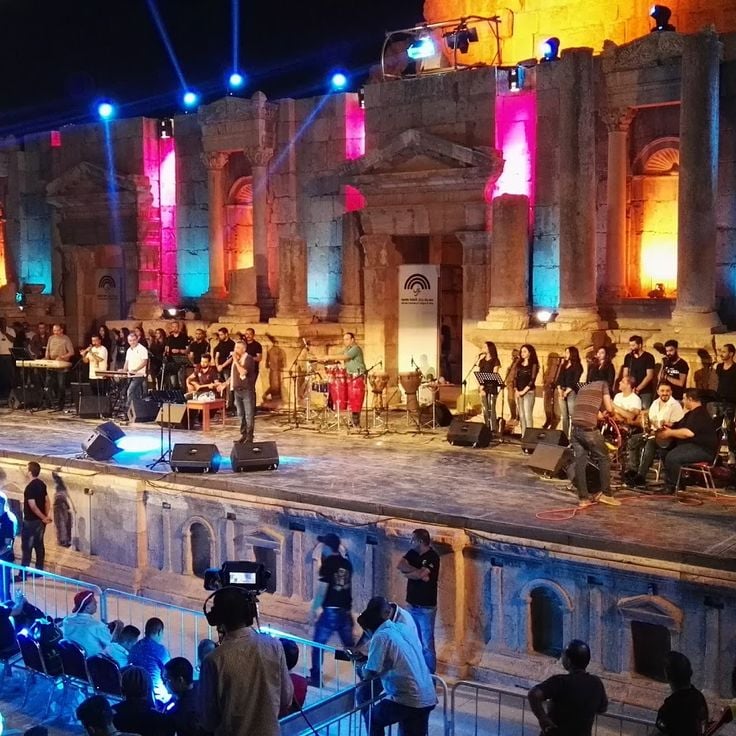
This Roman theater in Jerash dates from 90 to 92 AD and once seated about 3000 spectators on 32 rows. The south theater still shows the typical design of Roman gathering places with its semicircular shape and rising tiers. The acoustics allow voices from the center of the stage to carry to the upper rows. This site is one of the monuments documenting Jordan's Roman past.
This archaeological site rises on a hill in central Amman and preserves remains from Roman, Byzantine, and Umayyad times. Visitors find here the Temple of Hercules from the 2nd century, whose tall columns still stand, the Umayyad Palace with its carved arches, and the Byzantine Church with its mosaics. The Citadel sits about 2,800 feet (850 meters) above sea level and offers a wide view over the city rooftops. Stone walls, cisterns, and foundations tell the story of successive civilizations that used this place. The archaeological museum at the entrance displays objects from different periods of Jordan's history, including pottery, coins, and statues. Olive trees and wild herbs grow among the ruins, giving the hill a Mediterranean character. This site connects Roman traces with Islamic palaces and shows the layered history of Jordan's ancient and medieval civilizations.
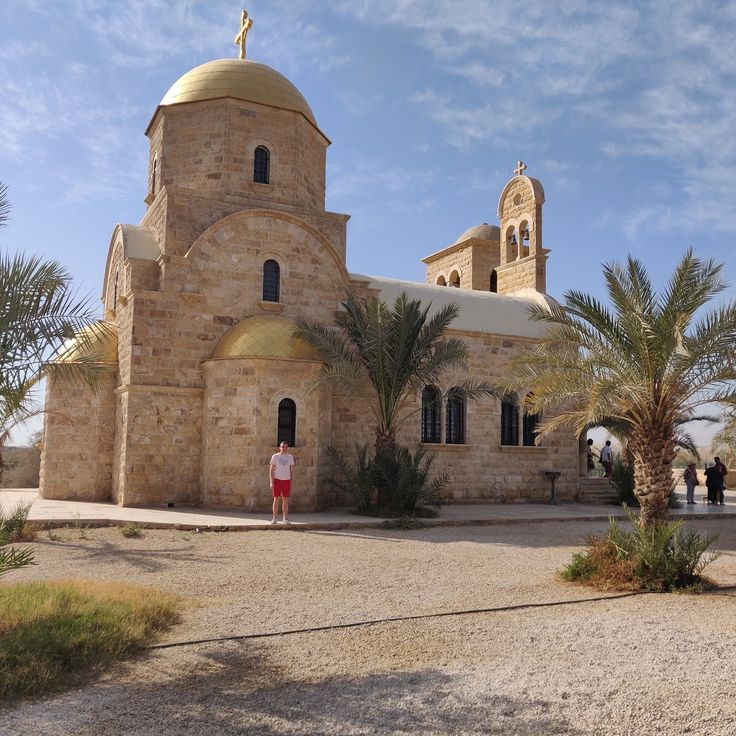
This sacred place sits on the eastern bank of the Jordan River and marks the spot where, according to Christian tradition, John the Baptist baptized Jesus. Early Christian and Byzantine church ruins remain here, along with baptismal pools from the 5th and 6th centuries and modern chapels of different denominations. A pilgrim path leads through the excavations down to the river bank, where believers can receive baptism in the Jordan.
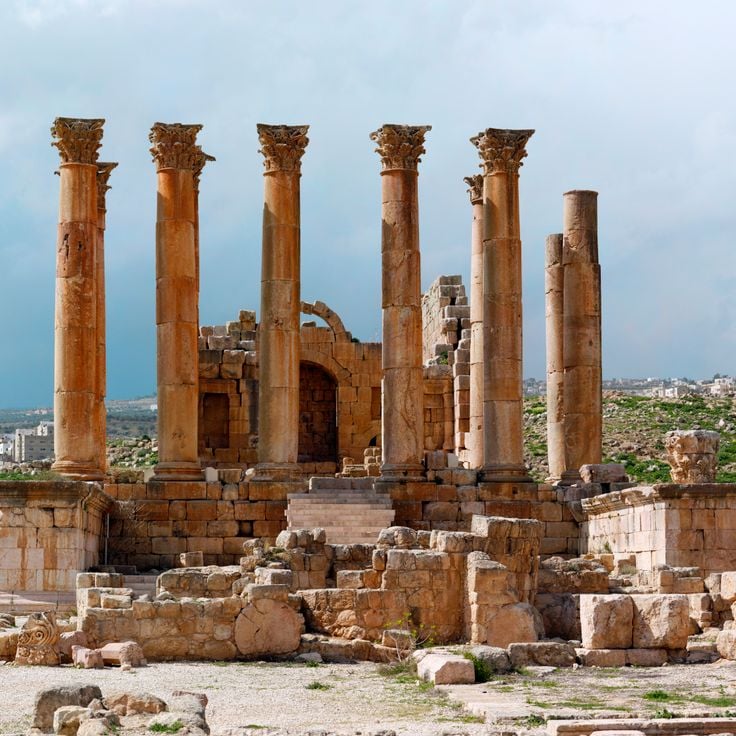
This temple rises on a podium above the ancient city of Jerash and was built during Roman rule. The Corinthian columns reach toward the sky and mark one of the highest points of the archaeological site. From here, you look down onto colonnaded streets and public squares that spread below. The Temple of Artemis was completed in the second century and served as a religious center. Some columns still stand upright while others lie on the ground, giving an impression of the original scale. The place draws visitors who walk among the ruins and take in views of the surrounding landscape.
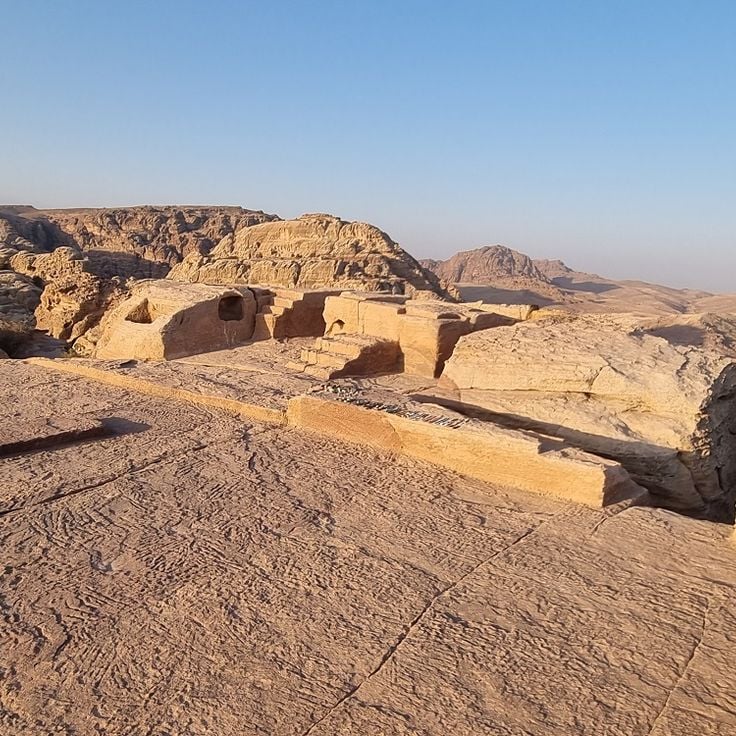
This Nabataean ritual site sits at the summit of a mountain in Petra, featuring two stone altars and a courtyard with a basin for ceremonial practices. The complex offers insight into the religious customs of the ancient Nabataeans, who performed sacrificial rites here. The path upward follows steps carved into the rock, and from the summit the view opens across the entire archaeological site of Petra with its red sandstone cliffs and valleys.
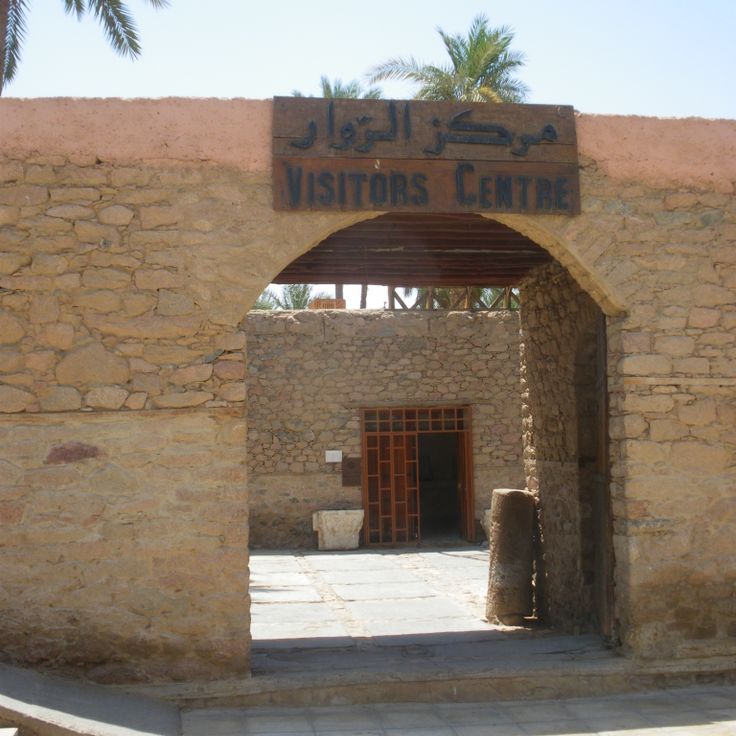
This museum displays pottery, coins, and everyday objects from the Aqaba region. The collection spans thousands of years, from the Bronze Age through the Nabataean and Roman periods to the Islamic era. The artifacts come from excavations in the surrounding area and offer insight into the daily life of past civilizations that settled at this point on the Red Sea. The Aqaba Archaeological Museum is housed in a historic building and complements Jordan's ancient sites with a collection of smaller finds that document the trade, crafts, and culture of the region.
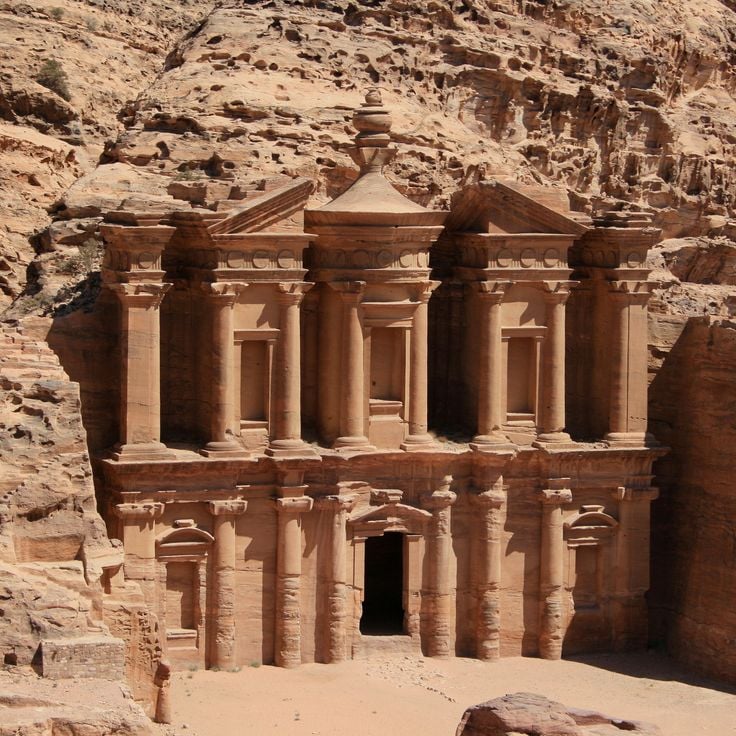
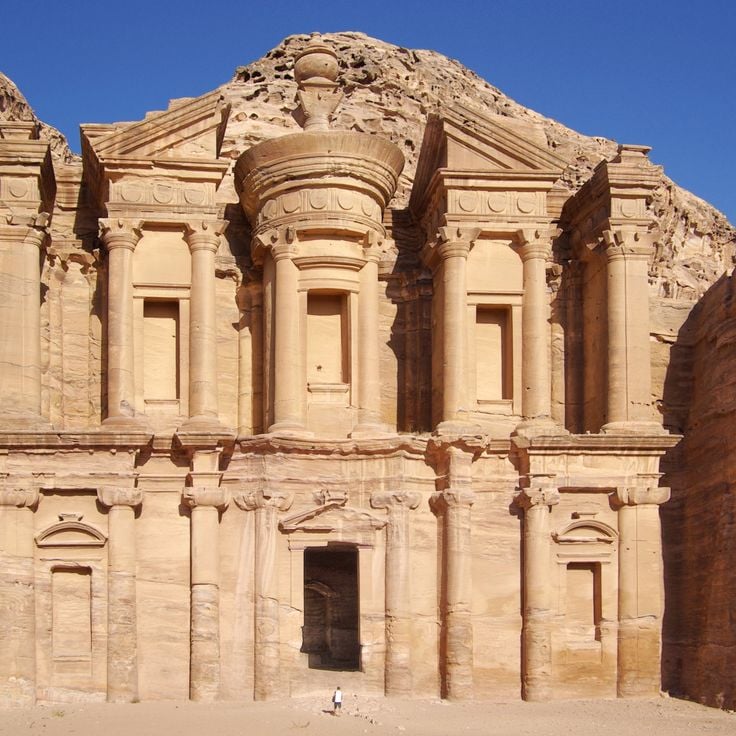
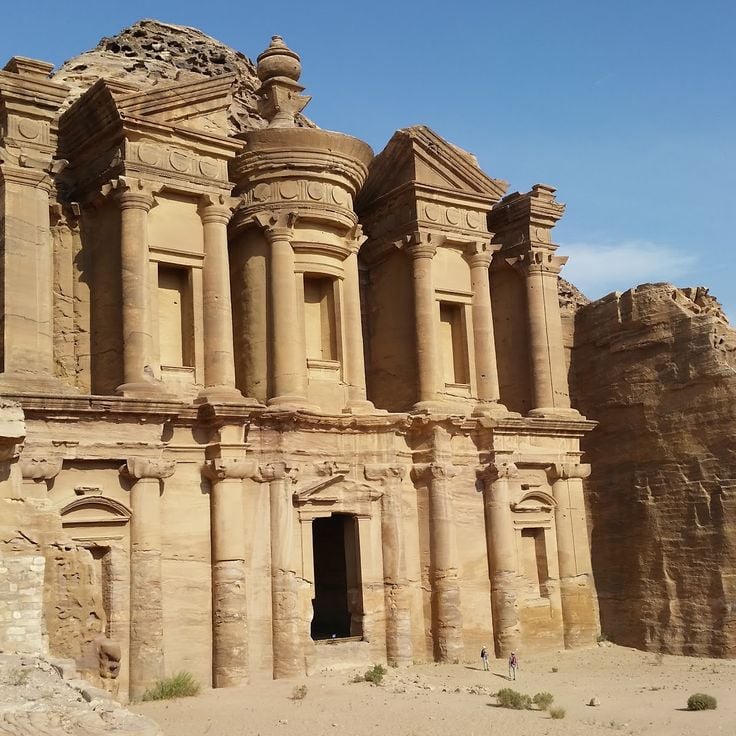
The Dayr Monastery stands at the top of a rocky plateau in Petra, reached by a long stone staircase. Its facade is carved directly into the rose-colored sandstone and shows classical columns and decorations from Nabataean times. The silence up there and the wide view over the mountains make the climb worthwhile. This place once likely served religious purposes; today hikers come here to enjoy the quiet and the view.
This monumental structure rises 40 meters high at the end of the Siq gorge and was carved in the first century from the red sandstone. The facade with its Corinthian columns and the urn at the top stands as the first major building at the end of the narrow rock corridor. The Nabataeans created this structure as a tomb by working the stone from top to bottom. Morning light bathes the rose-colored stone in warm tones and brings out the details of the columns and reliefs. Visitors reach the building after walking through the narrow gorge, where the view of the facade suddenly opens up.
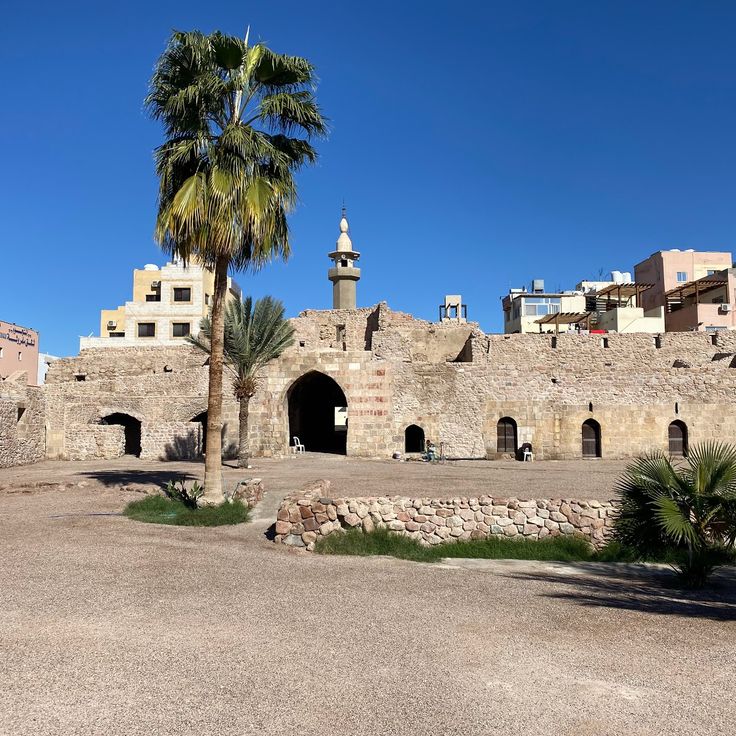
This fort stands at the edge of town and preserves traces of military use from the 16th century. The Mamluks built it with thick stone walls and watchtowers, later it served as a base during the Arab Revolt. Inside the courtyard are remains of rooms and corridors, the walls show stonework from different periods. From the upper levels you look out over the sea and the surrounding streets. The structure sits among modern buildings and recalls the strategic importance of this coastal location in Jordan's history.
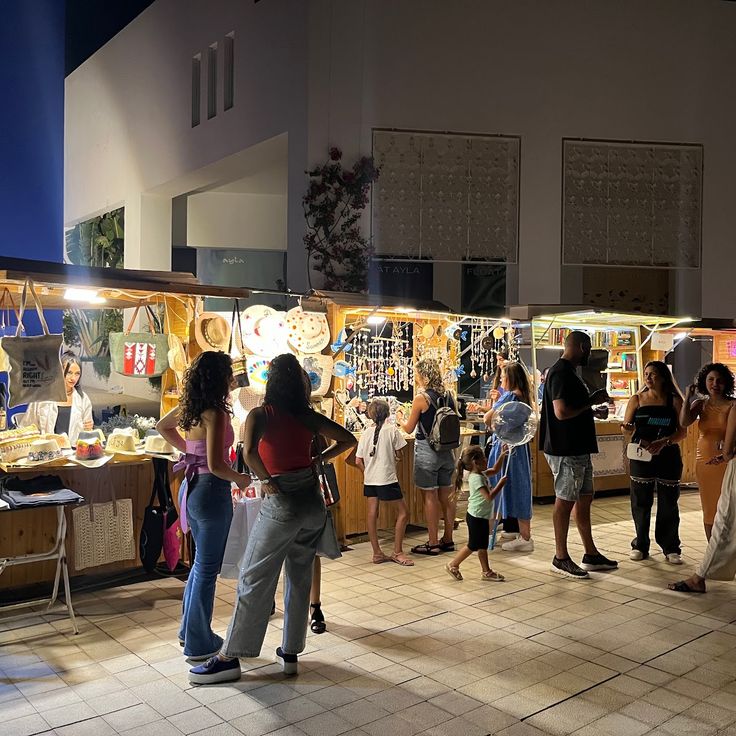
The central market in Aqaba brings together vendors selling fabrics, jewelry, souvenirs, and food products. This souk reveals the commercial life of the city by the Red Sea. The stalls offer dried fruits, fish, and spices from the Middle East. The market sits near the harbor and preserves the trade routes that have connected Aqaba to other regions for centuries. The stalls reflect the daily life of residents and the maritime history of this Jordanian city.
This first Islamic settlement on the Red Sea was built in the 7th century as one of the earliest Islamic cities outside the Arabian Peninsula. The ruins preserve foundations of mosques, residential buildings, and public structures from the Umayyad period. Stone walls and foundations show the urban planning of that early era. The site lies near the modern center of Aqaba and documents the beginning of Islamic presence in this coastal region of Jordan.
This Nabataean settlement lies three kilometers north of Petra and displays tombs, cisterns, and banquet halls carved into the rock walls. The site served as a resting place for caravans traveling the incense route and preserves first-century frescoes that are among the few surviving examples of Nabataean wall painting. The narrow gorges and smaller scale give a sense of how traders lived before reaching the main center.
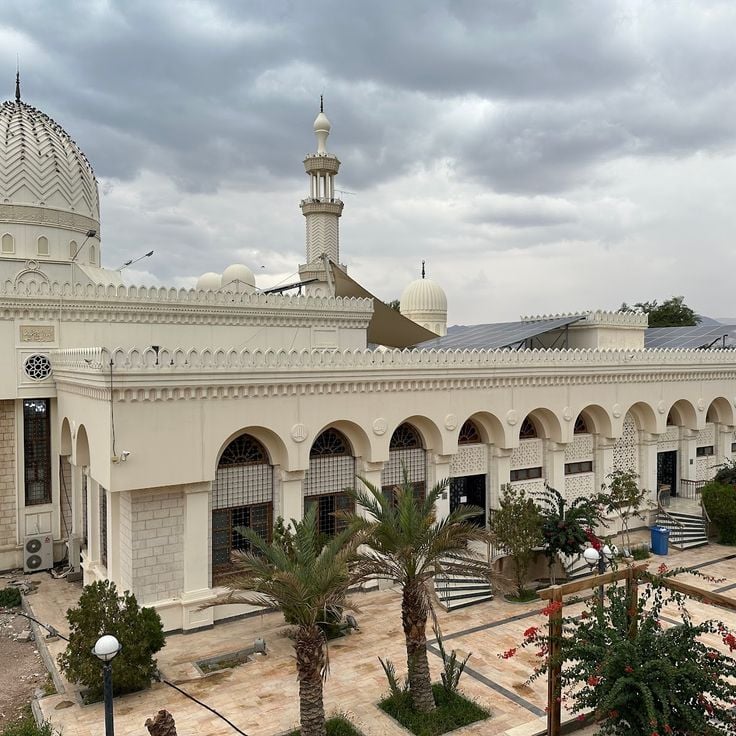
This mosque was built between 1975 and 1977 along the waterfront and dominates the cityscape with its white minaret rising 40 meters (131 feet) into the sky. The architecture follows contemporary lines and the building serves as a prayer space for locals and visitors. Its location by the water gives it a strong presence in Aqaba.
This ancient city from the 4th century BC was carved directly into red sandstone cliffs by the Nabataeans. The monuments cut into rock serve as temples, royal tombs, and treasuries. Petra rises between narrow gorges and open valleys in southern Jordan. Visitors enter through the Siq, a natural rock fissure extending over half a mile (1 kilometer). At the end of this passage, the facade of the Treasury appears with its Corinthian columns. From here the Nabataeans controlled trade routes between Arabia, Egypt, and Syria. Later additions came from Roman, Byzantine, and Islamic builders. Most structures were carved out of the natural sandstone, which ranges in color from pink and orange to violet.
This nature reserve follows the course of the Mujib River, which has carved deep gorges into red rock formations. The walls rise up to 1000 meters and frame a path that descends from the highlands to the Dead Sea. Water has shaped narrow passages and pools over thousands of years, where hikers move through the current. Birds nest in the rock faces while wild goats climb on the ledges. This canyon connects Jordan's highland terrain with its lowest depression.
This mountain rises 710 meters above sea level west of Madaba. According to Christian tradition, Moses stood here and saw the Promised Land before his death. The site preserves remains of Byzantine churches from the 4th century. From the summit, the view reaches across the Jordan Valley toward Jerusalem and the Dead Sea. Archaeologists uncovered mosaics in the ruins showing biblical scenes. Pilgrims have visited this place since early Christian times. A modern chapel stands beside the ancient foundations. Wind often sweeps strongly across the bare slopes.
This red sand desert lies south of the ancient trade routes and shows cliffs that rise 500 meters (1,640 feet) into the sky. Canyons cut through the rock, where wind has shaped natural arches and stone towers. Bedouin camps stand between the dunes. Petroglyphs on the walls tell of caravans that passed through here centuries ago. The light changes over the day and colors the sandstone from orange to violet.
This body of water sits 430 meters below sea level with a salt concentration of 34 percent. The Dead Sea forms a natural border between Jordan and Israel. The high salt density allows bathers to float on the surface without needing to swim. The shoreline shows white salt deposits that shine in the sunlight. The surrounding desert landscape appears dry and bare. The water feels oily and leaves salt crystals on the skin. Visitors come here to test the unusual bathing experience and try the mineral-rich waters that have been known since biblical times.
This reserve spreads across mountains, valleys, and deserts south of Tafilah, preserving one of Jordan's most diverse ecosystems. The landscape ranges from sandstone cliffs to deep wadis where acacia trees grow between the rocks. Hiking trails pass through different vegetation zones, from highland forests to dry desert slopes, connecting old stone villages with viewpoints over the Rift Valley.
This city preserves a Roman theater from the 2nd century with seating for 6000 people and a citadel on a hill where structures from the Neolithic through the Ottoman era show the layers of Jordanian history. Amman spreads across several hills, where old streets and modern neighborhoods mix together. The citadel ruins overlook the valleys, while the theater sits carved into a natural slope. The streets wind through markets, mosques, and remnants of Roman colonies, telling the story of long settlement at this crossroads between desert and highland.
This city holds Roman monuments from the 1st century, including Hadrian's Arch, two theaters, the Temple of Artemis, and an oval plaza ringed by columns. The paved streets lead through a wide area where temple complexes, public baths, and market squares stand side by side. Visitors walk under stone archways and follow the traces of Roman engineering. The site shows how an ancient provincial city worked, with water channels, shops, and religious buildings. Cultural events take place in the ancient theaters during the summer months.
This port city on the Red Sea provides access to coral reefs and sunken ships along Jordan's coastline. Aqaba connects the region's heritage with the warm waters that draw divers and snorkelers. The city serves as a southern starting point for journeys through Jordan and as a gateway to the underwater landscapes of the Gulf of Aqaba.
This town south of Amman preserves the famous Madaba Map, an early Byzantine floor mosaic from the sixth century in St. George's Church, showing a geographic representation of the Middle East with Jerusalem at its center and recognized as the oldest surviving cartographic depiction of Palestine, along with other mosaic churches and the Greek Orthodox tradition of the place.
This archaeological site sits on a hilltop in northern Jordan and preserves the remains of Gadara, a city from Hellenistic and Roman times. Umm Qais shows colonnaded streets, theaters made of black basalt, burial sites, and an Ottoman village built over the ancient foundations. From the hills, you can see three countries at once: the Jordanian plains, the Syrian highlands, and the Israeli territories. The ruins stand among olive groves and open fields. The theater, with its dark stone rows, faces down into the valley. Along the old roads lie toppled columns and limestone capitals. Near the entrance, the stone walls of the Ottoman hamlet now house a small museum.
This Crusader fortress from the 12th century rises on a hilltop above the town of Kerak. The stronghold of dark stone preserves a maze of tunnels, arched passages, and defensive structures. Thick walls enclose wide courtyards where soldiers and residents once lived. From the upper terraces, you look out over the surrounding highlands and the Dead Sea in the distance. The compound combines Crusader, Ayyubid, and Mamluk building styles. Visitors walk through underground passages that lead to storage rooms and guard posts. The fortress stands as evidence of medieval warfare and cultural exchange between East and West in this region of Jordan.
These thermal springs lie in the mountains southwest of Madaba, where hot water emerges from the rock and flows down several tiers. The water reaches temperatures around 60 degrees Celsius and collects in natural pools among rocks and palms. Visitors use the pools for bathing, and the warm water feeds small waterfalls. The springs are surrounded by dry mountain landscape, and access follows a road through arid valleys. Nearby hotels draw on the thermal water.
These desert castles from the 7th and 8th centuries are structures built by the Umayyad dynasty across Jordan's eastern steppe. Qasr Amra preserves frescoes depicting courtly life and hunting scenes on the walls of a former bathhouse. Qasr Kharana shows the form of a square fortress with two floors and rooms arranged around a central courtyard. Qasr al-Azraq was built from black basalt and served over time as a caravanserai, Roman fort, and later as a base during the Arab Revolt. The buildings lie scattered across the dry landscape between Amman and the Iraqi border, surrounded by gravel plains and low scrub. Some walls still carry traces of stucco and mortar, while others are marked by wind and sun.
This temple from 162 AD stands on the citadel of Amman and shows six columns of 13 meters (43 feet) in height. Fragments of a monumental statue still lie among the ruins. The Romans built the structure during the reign of Marcus Aurelius as part of the forum of ancient Philadelphia. The columns rise above the modern city and mark one of the highest points in the capital.
This ancient road connects Amman to Aqaba across 335 km (208 miles) through the Jordanian mountains. The King's Highway leads travelers to several historical sites, including Byzantine churches, Crusader castles, and Nabataean ruins. The route winds through valleys and across plateaus, passing villages and agricultural terraces. In biblical times, caravans used this path for trade between Egypt and Mesopotamia. Today, this route allows glimpses into the different civilizations that shaped Jordan, while passing through changing landscapes from desert to green hills.
This archaeological site in the Jordan Valley preserves traces of many civilizations, from the Neolithic to the Ottoman era. Pella contains several Byzantine churches, a Roman theater, and remains from different historical periods spread across a hilly terrain overlooking the valley. The ruins sit at various levels and show the long occupation of this location along the ancient trade route.
This Roman theater in Jerash dates from 90 to 92 AD and once seated about 3000 spectators on 32 rows. The south theater still shows the typical design of Roman gathering places with its semicircular shape and rising tiers. The acoustics allow voices from the center of the stage to carry to the upper rows. This site is one of the monuments documenting Jordan's Roman past.
This archaeological site rises on a hill in central Amman and preserves remains from Roman, Byzantine, and Umayyad times. Visitors find here the Temple of Hercules from the 2nd century, whose tall columns still stand, the Umayyad Palace with its carved arches, and the Byzantine Church with its mosaics. The Citadel sits about 2,800 feet (850 meters) above sea level and offers a wide view over the city rooftops. Stone walls, cisterns, and foundations tell the story of successive civilizations that used this place. The archaeological museum at the entrance displays objects from different periods of Jordan's history, including pottery, coins, and statues. Olive trees and wild herbs grow among the ruins, giving the hill a Mediterranean character. This site connects Roman traces with Islamic palaces and shows the layered history of Jordan's ancient and medieval civilizations.
This sacred place sits on the eastern bank of the Jordan River and marks the spot where, according to Christian tradition, John the Baptist baptized Jesus. Early Christian and Byzantine church ruins remain here, along with baptismal pools from the 5th and 6th centuries and modern chapels of different denominations. A pilgrim path leads through the excavations down to the river bank, where believers can receive baptism in the Jordan.
This temple rises on a podium above the ancient city of Jerash and was built during Roman rule. The Corinthian columns reach toward the sky and mark one of the highest points of the archaeological site. From here, you look down onto colonnaded streets and public squares that spread below. The Temple of Artemis was completed in the second century and served as a religious center. Some columns still stand upright while others lie on the ground, giving an impression of the original scale. The place draws visitors who walk among the ruins and take in views of the surrounding landscape.
This Nabataean ritual site sits at the summit of a mountain in Petra, featuring two stone altars and a courtyard with a basin for ceremonial practices. The complex offers insight into the religious customs of the ancient Nabataeans, who performed sacrificial rites here. The path upward follows steps carved into the rock, and from the summit the view opens across the entire archaeological site of Petra with its red sandstone cliffs and valleys.
This museum displays pottery, coins, and everyday objects from the Aqaba region. The collection spans thousands of years, from the Bronze Age through the Nabataean and Roman periods to the Islamic era. The artifacts come from excavations in the surrounding area and offer insight into the daily life of past civilizations that settled at this point on the Red Sea. The Aqaba Archaeological Museum is housed in a historic building and complements Jordan's ancient sites with a collection of smaller finds that document the trade, crafts, and culture of the region.
The Dayr Monastery stands at the top of a rocky plateau in Petra, reached by a long stone staircase. Its facade is carved directly into the rose-colored sandstone and shows classical columns and decorations from Nabataean times. The silence up there and the wide view over the mountains make the climb worthwhile. This place once likely served religious purposes; today hikers come here to enjoy the quiet and the view.
This monumental structure rises 40 meters high at the end of the Siq gorge and was carved in the first century from the red sandstone. The facade with its Corinthian columns and the urn at the top stands as the first major building at the end of the narrow rock corridor. The Nabataeans created this structure as a tomb by working the stone from top to bottom. Morning light bathes the rose-colored stone in warm tones and brings out the details of the columns and reliefs. Visitors reach the building after walking through the narrow gorge, where the view of the facade suddenly opens up.
This fort stands at the edge of town and preserves traces of military use from the 16th century. The Mamluks built it with thick stone walls and watchtowers, later it served as a base during the Arab Revolt. Inside the courtyard are remains of rooms and corridors, the walls show stonework from different periods. From the upper levels you look out over the sea and the surrounding streets. The structure sits among modern buildings and recalls the strategic importance of this coastal location in Jordan's history.
The central market in Aqaba brings together vendors selling fabrics, jewelry, souvenirs, and food products. This souk reveals the commercial life of the city by the Red Sea. The stalls offer dried fruits, fish, and spices from the Middle East. The market sits near the harbor and preserves the trade routes that have connected Aqaba to other regions for centuries. The stalls reflect the daily life of residents and the maritime history of this Jordanian city.
This first Islamic settlement on the Red Sea was built in the 7th century as one of the earliest Islamic cities outside the Arabian Peninsula. The ruins preserve foundations of mosques, residential buildings, and public structures from the Umayyad period. Stone walls and foundations show the urban planning of that early era. The site lies near the modern center of Aqaba and documents the beginning of Islamic presence in this coastal region of Jordan.
This Nabataean settlement lies three kilometers north of Petra and displays tombs, cisterns, and banquet halls carved into the rock walls. The site served as a resting place for caravans traveling the incense route and preserves first-century frescoes that are among the few surviving examples of Nabataean wall painting. The narrow gorges and smaller scale give a sense of how traders lived before reaching the main center.
This mosque was built between 1975 and 1977 along the waterfront and dominates the cityscape with its white minaret rising 40 meters (131 feet) into the sky. The architecture follows contemporary lines and the building serves as a prayer space for locals and visitors. Its location by the water gives it a strong presence in Aqaba.
This ancient city from the 4th century BC was carved directly into red sandstone cliffs by the Nabataeans. The monuments cut into rock serve as temples, royal tombs, and treasuries. Petra rises between narrow gorges and open valleys in southern Jordan. Visitors enter through the Siq, a natural rock fissure extending over half a mile (1 kilometer). At the end of this passage, the facade of the Treasury appears with its Corinthian columns. From here the Nabataeans controlled trade routes between Arabia, Egypt, and Syria. Later additions came from Roman, Byzantine, and Islamic builders. Most structures were carved out of the natural sandstone, which ranges in color from pink and orange to violet.
This nature reserve follows the course of the Mujib River, which has carved deep gorges into red rock formations. The walls rise up to 1000 meters and frame a path that descends from the highlands to the Dead Sea. Water has shaped narrow passages and pools over thousands of years, where hikers move through the current. Birds nest in the rock faces while wild goats climb on the ledges. This canyon connects Jordan's highland terrain with its lowest depression.
This mountain rises 710 meters above sea level west of Madaba. According to Christian tradition, Moses stood here and saw the Promised Land before his death. The site preserves remains of Byzantine churches from the 4th century. From the summit, the view reaches across the Jordan Valley toward Jerusalem and the Dead Sea. Archaeologists uncovered mosaics in the ruins showing biblical scenes. Pilgrims have visited this place since early Christian times. A modern chapel stands beside the ancient foundations. Wind often sweeps strongly across the bare slopes.
This red sand desert lies south of the ancient trade routes and shows cliffs that rise 500 meters (1,640 feet) into the sky. Canyons cut through the rock, where wind has shaped natural arches and stone towers. Bedouin camps stand between the dunes. Petroglyphs on the walls tell of caravans that passed through here centuries ago. The light changes over the day and colors the sandstone from orange to violet.
This body of water sits 430 meters below sea level with a salt concentration of 34 percent. The Dead Sea forms a natural border between Jordan and Israel. The high salt density allows bathers to float on the surface without needing to swim. The shoreline shows white salt deposits that shine in the sunlight. The surrounding desert landscape appears dry and bare. The water feels oily and leaves salt crystals on the skin. Visitors come here to test the unusual bathing experience and try the mineral-rich waters that have been known since biblical times.
This reserve spreads across mountains, valleys, and deserts south of Tafilah, preserving one of Jordan's most diverse ecosystems. The landscape ranges from sandstone cliffs to deep wadis where acacia trees grow between the rocks. Hiking trails pass through different vegetation zones, from highland forests to dry desert slopes, connecting old stone villages with viewpoints over the Rift Valley.
This city preserves a Roman theater from the 2nd century with seating for 6000 people and a citadel on a hill where structures from the Neolithic through the Ottoman era show the layers of Jordanian history. Amman spreads across several hills, where old streets and modern neighborhoods mix together. The citadel ruins overlook the valleys, while the theater sits carved into a natural slope. The streets wind through markets, mosques, and remnants of Roman colonies, telling the story of long settlement at this crossroads between desert and highland.
This city holds Roman monuments from the 1st century, including Hadrian's Arch, two theaters, the Temple of Artemis, and an oval plaza ringed by columns. The paved streets lead through a wide area where temple complexes, public baths, and market squares stand side by side. Visitors walk under stone archways and follow the traces of Roman engineering. The site shows how an ancient provincial city worked, with water channels, shops, and religious buildings. Cultural events take place in the ancient theaters during the summer months.
This port city on the Red Sea provides access to coral reefs and sunken ships along Jordan's coastline. Aqaba connects the region's heritage with the warm waters that draw divers and snorkelers. The city serves as a southern starting point for journeys through Jordan and as a gateway to the underwater landscapes of the Gulf of Aqaba.
This town south of Amman preserves the famous Madaba Map, an early Byzantine floor mosaic from the sixth century in St. George's Church, showing a geographic representation of the Middle East with Jerusalem at its center and recognized as the oldest surviving cartographic depiction of Palestine, along with other mosaic churches and the Greek Orthodox tradition of the place.
This archaeological site sits on a hilltop in northern Jordan and preserves the remains of Gadara, a city from Hellenistic and Roman times. Umm Qais shows colonnaded streets, theaters made of black basalt, burial sites, and an Ottoman village built over the ancient foundations. From the hills, you can see three countries at once: the Jordanian plains, the Syrian highlands, and the Israeli territories. The ruins stand among olive groves and open fields. The theater, with its dark stone rows, faces down into the valley. Along the old roads lie toppled columns and limestone capitals. Near the entrance, the stone walls of the Ottoman hamlet now house a small museum.
This Crusader fortress from the 12th century rises on a hilltop above the town of Kerak. The stronghold of dark stone preserves a maze of tunnels, arched passages, and defensive structures. Thick walls enclose wide courtyards where soldiers and residents once lived. From the upper terraces, you look out over the surrounding highlands and the Dead Sea in the distance. The compound combines Crusader, Ayyubid, and Mamluk building styles. Visitors walk through underground passages that lead to storage rooms and guard posts. The fortress stands as evidence of medieval warfare and cultural exchange between East and West in this region of Jordan.
These thermal springs lie in the mountains southwest of Madaba, where hot water emerges from the rock and flows down several tiers. The water reaches temperatures around 60 degrees Celsius and collects in natural pools among rocks and palms. Visitors use the pools for bathing, and the warm water feeds small waterfalls. The springs are surrounded by dry mountain landscape, and access follows a road through arid valleys. Nearby hotels draw on the thermal water.
These desert castles from the 7th and 8th centuries are structures built by the Umayyad dynasty across Jordan's eastern steppe. Qasr Amra preserves frescoes depicting courtly life and hunting scenes on the walls of a former bathhouse. Qasr Kharana shows the form of a square fortress with two floors and rooms arranged around a central courtyard. Qasr al-Azraq was built from black basalt and served over time as a caravanserai, Roman fort, and later as a base during the Arab Revolt. The buildings lie scattered across the dry landscape between Amman and the Iraqi border, surrounded by gravel plains and low scrub. Some walls still carry traces of stucco and mortar, while others are marked by wind and sun.
This temple from 162 AD stands on the citadel of Amman and shows six columns of 13 meters (43 feet) in height. Fragments of a monumental statue still lie among the ruins. The Romans built the structure during the reign of Marcus Aurelius as part of the forum of ancient Philadelphia. The columns rise above the modern city and mark one of the highest points in the capital.
This ancient road connects Amman to Aqaba across 335 km (208 miles) through the Jordanian mountains. The King's Highway leads travelers to several historical sites, including Byzantine churches, Crusader castles, and Nabataean ruins. The route winds through valleys and across plateaus, passing villages and agricultural terraces. In biblical times, caravans used this path for trade between Egypt and Mesopotamia. Today, this route allows glimpses into the different civilizations that shaped Jordan, while passing through changing landscapes from desert to green hills.
This archaeological site in the Jordan Valley preserves traces of many civilizations, from the Neolithic to the Ottoman era. Pella contains several Byzantine churches, a Roman theater, and remains from different historical periods spread across a hilly terrain overlooking the valley. The ruins sit at various levels and show the long occupation of this location along the ancient trade route.
This Roman theater in Jerash dates from 90 to 92 AD and once seated about 3000 spectators on 32 rows. The south theater still shows the typical design of Roman gathering places with its semicircular shape and rising tiers. The acoustics allow voices from the center of the stage to carry to the upper rows. This site is one of the monuments documenting Jordan's Roman past.
This archaeological site rises on a hill in central Amman and preserves remains from Roman, Byzantine, and Umayyad times. Visitors find here the Temple of Hercules from the 2nd century, whose tall columns still stand, the Umayyad Palace with its carved arches, and the Byzantine Church with its mosaics. The Citadel sits about 2,800 feet (850 meters) above sea level and offers a wide view over the city rooftops. Stone walls, cisterns, and foundations tell the story of successive civilizations that used this place. The archaeological museum at the entrance displays objects from different periods of Jordan's history, including pottery, coins, and statues. Olive trees and wild herbs grow among the ruins, giving the hill a Mediterranean character. This site connects Roman traces with Islamic palaces and shows the layered history of Jordan's ancient and medieval civilizations.
This sacred place sits on the eastern bank of the Jordan River and marks the spot where, according to Christian tradition, John the Baptist baptized Jesus. Early Christian and Byzantine church ruins remain here, along with baptismal pools from the 5th and 6th centuries and modern chapels of different denominations. A pilgrim path leads through the excavations down to the river bank, where believers can receive baptism in the Jordan.
This temple rises on a podium above the ancient city of Jerash and was built during Roman rule. The Corinthian columns reach toward the sky and mark one of the highest points of the archaeological site. From here, you look down onto colonnaded streets and public squares that spread below. The Temple of Artemis was completed in the second century and served as a religious center. Some columns still stand upright while others lie on the ground, giving an impression of the original scale. The place draws visitors who walk among the ruins and take in views of the surrounding landscape.
This Nabataean ritual site sits at the summit of a mountain in Petra, featuring two stone altars and a courtyard with a basin for ceremonial practices. The complex offers insight into the religious customs of the ancient Nabataeans, who performed sacrificial rites here. The path upward follows steps carved into the rock, and from the summit the view opens across the entire archaeological site of Petra with its red sandstone cliffs and valleys.
This museum displays pottery, coins, and everyday objects from the Aqaba region. The collection spans thousands of years, from the Bronze Age through the Nabataean and Roman periods to the Islamic era. The artifacts come from excavations in the surrounding area and offer insight into the daily life of past civilizations that settled at this point on the Red Sea. The Aqaba Archaeological Museum is housed in a historic building and complements Jordan's ancient sites with a collection of smaller finds that document the trade, crafts, and culture of the region.
The Dayr Monastery stands at the top of a rocky plateau in Petra, reached by a long stone staircase. Its facade is carved directly into the rose-colored sandstone and shows classical columns and decorations from Nabataean times. The silence up there and the wide view over the mountains make the climb worthwhile. This place once likely served religious purposes; today hikers come here to enjoy the quiet and the view.
This monumental structure rises 40 meters high at the end of the Siq gorge and was carved in the first century from the red sandstone. The facade with its Corinthian columns and the urn at the top stands as the first major building at the end of the narrow rock corridor. The Nabataeans created this structure as a tomb by working the stone from top to bottom. Morning light bathes the rose-colored stone in warm tones and brings out the details of the columns and reliefs. Visitors reach the building after walking through the narrow gorge, where the view of the facade suddenly opens up.
This fort stands at the edge of town and preserves traces of military use from the 16th century. The Mamluks built it with thick stone walls and watchtowers, later it served as a base during the Arab Revolt. Inside the courtyard are remains of rooms and corridors, the walls show stonework from different periods. From the upper levels you look out over the sea and the surrounding streets. The structure sits among modern buildings and recalls the strategic importance of this coastal location in Jordan's history.
The central market in Aqaba brings together vendors selling fabrics, jewelry, souvenirs, and food products. This souk reveals the commercial life of the city by the Red Sea. The stalls offer dried fruits, fish, and spices from the Middle East. The market sits near the harbor and preserves the trade routes that have connected Aqaba to other regions for centuries. The stalls reflect the daily life of residents and the maritime history of this Jordanian city.
This first Islamic settlement on the Red Sea was built in the 7th century as one of the earliest Islamic cities outside the Arabian Peninsula. The ruins preserve foundations of mosques, residential buildings, and public structures from the Umayyad period. Stone walls and foundations show the urban planning of that early era. The site lies near the modern center of Aqaba and documents the beginning of Islamic presence in this coastal region of Jordan.
This Nabataean settlement lies three kilometers north of Petra and displays tombs, cisterns, and banquet halls carved into the rock walls. The site served as a resting place for caravans traveling the incense route and preserves first-century frescoes that are among the few surviving examples of Nabataean wall painting. The narrow gorges and smaller scale give a sense of how traders lived before reaching the main center.
This mosque was built between 1975 and 1977 along the waterfront and dominates the cityscape with its white minaret rising 40 meters (131 feet) into the sky. The architecture follows contemporary lines and the building serves as a prayer space for locals and visitors. Its location by the water gives it a strong presence in Aqaba.