Ōwakudani, Volcanic valley in Hakone, Japan
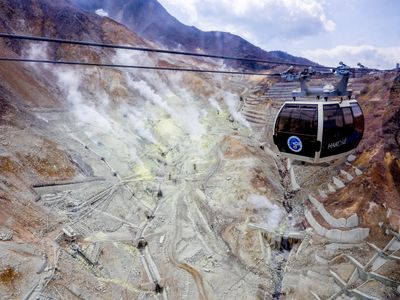
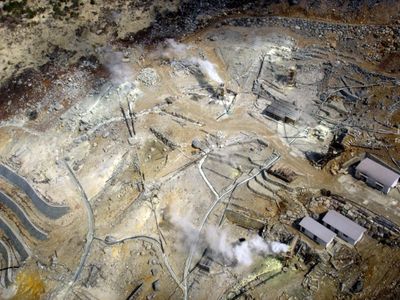
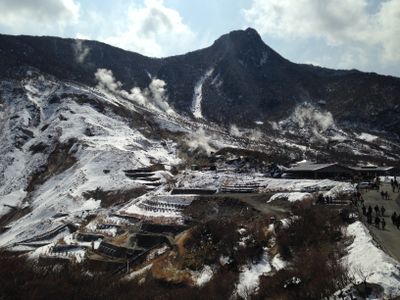
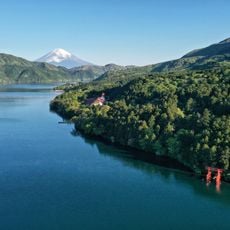
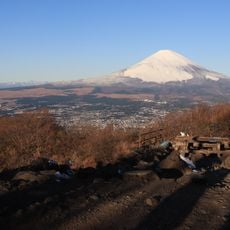
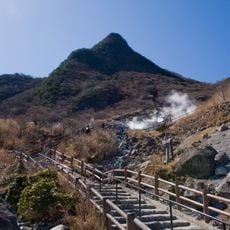
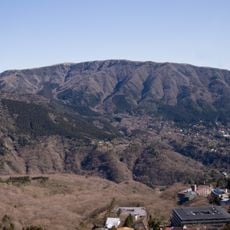
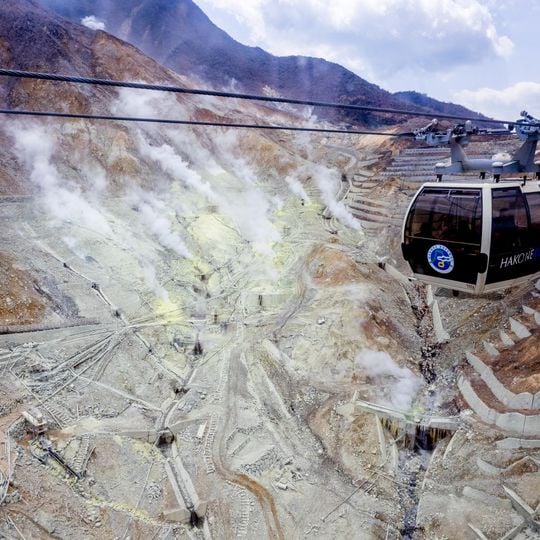
Ōwakudani is a volcanic valley near Hakone that features numerous steam vents and hot springs releasing sulfurous gases that create white plumes across the landscape. The terrain includes rocky slopes, crater formations, and viewing areas where visitors can observe the geothermal activity up close.
The valley formed after an eruption of Mount Hakone about 3000 years ago, creating the crater and geothermal features that remain active today. The name Ōwakudani translates to "great boiling valley" and refers to the intense geothermal activity that has continued since the eruption.
The place is known for black eggs cooked in the hot springs, a local specialty that visitors can watch being prepared at stalls throughout the area. This food tradition has become part of the visitor experience and represents a connection between the geothermal features and everyday food culture.
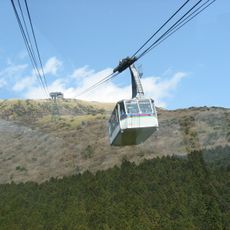
Visitors reach the area by cable car from Sounzan Station, which takes a short ride to the main viewing areas. The terrain is uneven with marked walking paths, so comfortable shoes are recommended and the sulfur smell can be strong at first.
The hot springs here reach temperatures ideal for cooking eggs naturally, making the black eggs a distinctive souvenir with genuine geothermal origins. This cooking method powered by volcanic heat is found in few places worldwide and shows how the landscape actively shapes what people can make and eat.
The community of curious travelers
AroundUs brings together thousands of curated places, local tips, and hidden gems, enriched daily by 90,871 contributors worldwide.