Suncheon Bay Ecological Park, Protected wetland park in Suncheon Bay, South Korea.
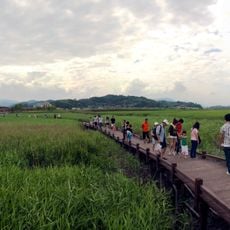
Suncheon Bay Ecological Park is a protected bay between the Yeosu and Goheung peninsulas, 8 km from central Suncheon. It covers 21.6 km² of mudflats and 5.4 km² of reed beds; the reed bed from the Dong and Isa stream junction to the mudflat is the widest in Korea. The bay is about 8,000 years old, formed as sea levels rose after the last glacial epoch.
Geologists date Suncheon Bay to about 8,000 years ago, when sea levels rose roughly 160 m after the last glacial epoch and the West Sea flooded former land. River-borne earth and sand, accumulated by tides, built the sandbar and brackish wetland. The reed beds are more than 30 years old and have expanded quickly in the past decade.
Suncheon Bay's reed beds supply the material for traditional handicrafts, and the Suaeda japonica that turns red in autumn is harvested and eaten locally. The bay is also known for its fisheries, including gray mullet, gizzard shad and octopus, and for aquaculture. In autumn, visitors come to see the reed blossoms and the red Suaeda fields.
Visitors can explore the area on marked walking trails and observe wildlife from several viewing towers. It is advisable to bring binoculars and visit during low tide when the mudflats are particularly visible.
The area hosts over 150 bird species, including some rare migratory species that stop here during their annual journey. This high species diversity makes it an important migration stopover for birds from across the region.
The community of curious travelers
AroundUs brings together thousands of curated places, local tips, and hidden gems, enriched daily by 93,647 contributors worldwide.