Jeju Eoseungsaengak Japanese Cave Fortification, Registered cultural property in Haedong, Jeju, South Korea
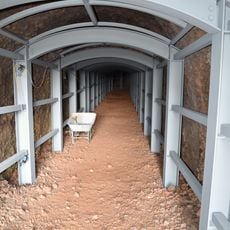
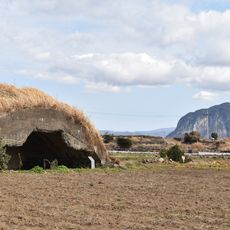
The Jeju Eoseungsaengak Japanese Cave Fortification is a registered cultural property of the Republic of Korea in Haedong, Jeju City, on the slopes of Eoseungsaeng Oreum. It comprises two bunkers and three cave positions, including a 300 m tunnel with three entrances and a grid-shaped interior; the reinforced-concrete pillboxes have trapezoidal gun slits.
The tunnels were built during the Japanese colonial period in the first half of the 20th century as military shelters intended to protect soldiers in the event of an Allied invasion. No attack on Jeju ever took place, so the fortifications were never used in combat.
The site is on Eoseungsaengak, a volcanic cone in Haedong, Jeju City. It was built as the headquarters of the Japanese 58th Army, the top command, to serve as a final resistance base if the Gamaoreum cave position fell. Visitors can see two bunkers and three cave positions, including a 300-meter tunnel with three entrances and a grid-shaped interior.
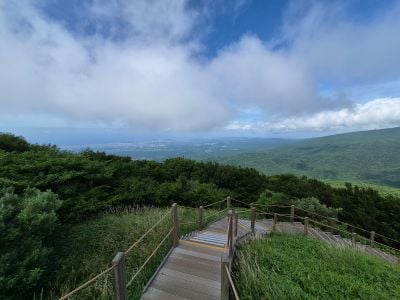
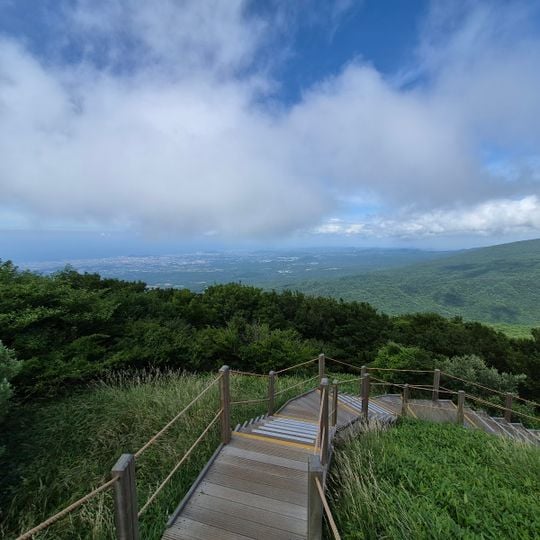
Sturdy shoes are a good idea, as the ground inside the tunnels can be uneven, and a flashlight may help since lighting is limited in some sections. The walk up to the summit takes around 30 minutes on a trail that is short but fairly steep.
The 300-metre tunnel has three entrances and an interior laid out in a grid pattern, while the two tochka bunkers were built of thick reinforced concrete with trapezoid-shaped firing slits for observing the outside. The site was meant as the last resistance stronghold of the Japanese 58th Army command if the Gamaoreum cave position fell.
The community of curious travelers
AroundUs brings together thousands of curated places, local tips, and hidden gems, enriched daily by 94,049 contributors worldwide.