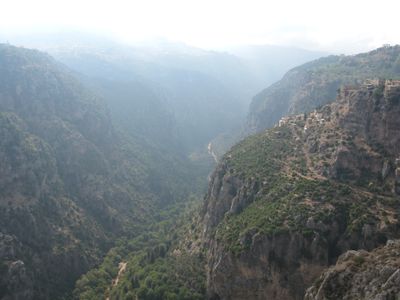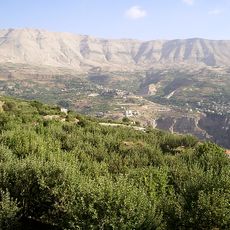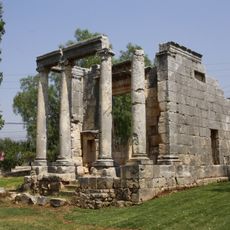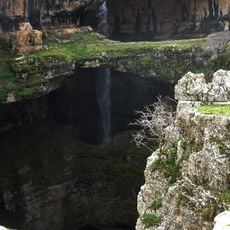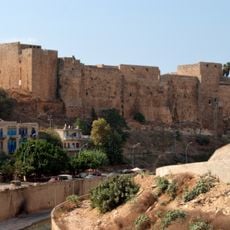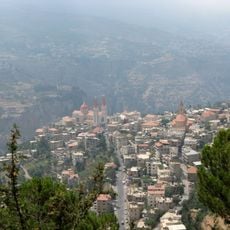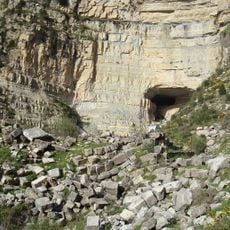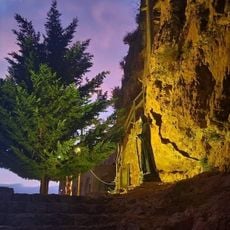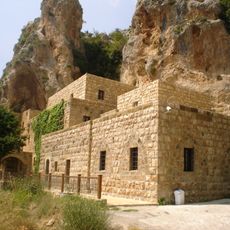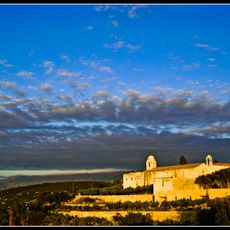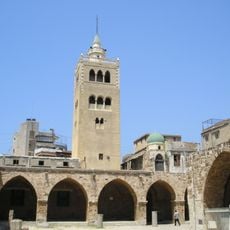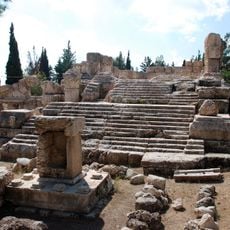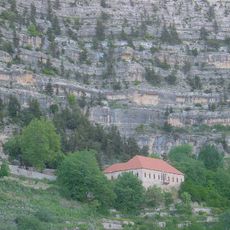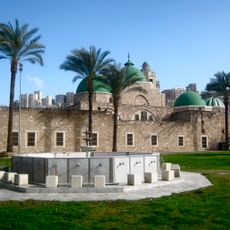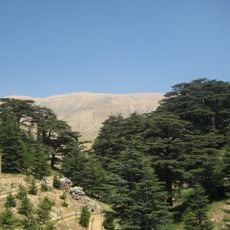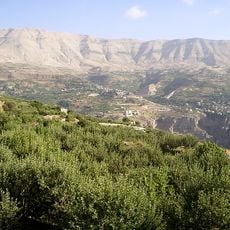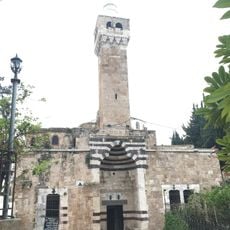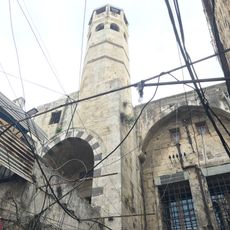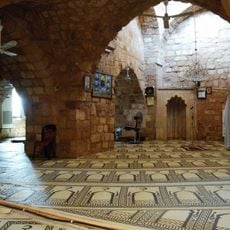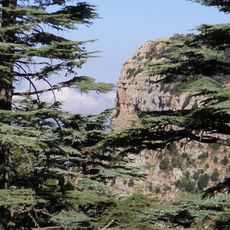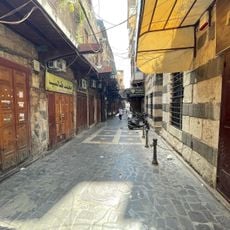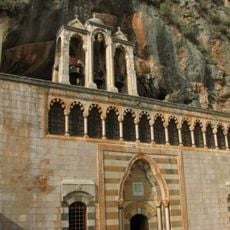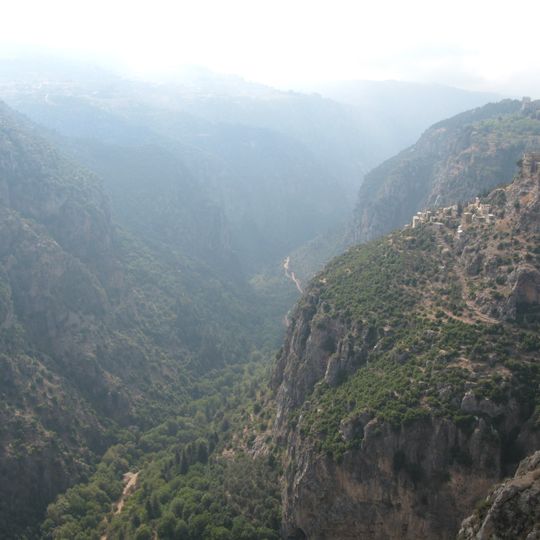
Kadisha Valley, Sacred valley with ancient monasteries in North Lebanon.
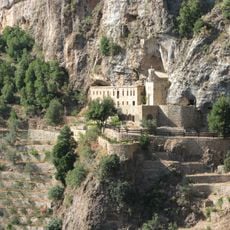
The Kadisha Valley spans across steep limestone cliffs containing numerous caves, monasteries, and chapels carved into the rock formations.
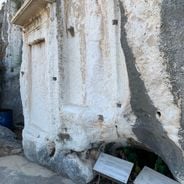
Monks and hermits established settlements within the valley's natural caves during the early centuries of Christianity, creating a network of religious structures.
The valley holds the principal monastery of the Maronite Christian community at Qannubin, representing centuries of religious dedication and architectural development.
Visitors need sturdy walking shoes and basic fitness levels to explore the valley's multiple hiking trails connecting various historical religious sites.
The Qozhaya Monastery in the valley contains the Middle East's first printing press from 1610, which produced texts in Syriac and Arabic.
Location: Bsharri District
Part of: Ouadi Qadisha (the Holy Valley) and the Forest of the Cedars of God (Horsh Arz el-Rab)
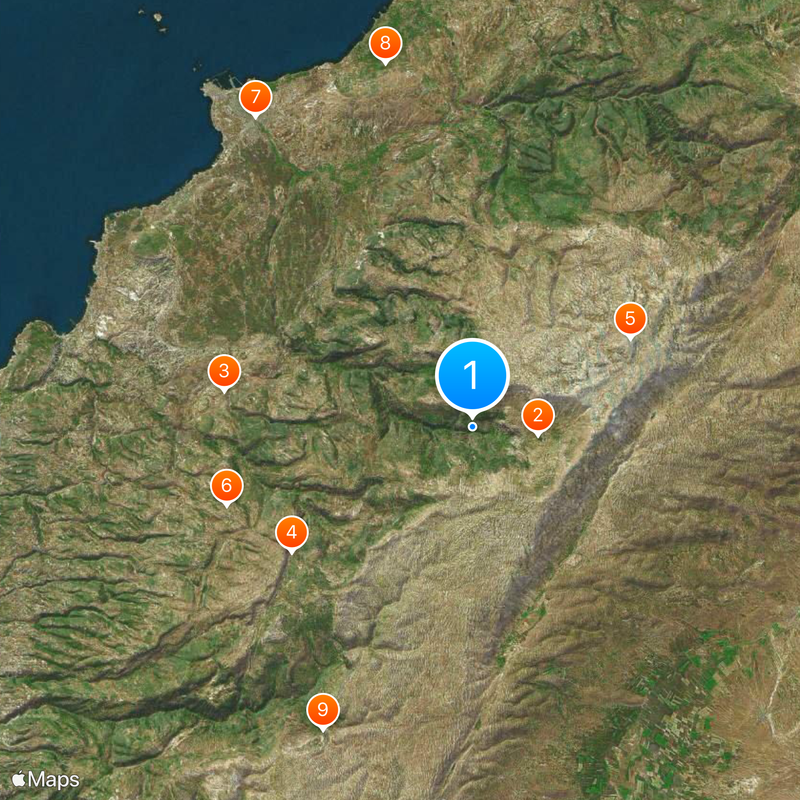
GPS coordinates: 34.24838,36.00130
Latest update: May 27, 2025 09:50
Lebanon preserves thousands of years of human settlement through archaeological sites and museum collections spread across the country. Phoenician ruins are adjacent to Roman monuments, while medieval fortresses mark periods of the Crusades and Ottoman rule. In Beirut, the National Museum houses artifacts covering all the country's historical eras, and the Mim Mineral Museum displays over 2,000 specimens from around the world. Along the coast, Sidon features a 13th-century maritime fortress and the Echmoun temple, a Phoenician complex built in the 7th century BCE. Collections extend well beyond classical archaeology. The Saint-Joseph University Prehistory Museum documents prehistoric occupation in Lebanon, while the Byblos Fossil Museum showcases more than 200 petrified specimens illustrating regional geological history. These institutions provide a thorough overview of the human and natural evolution of this Mediterranean area, from early settlements to Ottoman and modern periods.
Lebanon offers diverse photo opportunities, from natural limestone formations at Raouché to ancient Roman ruins in Baalbek. The country features underground caves at Jeita, medieval markets in Byblos, and historic cedar forests. Religious buildings, coastal fortresses, and traditional architecture in cities like Tripoli and Beirut present cultural heritage. Natural areas include the Qadisha Valley, Bekaa Valley vineyards, and Mediterranean beaches at Palm Islands Reserve.
Cedars of God
4.4 km
Roman temple of Bziza
16.7 km
Baatara gorge waterfall
14.6 km
Qurnet Al Sawda
12 km
Sisters Olive Trees of Noah
17.2 km
Citadel of Tripoli
25.1 km
Miniyeh-Danniyeh District
24.8 km
Afqa Grotto
22.4 km
Qozhaya
6.3 km
Gibran Museum
1.6 km
Balamand Monastery
24.4 km
Mansouri Great Mosque
25.3 km
Qasr el Banat, Lebanon
20.9 km
Mar Sarkis, Ehden
5 km
Taynal Mosque
25.3 km
Arz
3.6 km
Ouadi Qadisha (the Holy Valley) and the Forest of the Cedars of God (Horsh Arz el-Rab)
6.2 km
Al-Burtasi Mosque
25.3 km
Mu'allaq Mosque
25.2 km
Abd al-Wahid Mosque
25.3 km
Arz Tannourine
8 km
Khan al-Sabun
25.4 km
Al-Uwaysiyat
25.3 km
Monastery Of Mar Lishaa
538 m
Khan al-Khayyatin
25.3 km
Hammam Izz al-Din Aybak
25.3 km
Hammam al-Jadid
25.2 km
Church of Saint Anthony
6.2 kmReviews
Visited this place? Tap the stars to rate it and share your experience / photos with the community! Try now! You can cancel it anytime.
Discover hidden gems everywhere you go!
From secret cafés to breathtaking viewpoints, skip the crowded tourist spots and find places that match your style. Our app makes it easy with voice search, smart filtering, route optimization, and insider tips from travelers worldwide. Download now for the complete mobile experience.
A unique approach to discovering new places❞
— Le Figaro
All the places worth exploring❞
— France Info
A tailor-made excursion in just a few clicks❞
— 20 Minutes