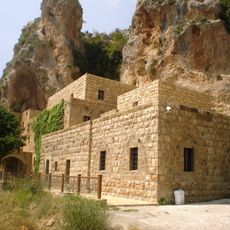
Qozhaya, Maronite monastery in Zgharta District, Lebanon
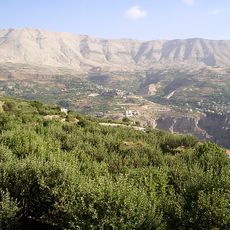
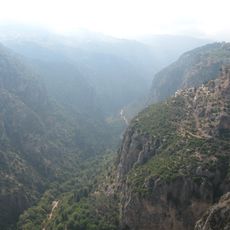
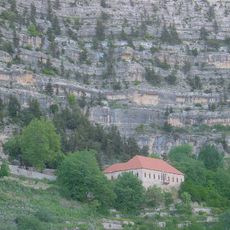
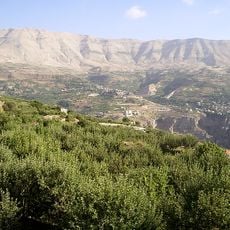
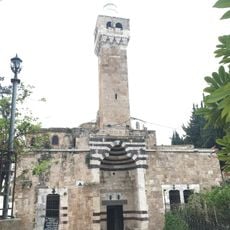
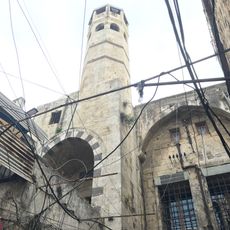
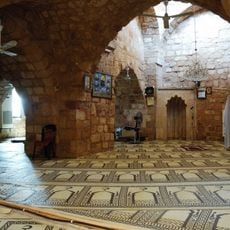
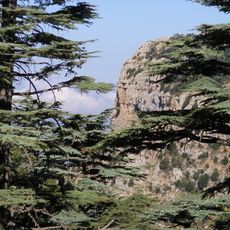
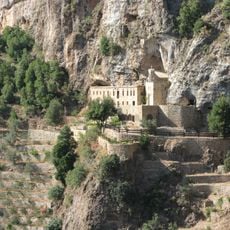
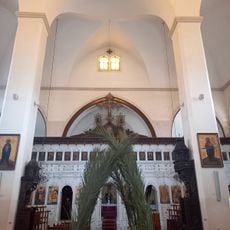
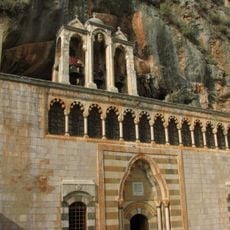
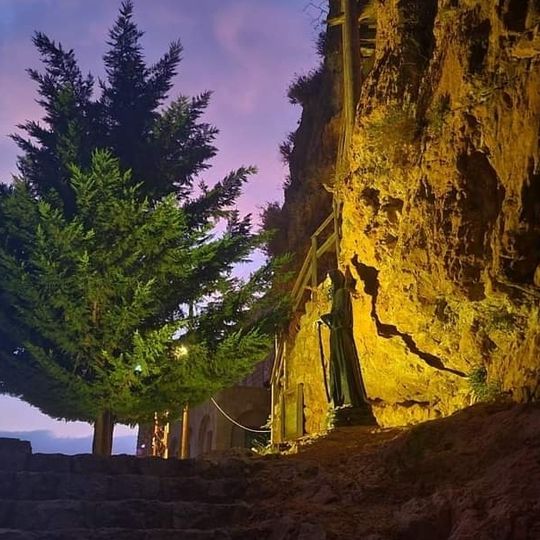
Qozhaya is a Maronite monastery in the Zgharta District of Lebanon's North Governorate, dedicated to Saint Anthony the Great. It stands in the Qozhaya valley, which joins the Qannoubine valley to form the Kadisha Valley. The complex includes a church, housing for monks and nuns, a guest house, a museum, a library, and the Grotto of Saint Anthony.
Hermits occupied the site from the early fourth century, and vestiges from the seventh century survive despite repeated looting and fires. By the twelfth century it had probably become the see of the Maronite Patriarch. In 1584 Patriarch Sergius Rizzi installed the Middle East's first printing press here; in 1610 Yuhanna Makhlouf's press issued a 260-page bilingual Psalter in Syriac and Garshuni. The Lebanese Maronite Order took over in 1708, and by the early nineteenth century more than 300 monks belonged to Qozhaya.
The name Qozhaya comes from Syriac and is usually translated as "treasure of life"; the monastery is dedicated to Saint Anthony the Great and takes its common name from the valley it stands in. The valley joins Qannoubine to the west to form the Kadisha Valley. Visitors can see the Grotto of Saint Anthony, the church, the museum, the library and the Hermitage of Mar Boula.
The monastery stands in the Qozhaya valley, part of the Kadisha Valley, in the Zgharta District of the North Governorate. Visitors reach the church, the Grotto of Saint Anthony, the museum, the library and the Hermitage of Mar Boula on foot, and the monastery runs a guest house for those who stay overnight.
In 1584, the first printing press to arrive in the Middle East was installed here, producing religious texts in both Syriac and Arabic. This machine allowed the monastery to distribute written works more widely than ever before to communities across the region.
The community of curious travelers
AroundUs brings together thousands of curated places, local tips, and hidden gems, enriched daily by 93,547 contributors worldwide.