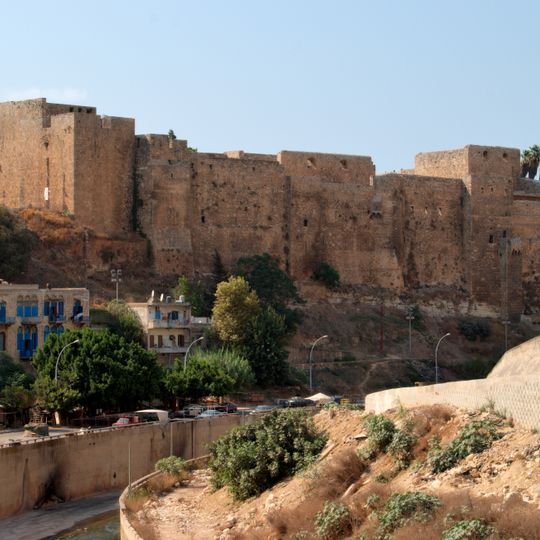
Citadel of Tripoli, Medieval castle on Mount Pilgrim in Tripoli, Lebanon
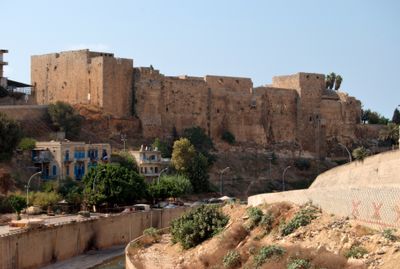
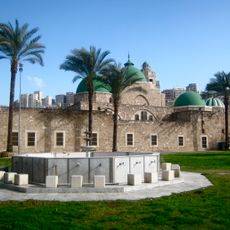
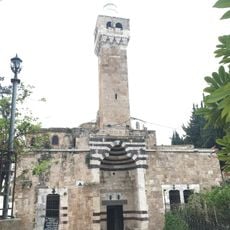
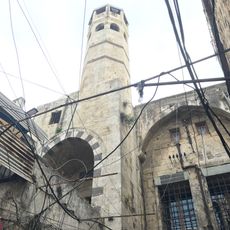
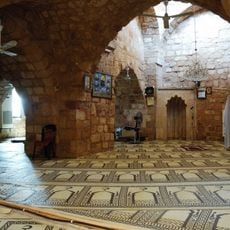
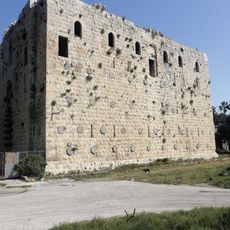
The Citadel of Tripoli is a medieval fortress built on elevated terrain with a complex layout of interconnected spaces across multiple levels. The structure features towers, defensive walls, and various chambers that were designed for both military and residential purposes.
Raymond de Saint-Gilles built the castle during the Frankish siege of Tripoli between 1102 and 1109, on a hill that had held an 11th-century Shi'i cemetery. The Mamluks burned it in 1289; it was rebuilt in 1307–1308 under governor Asandamir Kurji and restored in 1521 by Sultan Suleiman I. Ottoman governor Mustafa Agha Barbar rebuilt it extensively in the early 19th century.
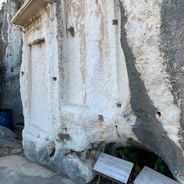
Locals call it Qal'at Sanjil, after Raymond de Saint-Gilles, who died there in 1105; the hill was earlier an 11th-century Shi'i cemetery destroyed by the Crusaders. A Mamluk decree of Sultan al-Kamil Sha'ban, issued in 1345, survives above the second entrance. The Ottomans later used the citadel as a prison.
The site is best explored on foot, allowing visitors to move through the different levels and spaces at their own pace. Sturdy footwear is recommended since pathways are uneven and some areas contain steep stairs.
The Mamluk sultan al-Kamil Sha'ban's 1345 military decree, set above the second entrance, is the best preserved of those posted in Aleppo, Tripoli and Krak des Chevaliers. It gave up the sultan's claim to a dead soldier's accrued bonus pay.
The community of curious travelers
AroundUs brings together thousands of curated places, local tips, and hidden gems, enriched daily by 93,516 contributors worldwide.