Lovćen, Mountain and national park in southwestern Montenegro
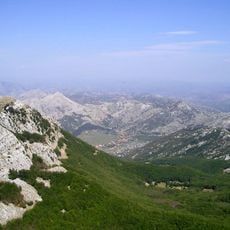
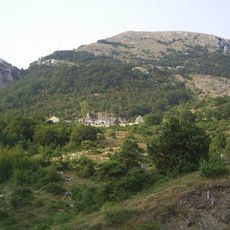
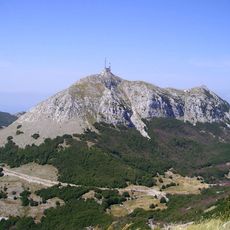
Lovćen is a mountain in southwestern Montenegro whose two peaks, Štirovnik at 1,749 m and Jezerski vrh at 1,657 m, rise from forested slopes to bare limestone with fissures, pits and deep depressions. On Jezerski vrh stands the Njegoš Mausoleum, a small dark structure with a thin mast above it. The national park covers 62.20 km² of the central massif.
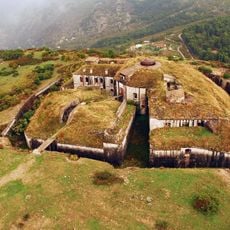
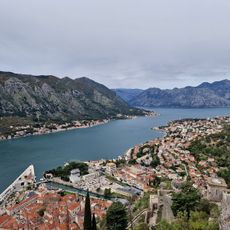
On 8 August 1914, Nicholas I of Montenegro ordered his army to attack the Austro-Hungarian naval base in the Bay of Kotor; Montenegrin guns fired from batteries placed across the border from Mount Lovćen. French naval guns under Capitaine de frégate Grellier were hauled inland and set up on the mountain's south side, opening fire on 19 October. The battleship SMS Radetzky silenced the Allied batteries by 26 October, and in January 1916 Austro-Hungarian troops took the Lovćen Pass.
Njegoš chose Jezerski vrh for his burial and built a small chapel there, where he was later interred. The chapel was demolished during the Austro-Hungarian occupation in World War I and rebuilt in the 1920s under King Alexander. In 1970 the communist authorities began preparations to replace it with Ivan Meštrović's mausoleum, opened in 1971, prompting mass protests in Yugoslavia; Meštrović never visited Lovćen.
The mountain is accessible via hiking trails that branch from different starting points and vary in difficulty. Visitors should prepare for changing weather conditions, especially during colder months, and bring appropriate gear for outdoor activities.
The name Crna Gora was first recorded in a 1276 charter issued by Stefan Milutin, and it was applied to several regions of medieval Serbian lands, including Skopska Crna Gora and Užička Crna Gora, before it came to denote this mountain and the country.
The community of curious travelers
AroundUs brings together thousands of curated places, local tips, and hidden gems, enriched daily by 94,687 contributors worldwide.