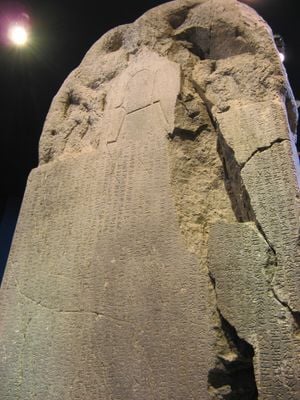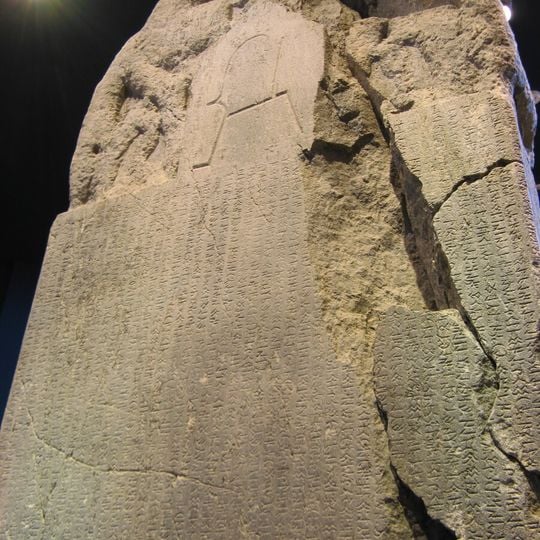
Kül Tigin inscription, Runic inscription in the Orkhon Valley, Mongolia.
The Kül Tigin inscription is a four-sided stone stele of grey granite, 3.75 m tall, with carved Old Turkic runes on three faces and a Chinese text on the west face. A diagonal crack splits its right side, and the top is broken. It stands on a granite block cut from an altar stone in 1911.
Bilge Khagan raised the monument in 732 for his brother Kül Tigin, who died on 27 February 731; a funeral ceremony was held on 1 November 731. The Tang emperor Xuan Zong sent envoys and six craftsmen, and wrote a Chinese text for the west face. The stele was probably erected on 21 August 732.
The Turkic text is written in the voice of Bilge Khagan, who addresses the Göktürk nobles and warns them against the Tang, blamed for the khaganate's decline; the Chinese face, composed by Emperor Xuan Zong, speaks of friendship between the two courts. The scribe was Yollug Tigin, Bilge Khagan's son and Kül Tigin's nephew.
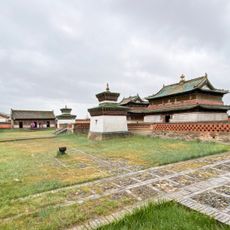
The inscription stands in the Orkhon Valley, about 40 km north of the ruins of Karabalghasun and near the Erdene Zuu Monastery, not at Ögii Lake. It shares the site with the Bilge Khagan inscription. The stone was reset in 1911 on a granite block cut from an altar stone after its original base broke.
The stele no longer stands on its original turtle base: that base broke, and in 1911 the stone was set on a granite block cut from an altar. Its Chinese face was written by Emperor Xuan Zong of Tang, who also sent six craftsmen to depict Kül Tigin's deeds.
The community of curious travelers
AroundUs brings together thousands of curated places, local tips, and hidden gems, enriched daily by 94,645 contributors worldwide.