Dzivgis Cave Fortress, Medieval cave fortress in North Ossetia, Russia
Dzivgis Cave Fortress is a castle built into multiple cave chambers within rock formations along a mountainside, creating a multi-level defensive structure that stretches several hundred meters. The design integrates natural stone features with constructed fortifications to form a unified defensive system.
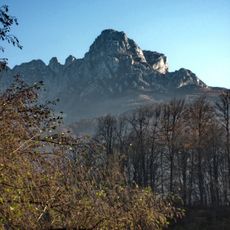
The six cave chambers were closed off with stone walls set in strong mortar, using natural hollows that water and wind had carved into the limestone of Mount Kariu-khokh. A local tradition holds that in the 16th century the fortifications blocked the road into the Kurtatinsky gorge against Shah Abbas I, whose troops withdrew. In 1912 the esaúl F. S. Pankratov (pseudonym Grebenets) visited and left written notes.
The name Dzivgis comes from the Ossetian Dzyvgysy, and the site is known locally as Dzyvgysy fidar. The six cave chambers were closed with stone walls set in strong mortar, and some could hold at least a hundred people. A local tradition holds that in the 16th century the fortifications blocked the Persian shah Abbas I from entering the Kurtatinsky gorge.
Visiting requires sturdy footwear and reasonable physical fitness, as stairs and steep paths connect the various levels of the site. A local guide can help you find hidden chambers and passages more easily.
The six cave chambers were closed off with stone walls set in strong mortar, and the largest could hold at least a hundred people. The main fortification stands on the lowest level, reached by a stone stairway; the others were entered from neighbouring chambers along paths cut in the rock and by hanging ladders pulled up when needed. One cave ends in a deep pocket that stops dead at 65 metres.
The community of curious travelers
AroundUs brings together thousands of curated places, local tips, and hidden gems, enriched daily by 93,364 contributors worldwide.