Storglaciären, Polythermal valley glacier in Kiruna Municipality, Sweden
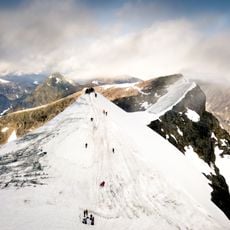
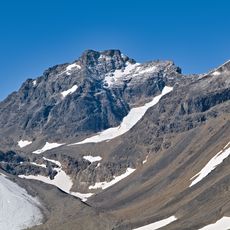
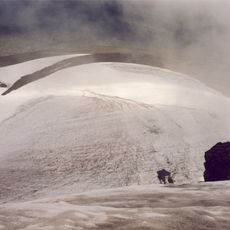
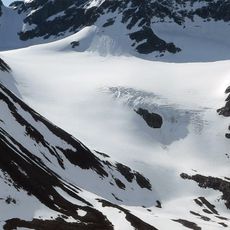
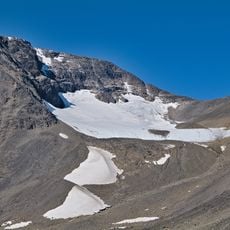
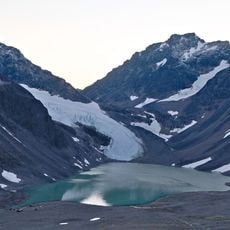
Storglaciären is a large valley glacier located in northern Sweden's mountain region, characterized by visible ice formations and deep crevasse systems. The ice field displays distinct zones with varying thickness and movement patterns that create different surface features across its expanse.
Fredrik Svenonius documented and photographed Storglaciären in 1886. The glacier advanced strongly in the 19th century and reached its greatest modern extent around 1910, when Svenonius photographed it again; since then the front has retreated about 500 metres. Mass-balance measurements began in 1946, the world's longest continuous series of its kind, and from 1946 to 2006 the glacier had a cumulative balance of -17 m.
The glacier's name means "The Great Glacier" in Swedish. Since 1946 it has been the main study object of Stockholm University's Tarfala research station, founded in the 1940s, and its mass-balance series is the longest in the world. The long research history makes it one of the most surveyed glaciers globally.
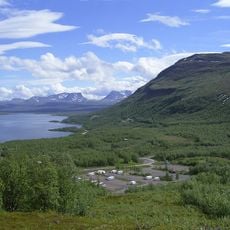
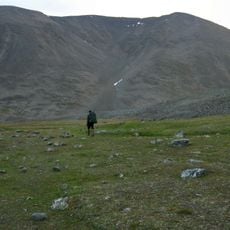
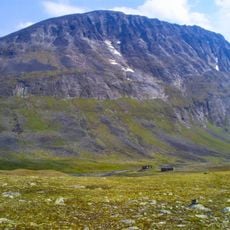
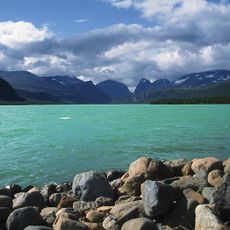
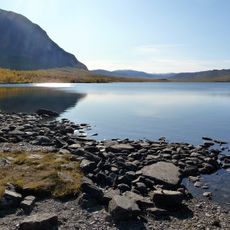
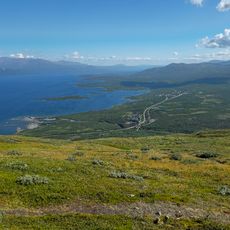
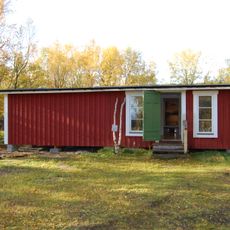
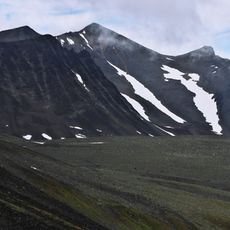
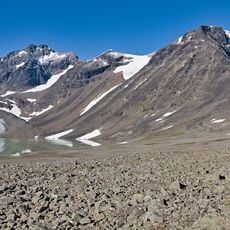
Storglaciären lies in Tarfala Valley on the eastern slope of Kebnekaise, reached on foot from the Tarfala research station operated by Stockholm University. The station sits in the Kebnekaise region of northern Sweden and serves as the base for work on the glacier. Access is by mountain trail, so plan for walking and for conditions that change with the season.
The ice contains two distinct temperature zones, with a frozen upper section and a lower portion near the melting point. This creates seasonal water flows that stream from the glacier during warmer periods.
The community of curious travelers
AroundUs brings together thousands of curated places, local tips, and hidden gems, enriched daily by 93,620 contributors worldwide.