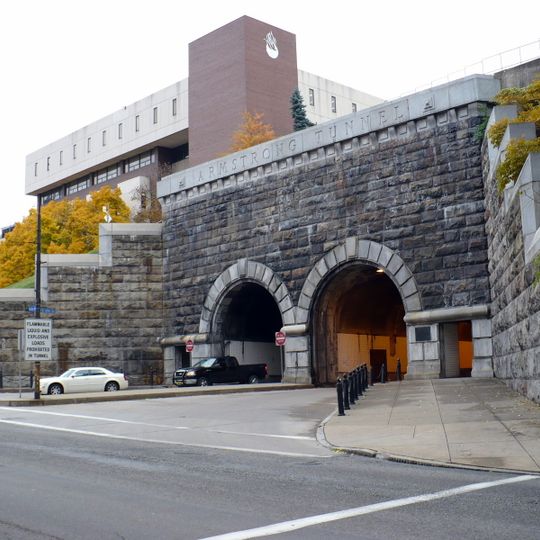
Armstrong Tunnel, road tunnel in Pittsburgh
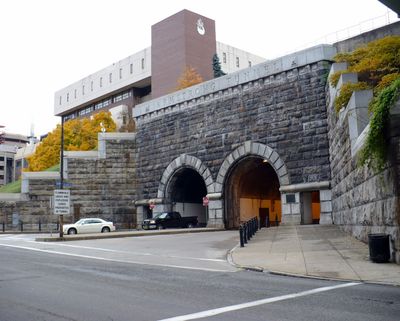
Armstrong Tunnel is a road tunnel in Pittsburgh, Pennsylvania that connects two streets with a passageway running about 1,000 feet long. The interior walls are lined with white ceramic tiles, while the stone portals at each end are made of sandstone trimmed with granite, creating a sturdy and classic appearance.
The tunnel was constructed around 1927 using a horseshoe-shaped design bored through solid rock. It was part of Pittsburgh's major infrastructure growth in the early 1900s, when the city built many bridges and tunnels to handle increasing traffic and connect expanding neighborhoods.
The tunnel is named after Joseph G. Armstrong, a Director of Public Works and later Mayor who shaped Pittsburgh's infrastructure. For locals, it remains an everyday shortcut that connects neighborhoods and keeps the city moving beneath busy streets.
The tunnel is walkable for pedestrians and has a protected sidewalk running along the western side, secured by barriers. The lighting inside allows safe passage day and night, and the level floor makes crossing straightforward for most visitors.
The tunnel features an interesting architectural detail: a roughly 45-degree bend partway through, likely due to geological or property constraints of its time. This curve distinguishes it from typical straight underpasses and makes it a notable example of how engineers adapted to real-world conditions.
The community of curious travelers
AroundUs brings together thousands of curated places, local tips, and hidden gems, enriched daily by 91,256 contributors worldwide.