See the monuments around you in AROpen chests in the app
Around Us is built for your phone — point your camera at the streets and discover the monuments and places around you in augmented reality.Around Us is built for your phone — chests unlock when you walk, explore and capture nearby places.
Madrid brings together royal history with everyday city life. The city holds palaces from the 18th century, wide parks, and art collections built up over generations. The Royal Palace sits on the site of a medieval fortress, while Retiro Park was once royal grounds before opening to the public. The Prado Museum shows European paintings from several centuries, and the Templo de Debod is an Egyptian temple brought to Madrid in the 1970s.
The city's squares reflect different periods. Plaza Mayor from the 17th century hosted public events, while Puerta del Sol marks the geographic center of Spain. Gran Via emerged in the early 20th century as a modern thoroughfare. Markets like San Miguel and the Sunday flea market at El Rastro reveal daily rhythms. Neighborhoods such as La Latina keep narrow streets and traditional taverns, while parks like Casa de Campo offer wide green space on the city edge.
Madrid brings together royal history with everyday city life. The city holds palaces from the 18th century, wide parks, and art collections built up over generations. The Royal Palace sits on the site of a medieval fortress, while Retiro Park was once royal grounds before opening to the public. The Prado Museum shows European paintings from several centuries, and the Templo de Debod is an Egyptian temple brought to Madrid in the 1970s.
The city's squares reflect different periods. Plaza Mayor from the 17th century hosted public events, while Puerta del Sol marks the geographic center of Spain. Gran Via emerged in the early 20th century as a modern thoroughfare. Markets like San Miguel and the Sunday flea market at El Rastro reveal daily rhythms. Neighborhoods such as La Latina keep narrow streets and traditional taverns, while parks like Casa de Campo offer wide green space on the city edge.
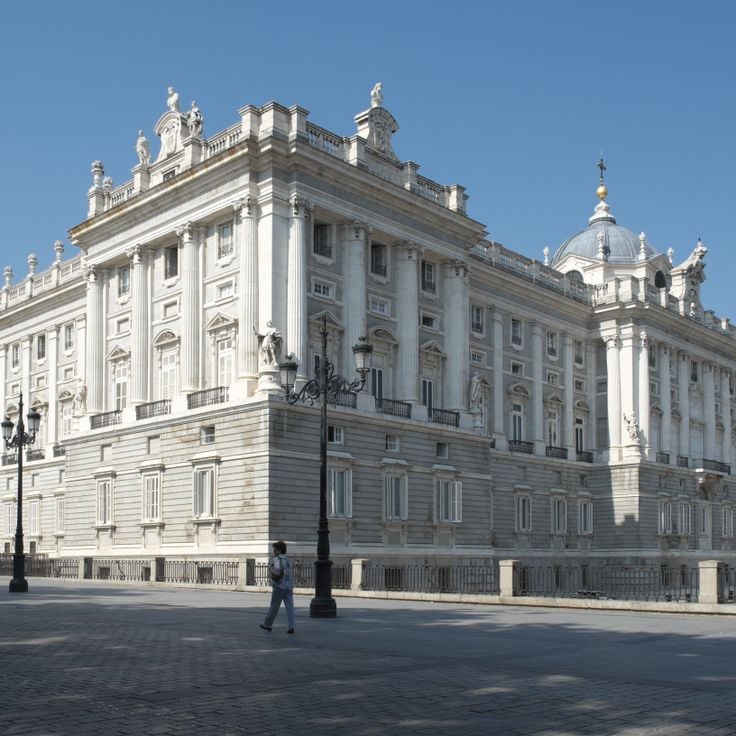
The Royal Palace is the official residence of Spanish monarchs and a central element of Madrid's cultural heritage. This palace houses historical weapons, tapestries, porcelain and artworks from different centuries. The rooms show the history of the Spanish monarchy through their collections and the architecture of the building. Visitors walk through halls that were once used for royal ceremonies and daily life at court.
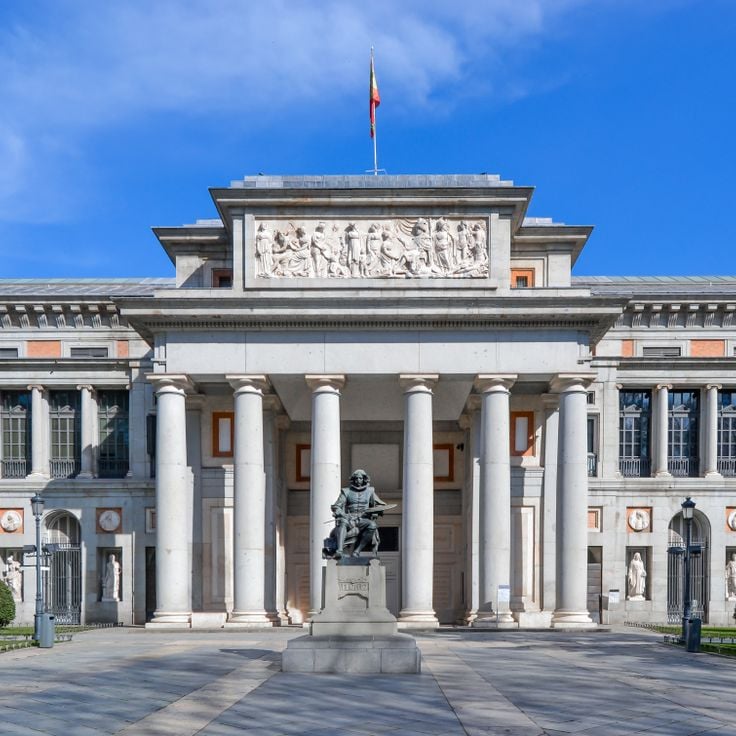
This museum brings together European paintings from the 12th to the 20th century and holds more than 7000 works. The collection shows Spanish, Flemish and Italian masters in rooms organized by period and school. The halls walk visitors through royal collections assembled over centuries. Long galleries display works by Velázquez, Goya and Bosch. The early 19th-century building stands in central Madrid and ranks among the leading art museums in Europe. The exhibition rooms present paintings that once belonged to Spanish rulers.
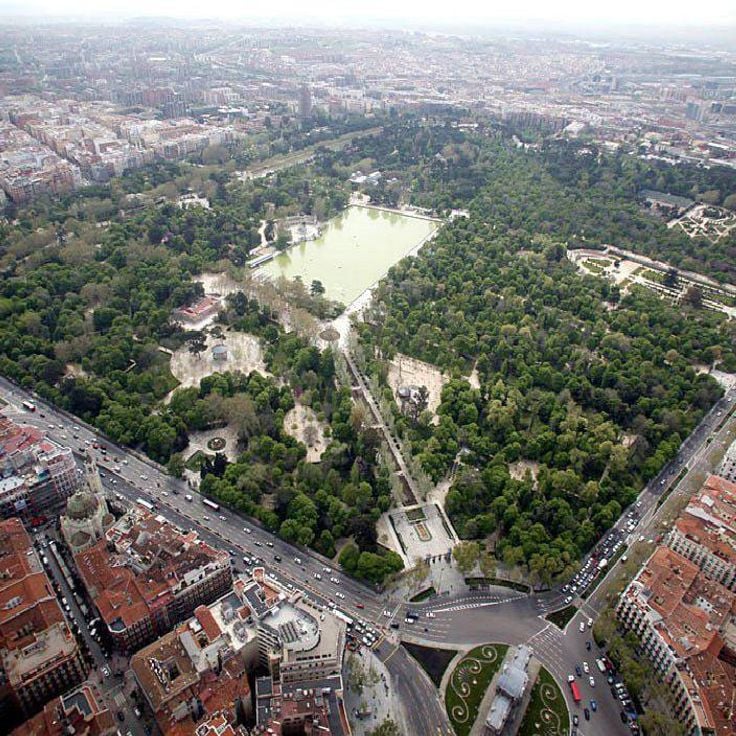
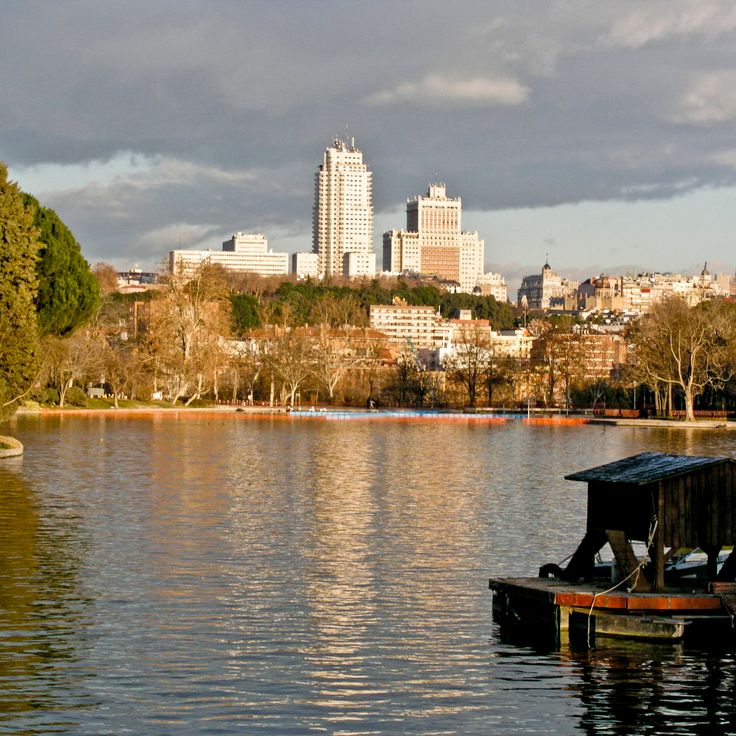
This park lies at the center of Madrid and provides a place where residents and travelers come to rest beneath tall trees planted centuries ago. The boating lake draws families on weekends, while the Crystal Palace stands as a glass and iron structure used for exhibitions. The botanical garden holds a wide range of plants from different climates, organized in paths and greenhouses. Throughout the grounds, paths lead past fountains and open lawns where people sit to read or talk.
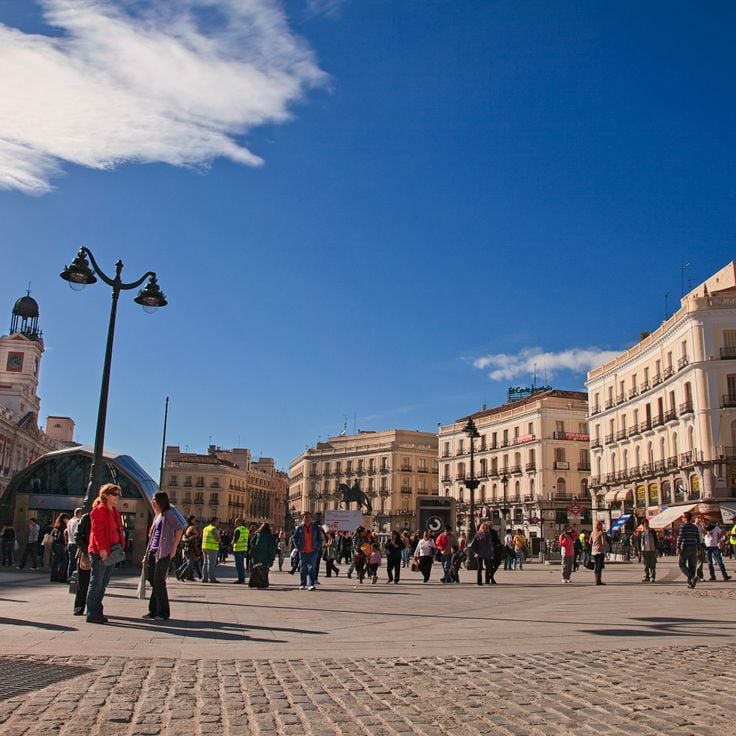
This central square in Madrid holds familiar symbols of the city. The bear statue stands at the edge, recalling the coat of arms. The Zero Kilometer stone marks the starting point for all Spanish roads. The clock tower belongs to the Casa de Correos and rings in the new year. People from Madrid gather here to hear the twelve chimes and eat twelve grapes. During the day, the square fills with passersby moving between metro entrances and street cafés. Roads lead in all directions toward shops and other neighborhoods.
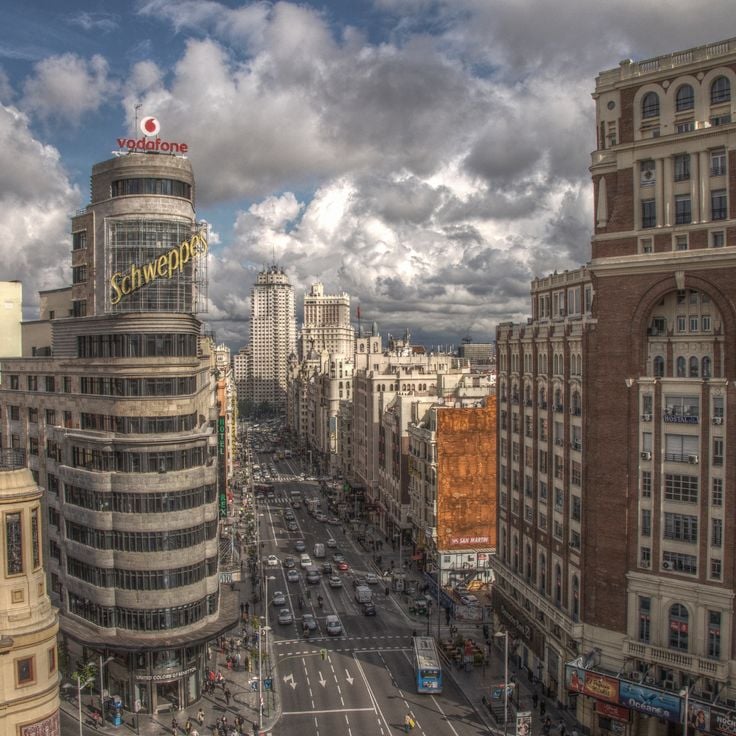
This wide street from the 20th century connects eastern and western Madrid. Gran Vía is lined with large stores and theaters along its stretch. As a major artery of the Spanish capital, it shows the urban development of the early twentieth century and belongs to the busy commercial areas of the city.
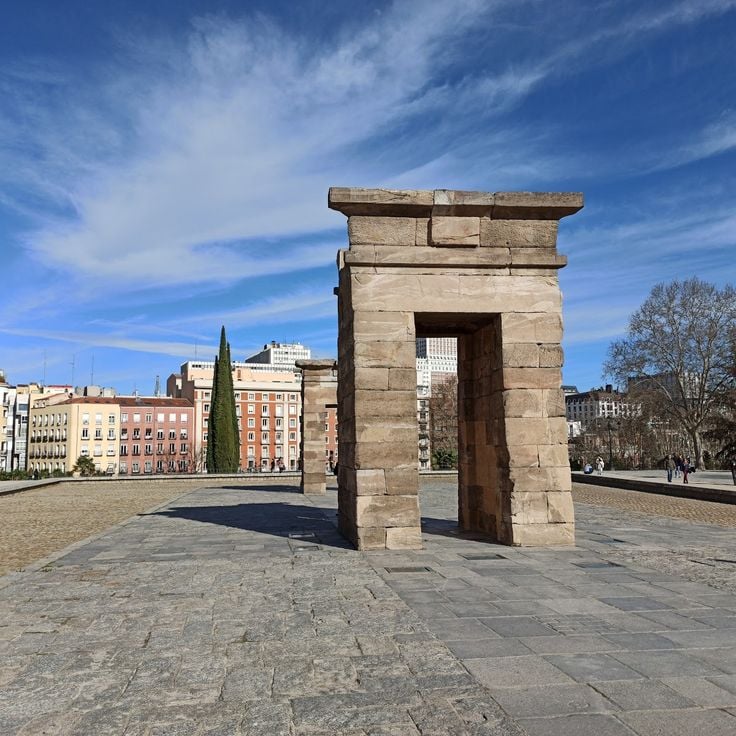
This temple, originally built in Egypt during the 2nd century BCE, now stands in Madrid as one of the oldest structures in the city. The Egyptian government gifted the monument to Spain in 1968 to save it from the rising waters of the Aswan Dam. Workers dismantled the stone blocks, shipped them across the Mediterranean, and reassembled them in Parque del Oeste. The Templo de Debod connects the Spanish capital to the history of the Nile Valley, offering visitors a glimpse into ancient Egyptian architecture and religious practice far from its original riverside location.
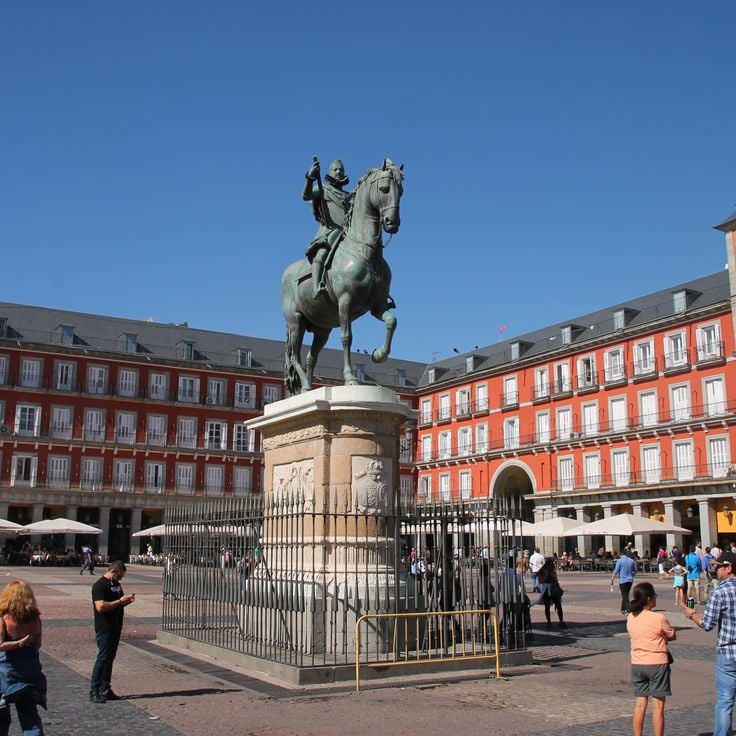
This rectangular square from the 17th century forms the heart of Madrid. The Plaza Mayor stretches across an enclosed space with arcades running along all sides, housing restaurants and shops beneath their arches. The Casa de la Panadería dominates the north side with its painted facade showing mythological scenes. The square served as a stage for markets, bullfights, and royal ceremonies over the centuries. Today, locals and travelers gather here under the arches, on the terraces, or across the open cobblestone surface. The uniform architecture with its balconies and turrets creates an enclosed space, separate from the activity of the surrounding streets.
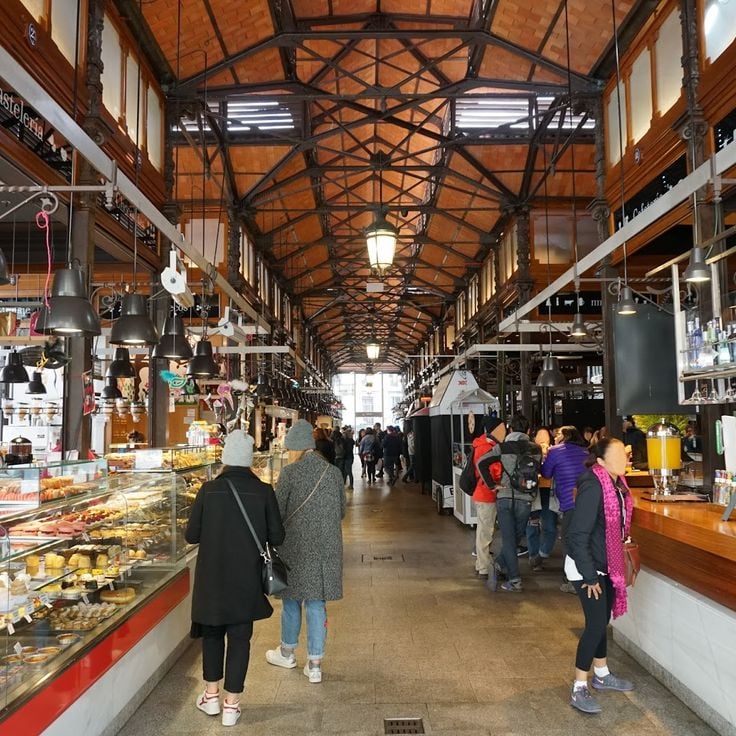
This market opened in 1916 in a building with glass walls and offers Spanish specialties and fresh products. The hall stands near Plaza Mayor and serves as a meeting point for locals and visitors who come to eat and shop. The iron structure and transparent roof let in plenty of light. Stalls sell cheese, cured meats, olives, seafood, pastries, and wine. The space fills with people, especially in the evening and on weekends.
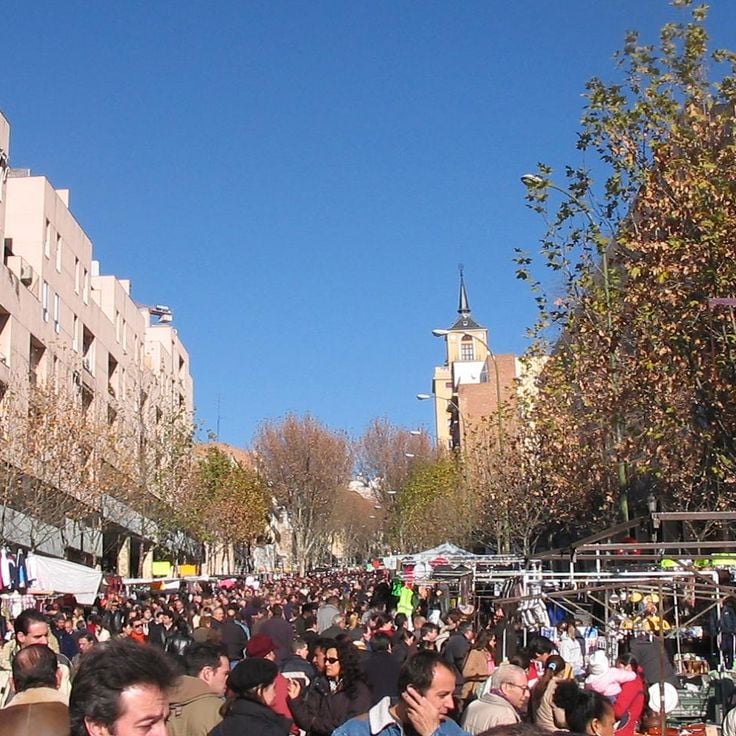
This Sunday market has been running since the 15th century and spreads through the streets of La Latina, gathering over 1000 stalls with antiques, crafts, books, and clothing. Locals and visitors walk among the stands, browsing old furniture, records, posters, and handmade items. The mood is lively, especially in the morning hours when vendors set up their goods and shoppers look for special pieces. After the walk, many gather at nearby bars for a drink or tapas.
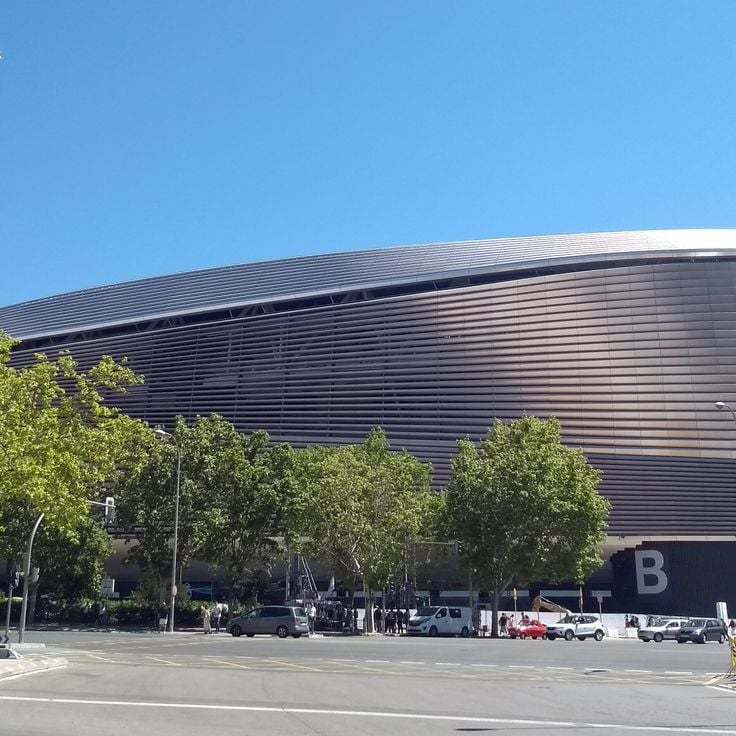
This football stadium in the Chamartín district has been home to Real Madrid since 1947. The stands hold over 80,000 spectators. The lower floors house a museum displaying the club's history: trophies, jerseys from past players, and photographs from different decades. On match days the stadium fills with fans who chant and wave scarves. On quiet days visitors can tour the locker rooms, the players' tunnel, and the benches at the edge of the pitch. The white exterior walls and tall light towers shape the skyline of this part of Madrid.
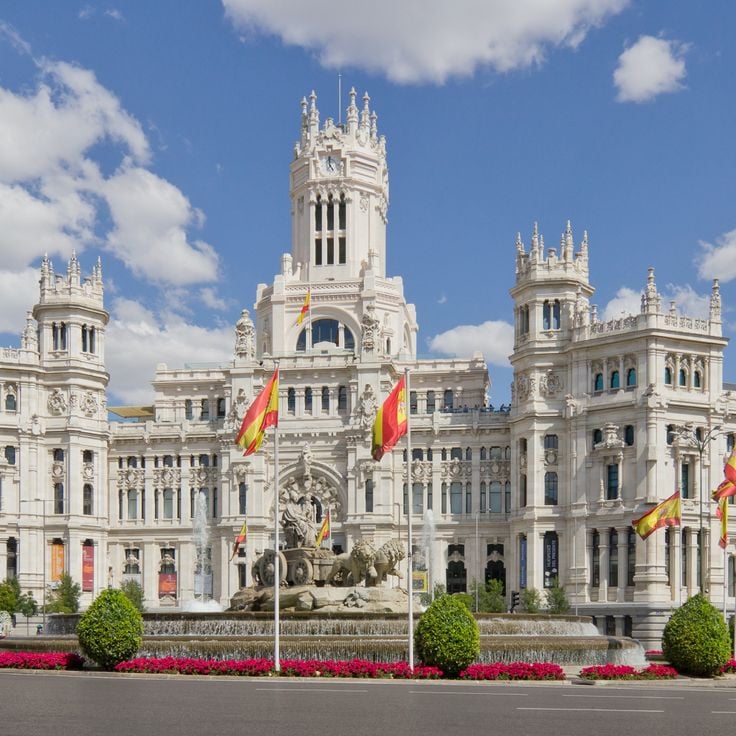
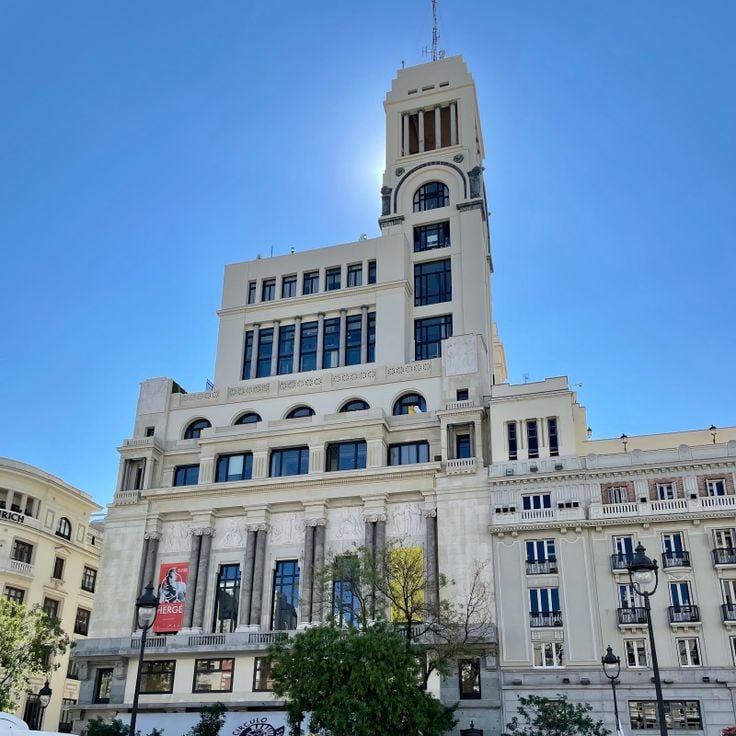
This palace began as the main post office and is now a cultural center with an observation deck and restaurants. The building from 1919 shows classical architecture with columns and a white facade. Inside, rotating exhibitions take place, and visitors can ride up to the terrace to see Madrid from above. The palace sits opposite the fountain at the square of the same name, one of the busiest crossroads in the city, where wide avenues meet. The ground floor holds cafés and spaces for cultural events that are open to the public.
This park is the largest public park in Madrid, covering a large area west of the city center. The grounds were once a royal hunting estate before opening to the public. The park holds a lake where you can rent rowboats, along with a zoo and an amusement park. Many walking trails wind through pine forests and open spaces where locals jog, cycle, or simply take a walk. On weekends, families come here to enjoy nature without leaving the city.
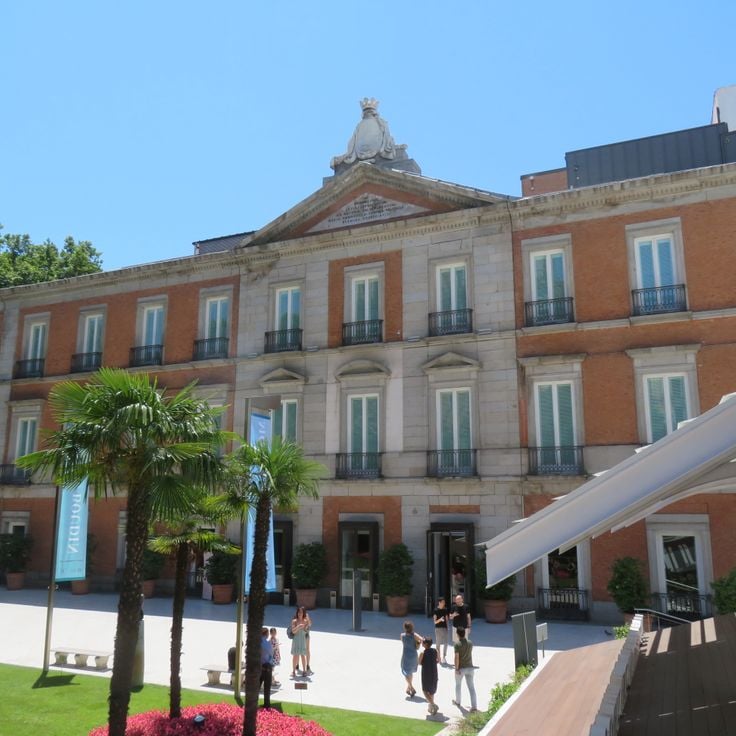
This museum sits along Paseo del Prado and presents paintings from different periods, ranging from medieval panels to twentieth-century works. The collection covers European and American art, offering an overview of how painting developed over the centuries. Rooms are arranged in chronological order, letting visitors walk through the history of art. The museum complements the other major galleries in Madrid, providing a broad view of Western artistic traditions.
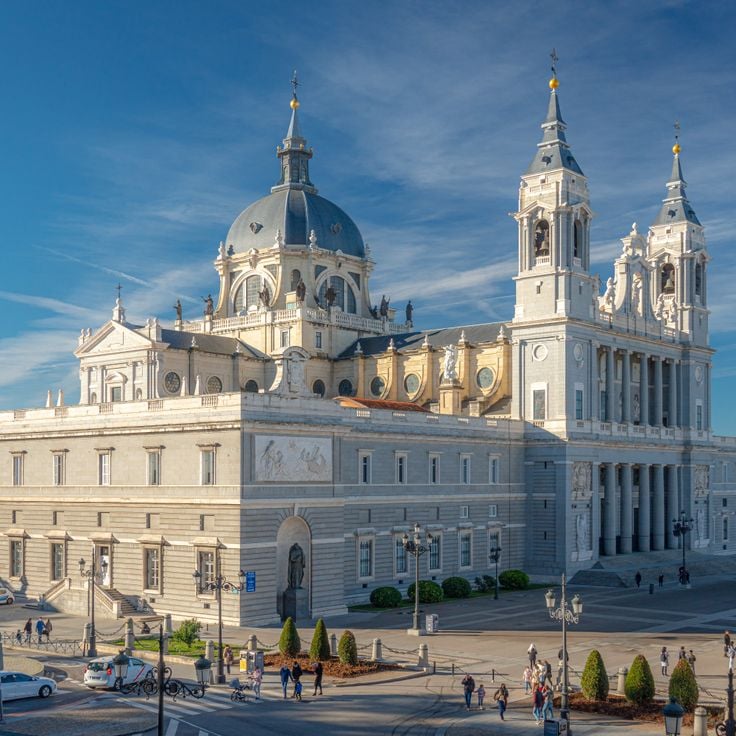
This cathedral stands in the historic center of Madrid, next to the Royal Palace. Construction began in the late 19th century and was completed only in 1993. The Almudena Cathedral combines neoclassical and neo-Gothic elements in its architecture. Inside, you will find modern stained glass windows and a bright atmosphere that differs from older European cathedrals. This Catholic place of worship serves as the seat of the Archdiocese of Madrid and represents an important part of the Spanish capital's cultural heritage.
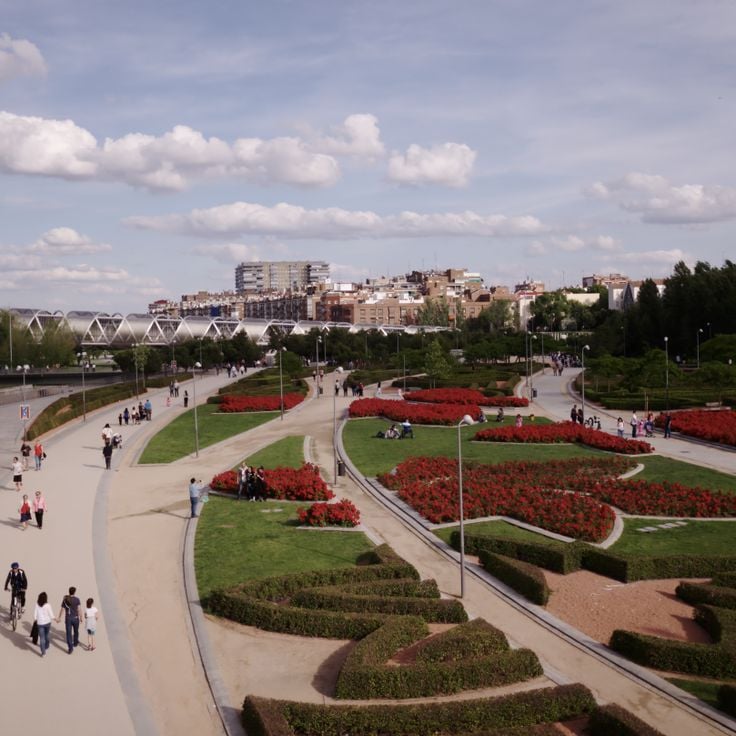
This park follows the Manzanares River through the city, offering expansive recreation areas in the heart of Madrid. The grounds draw families with children who use the playgrounds here. On weekends, you see cyclists on the paths along the water and joggers who prefer the shaded sections. Open spaces serve for events and gatherings, while bridges connect historic and modern architecture. Madrid Rio Park shows how the city brings together nature and urban life.
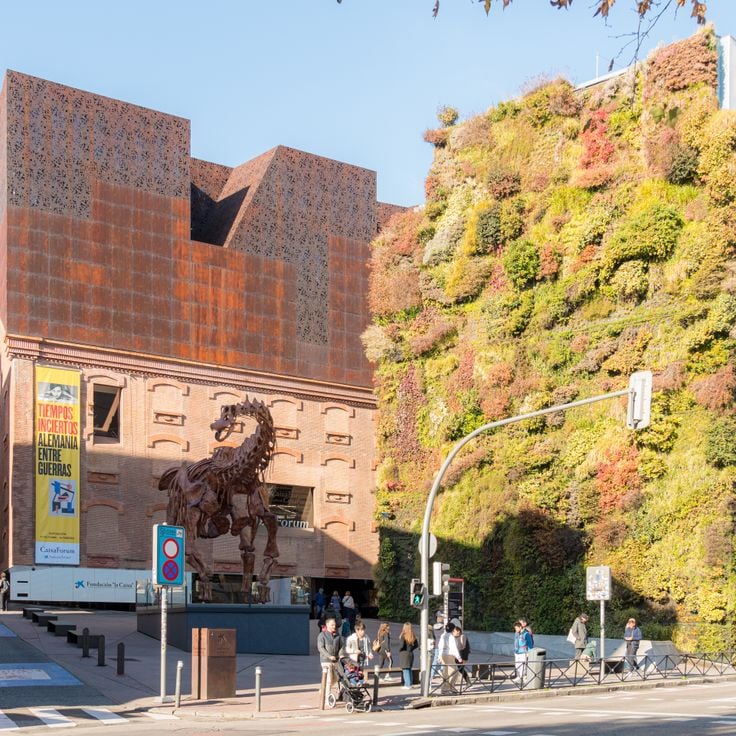
This cultural center on Paseo del Prado hosts rotating art exhibitions and performances in a modern building. CaixaForum Madrid complements the city's museum scene with contemporary and historical shows. The vertical garden on the facade offers a contrast to the classical architecture nearby. Entry is often free or reduced, making art accessible to visitors and residents.
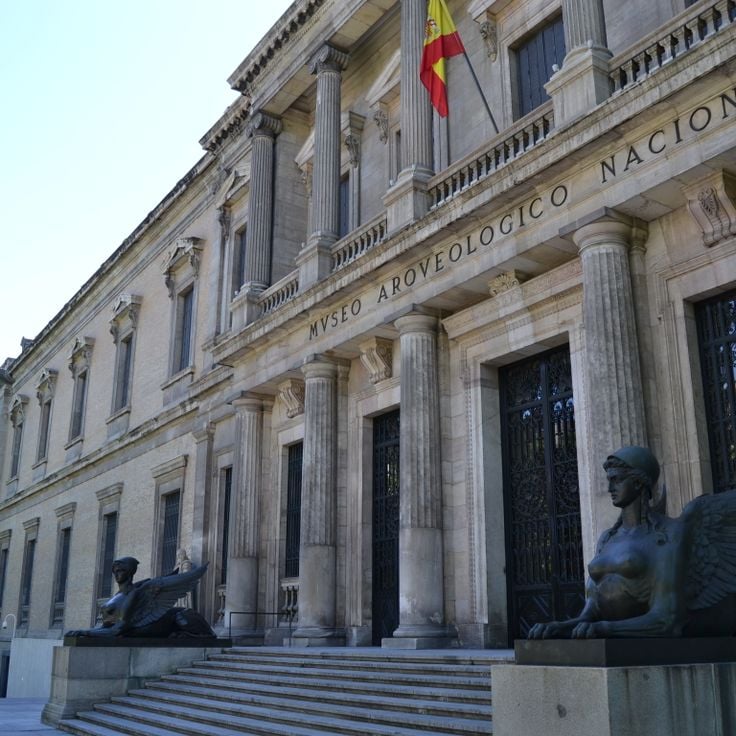
This museum displays finds from across the Iberian Peninsula and beyond. The collections document prehistoric settlements, Roman provinces, Visigothic kingdoms, and Moorish periods. You will find pottery, sculptures, coins, and jewelry from different eras. The rooms are arranged by time period, so you walk through thousands of years of Spanish history. The building itself dates from the 19th century and stands in the Salamanca neighborhood, next to the National Library. For travelers, the National Archaeological Museum offers a quiet place to understand the cultural heritage of Madrid and all of Spain.
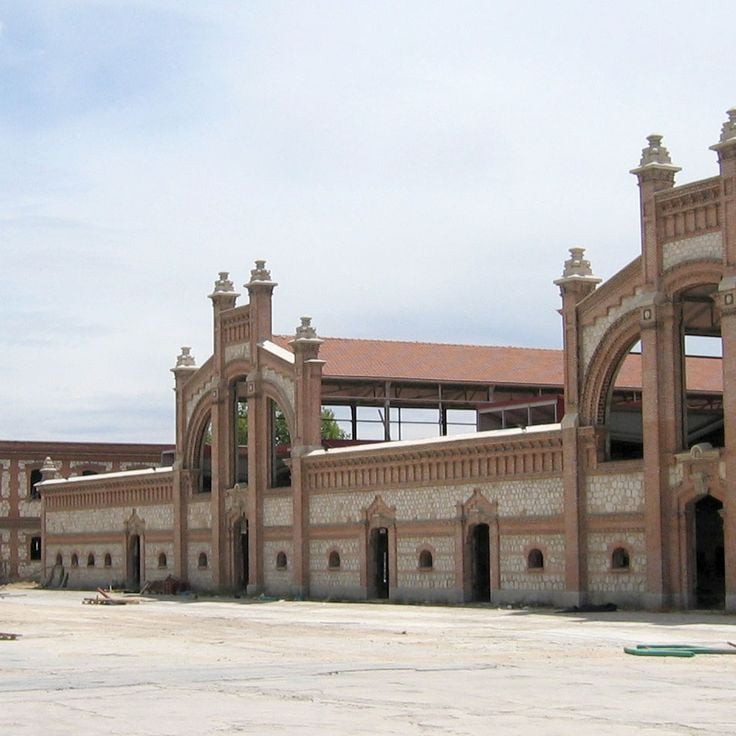
This arts complex occupies the former municipal slaughterhouse built during the 1920s. After decades of industrial use, the brick halls were gradually converted starting in 2006 into studios, theaters and exhibition spaces. You enter through wide gates and walk among tall masonry walls that still carry traces of their original purpose. Inside the halls, dance and theater companies rehearse, film screenings take place in converted rooms, and artists work on projects in the workshops. The place draws people interested in contemporary art, those seeking gatherings in the courtyards, or performances in the evening. The mood is quiet and spacious, with plenty of room between buildings. Small cafés and outdoor seating invite you to linger after exploring. Matadero Madrid connects the historical heritage of the city with an active program that supports experimental forms as much as accessible formats for a wide audience. The complex remains open to the public and continues to shape the cultural life of the district.
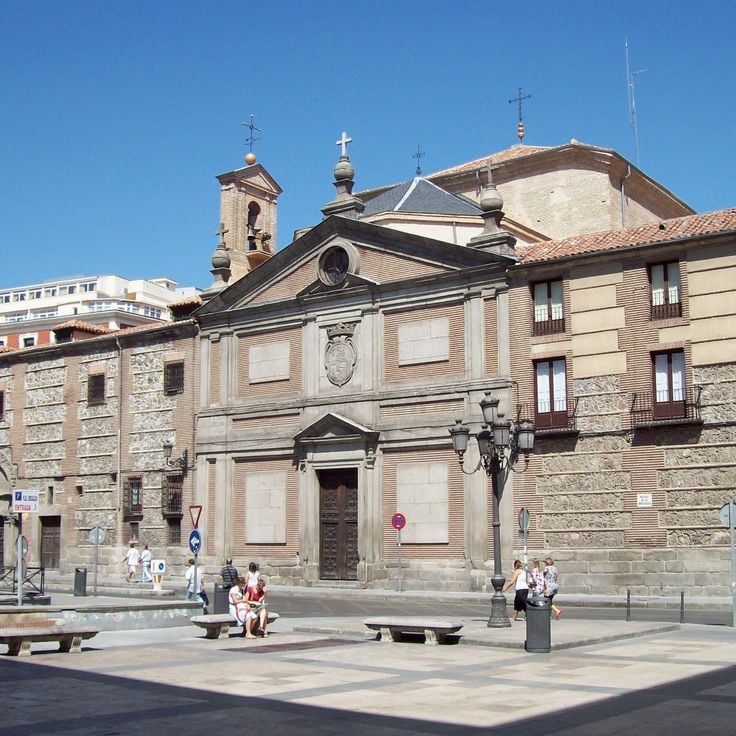
This convent from the 16th century was founded as a royal retreat and now houses a significant art collection. The rooms display religious paintings, tapestries, and sculptures gathered over centuries by the nuns who lived here. The cloister opens onto a quiet courtyard, while the chapels feature Baroque altars and gilded details. Visitors walk through corridors with tiled walls and wooden ceilings, past portraits of noble women who entered monastic life. The feeling remains contemplative, as the building is still home to a religious community.
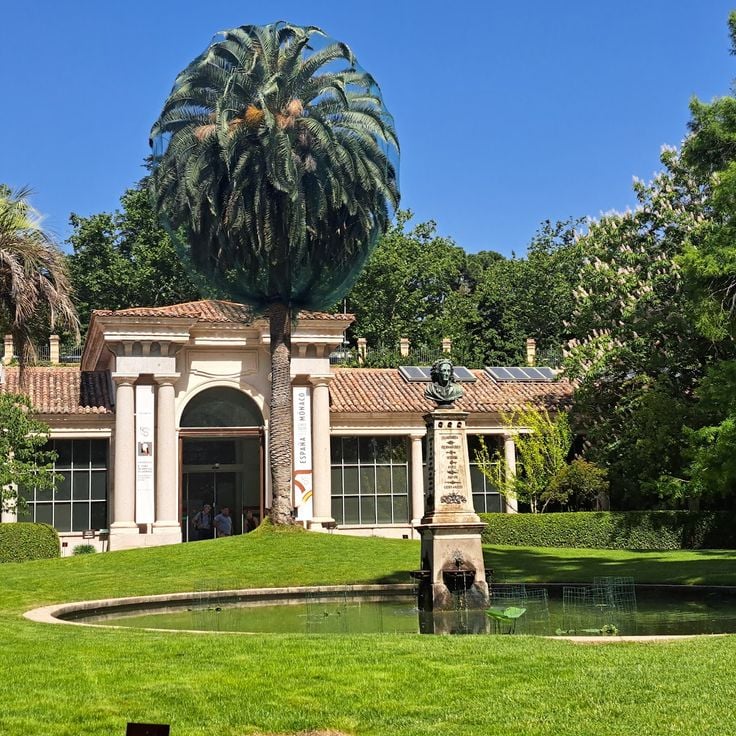
This botanical garden dates back to the 18th century and sits right next to the Prado Museum. The grounds display several thousand plant species from different climate zones. Visitors find shaded paths between greenhouse pavilions, organized beds, and old trees. The garden forms part of the historic green spaces in central Madrid and was originally created for scientific research.
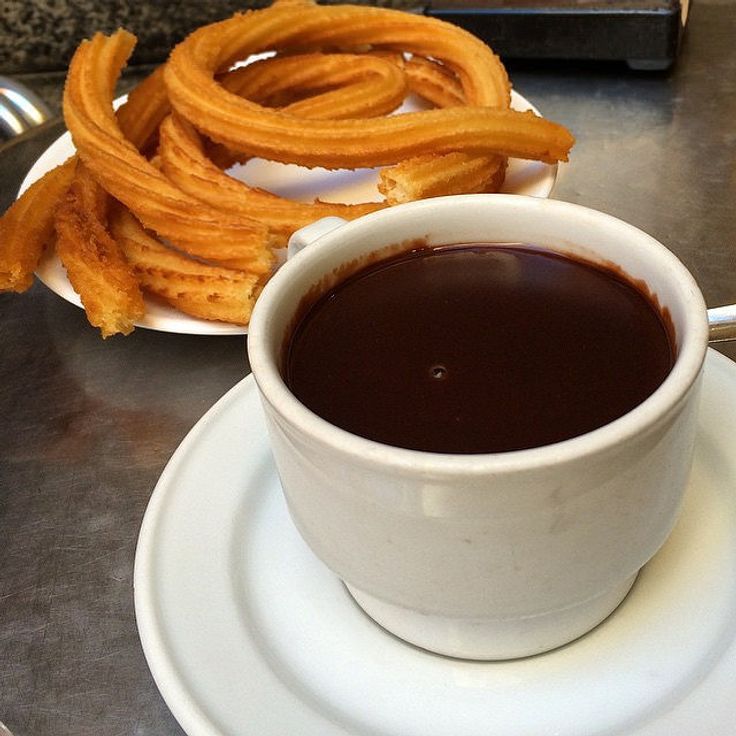
This historic confectionery has served Spanish churros with hot chocolate in a marble-walled café since 1894. The Chocolatería San Ginés sits in the center of Madrid and draws both locals and visitors who stop by after an evening out or early in the morning. The thick, creamy chocolate comes in cups for dipping the crispy churros, which are fried fresh throughout the day and night.
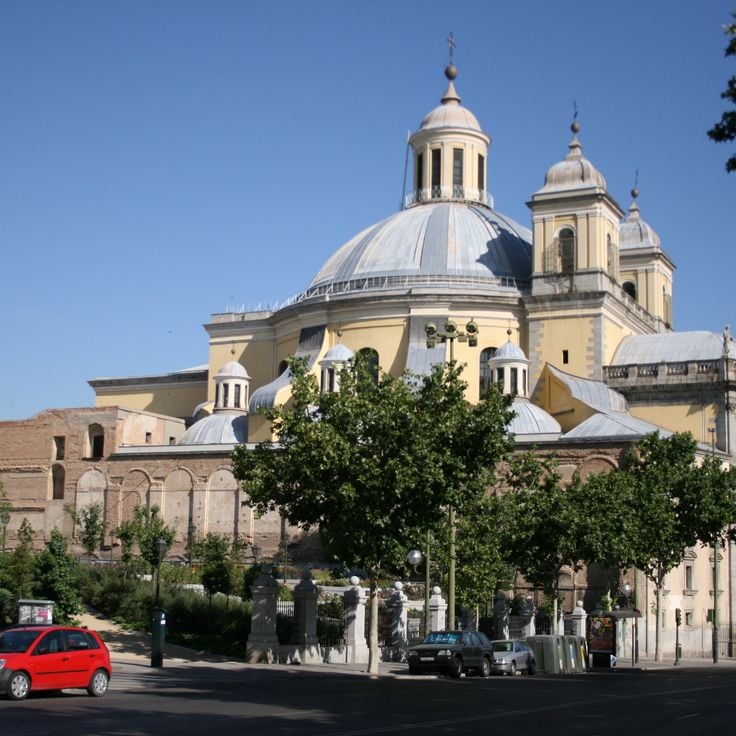
This basilica dates back to the 18th century and rises above the La Latina neighborhood with a 33-meter (108-foot) wide dome. Inside, you will find frescoes by Francisco Goya that count among Madrid's cultural treasures. The circular building with its neoclassical facade shapes the area and stands as one of the important religious structures in the Spanish capital.
This cultural center in Madrid focuses on contemporary art, theater, and film. It offers several exhibition spaces, a cinema, and a rooftop terrace where you can look out over the rooftops of the Spanish capital. The building dates back to the early 20th century and today serves as a meeting point for artists and visitors interested in art and culture.
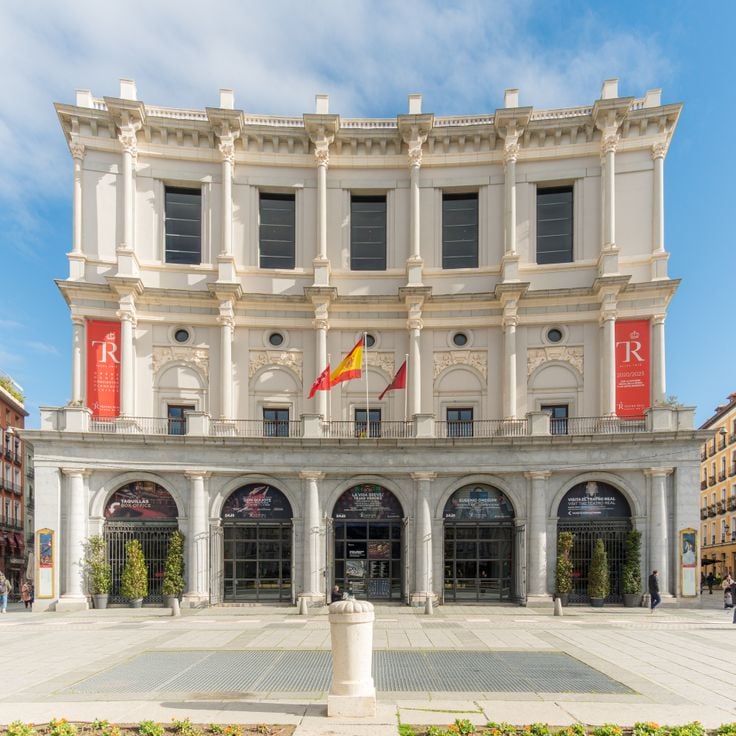
This theater stands opposite the Royal Palace and has been one of Spain's leading opera venues since 1850. The auditorium seats 1746 people and hosts opera and ballet performances at international level. The building combines classical architecture with modern stage technology. The theater plays a central role in Madrid's cultural life and attracts visitors from around the world. Before evening performances, people gather on the plaza surrounding the building.
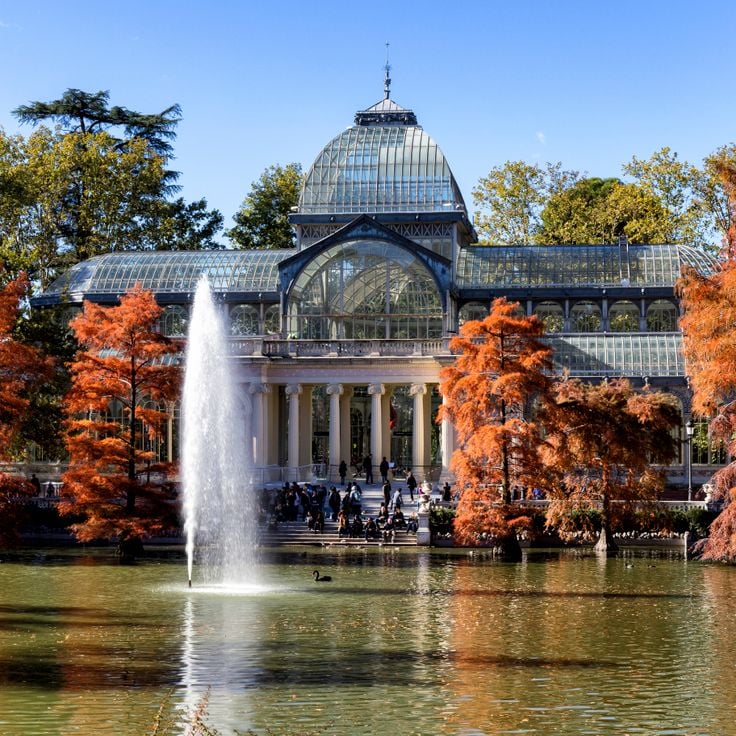
This glass and iron pavilion stands within Retiro Park and belongs to the notable 19th-century structures in Madrid. The transparent construction allows light to stream through the entire building, creating a bright, open space. Originally designed as a greenhouse for exotic plants, the Crystal Palace now serves as an exhibition venue for contemporary art. Visitors can walk through the tall rooms and observe both the architecture and the rotating art installations. The location by the artificial lake gives the building a quiet setting.
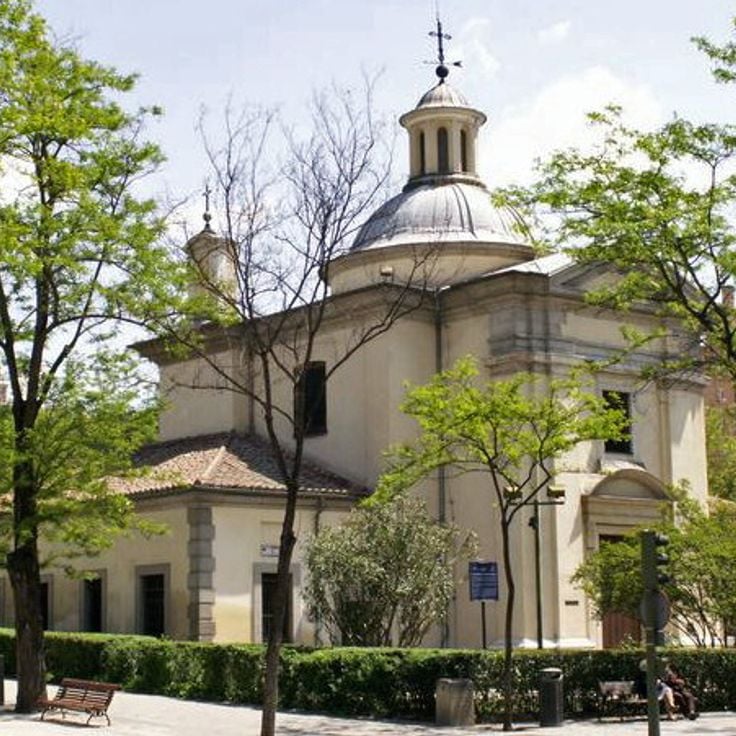
This chapel holds ceiling frescoes by Francisco de Goya and his burial place. The paintings show scenes from the life of Saint Anthony. Goya completed the work in the late 18th century. The interior keeps its original neoclassical style. Visitors find a quiet space for art and history in Madrid.
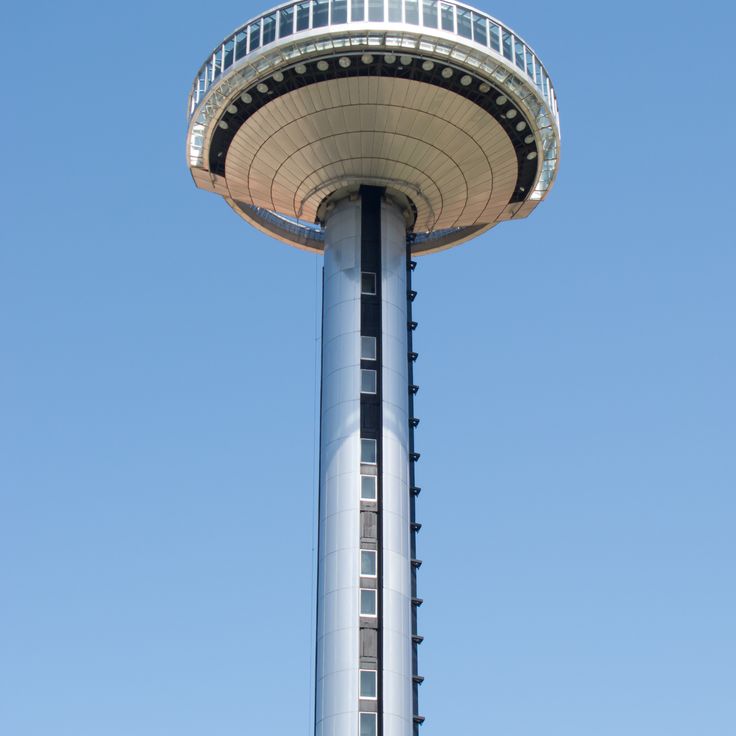
This observation tower in Madrid stands in the Moncloa district and offers views over the Spanish capital. From the platform you can see the city's rooftops, parks and surrounding areas. The tower rises above the nearby buildings and serves as a reference point in this part of Madrid. Visitors take an elevator to reach the viewing platform.
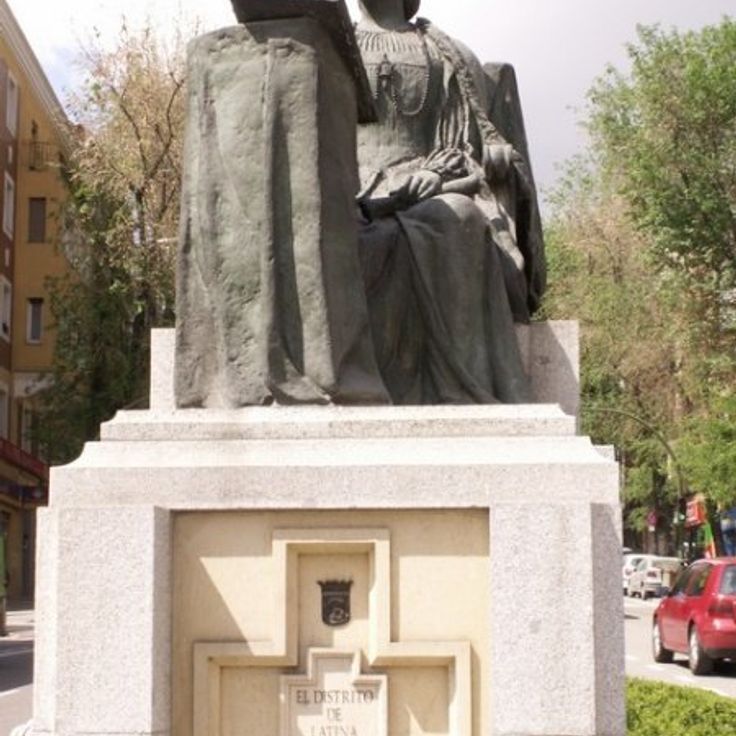
This neighborhood is known for its many bars serving tapas. Narrow streets wind through the old center, where locals and visitors gather in small establishments. Daily life unfolds on the streets, especially on weekends, when people move from one place to another to try small dishes and share drinks. The mood is social and relaxed. La Latina is one of the areas where you experience the city's food culture most directly, not through monuments or museums, but through the way people spend their time.
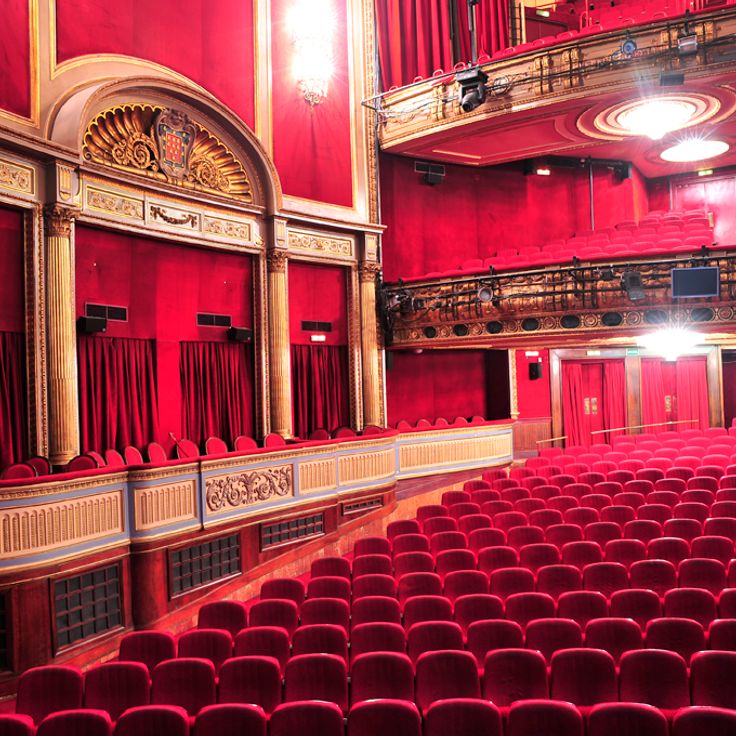
This theater opened its doors in 1949 and today serves as an important venue for musicals, concerts and plays in Madrid. The building combines Art Deco architecture with functional spaces, offering seating for about 1400 people. The stage hosts both national and international productions, ranging from classic dramas to modern musicals. Inside, the auditorium retains the original design from the mid-20th century, with clean lines and geometric patterns on walls and ceilings. Evening performances draw people from different neighborhoods who come to watch cultural shows. The theater sits along Gran Vía and fits into the urban landscape shaped by cinemas, shops and restaurants.
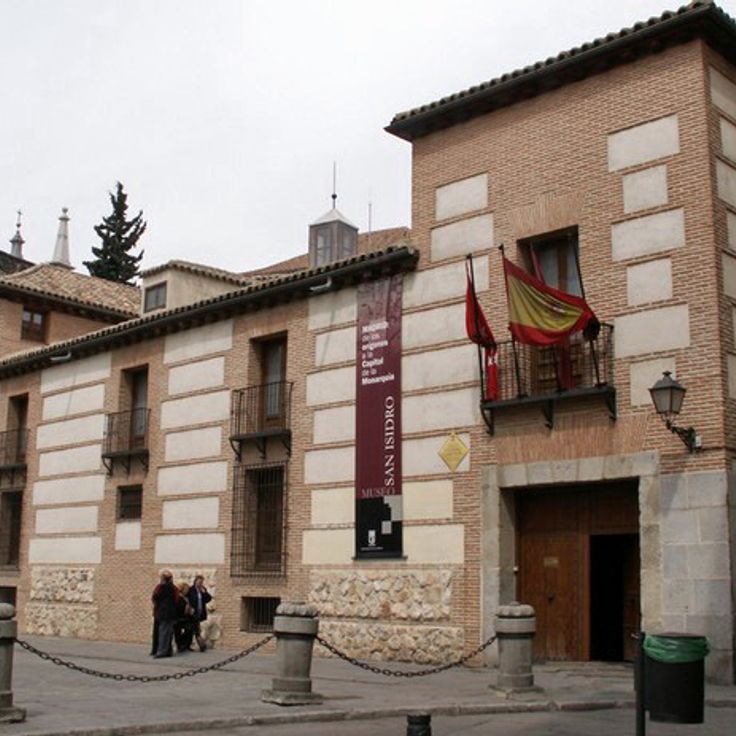
This museum presents the history of Madrid from medieval times through the 19th century. The collection features archaeological finds and religious objects that document the life of the city across centuries. Exhibits guide visitors through different periods, helping to understand how Madrid evolved from a medieval settlement into a royal capital. Visitors will find ceramics, coins, sculptures, and liturgical items recovered from churches and excavations throughout the region.
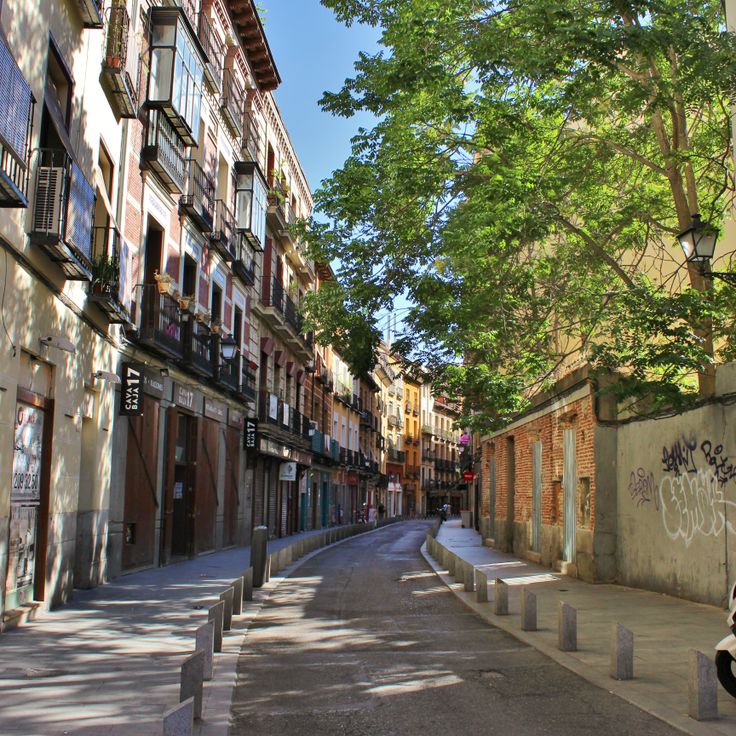
This medieval street is known for its food and the feel of an old neighborhood. More than 50 places line the way: restaurants, taverns and bars where people order tapas or sit down for a longer meal. Traditional Spanish cooking has its place here, and the narrow lanes recall the historic period when Madrid was still within walls. Many visitors come to spend the evening with wine and small dishes passed from table to table.
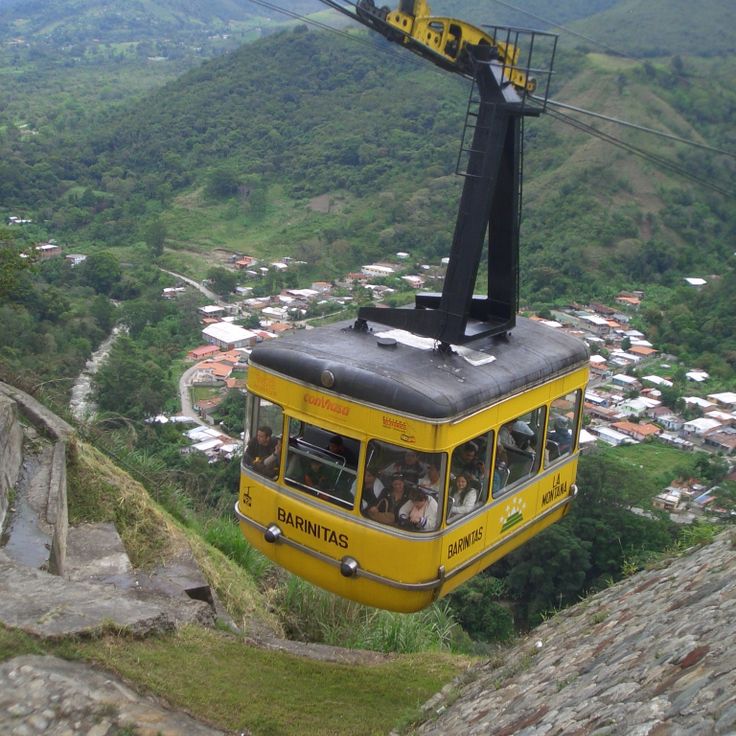
This cable car system links the Rosales area to Casa de Campo Park over a route of about one and a half miles. During the ride, views open across the city, from the western neighborhoods to the historic buildings and parks in the center. The Teleférico de Madrid moves slowly through the air, letting you take in the spread of the capital from an elevated angle. You see treetops, street grids, and the city skyline passing beneath the cabins.
The Royal Palace is the official residence of Spanish monarchs and a central element of Madrid's cultural heritage. This palace houses historical weapons, tapestries, porcelain and artworks from different centuries. The rooms show the history of the Spanish monarchy through their collections and the architecture of the building. Visitors walk through halls that were once used for royal ceremonies and daily life at court.
This museum brings together European paintings from the 12th to the 20th century and holds more than 7000 works. The collection shows Spanish, Flemish and Italian masters in rooms organized by period and school. The halls walk visitors through royal collections assembled over centuries. Long galleries display works by Velázquez, Goya and Bosch. The early 19th-century building stands in central Madrid and ranks among the leading art museums in Europe. The exhibition rooms present paintings that once belonged to Spanish rulers.
This park lies at the center of Madrid and provides a place where residents and travelers come to rest beneath tall trees planted centuries ago. The boating lake draws families on weekends, while the Crystal Palace stands as a glass and iron structure used for exhibitions. The botanical garden holds a wide range of plants from different climates, organized in paths and greenhouses. Throughout the grounds, paths lead past fountains and open lawns where people sit to read or talk.
This central square in Madrid holds familiar symbols of the city. The bear statue stands at the edge, recalling the coat of arms. The Zero Kilometer stone marks the starting point for all Spanish roads. The clock tower belongs to the Casa de Correos and rings in the new year. People from Madrid gather here to hear the twelve chimes and eat twelve grapes. During the day, the square fills with passersby moving between metro entrances and street cafés. Roads lead in all directions toward shops and other neighborhoods.
This wide street from the 20th century connects eastern and western Madrid. Gran Vía is lined with large stores and theaters along its stretch. As a major artery of the Spanish capital, it shows the urban development of the early twentieth century and belongs to the busy commercial areas of the city.
This temple, originally built in Egypt during the 2nd century BCE, now stands in Madrid as one of the oldest structures in the city. The Egyptian government gifted the monument to Spain in 1968 to save it from the rising waters of the Aswan Dam. Workers dismantled the stone blocks, shipped them across the Mediterranean, and reassembled them in Parque del Oeste. The Templo de Debod connects the Spanish capital to the history of the Nile Valley, offering visitors a glimpse into ancient Egyptian architecture and religious practice far from its original riverside location.
This rectangular square from the 17th century forms the heart of Madrid. The Plaza Mayor stretches across an enclosed space with arcades running along all sides, housing restaurants and shops beneath their arches. The Casa de la Panadería dominates the north side with its painted facade showing mythological scenes. The square served as a stage for markets, bullfights, and royal ceremonies over the centuries. Today, locals and travelers gather here under the arches, on the terraces, or across the open cobblestone surface. The uniform architecture with its balconies and turrets creates an enclosed space, separate from the activity of the surrounding streets.
This market opened in 1916 in a building with glass walls and offers Spanish specialties and fresh products. The hall stands near Plaza Mayor and serves as a meeting point for locals and visitors who come to eat and shop. The iron structure and transparent roof let in plenty of light. Stalls sell cheese, cured meats, olives, seafood, pastries, and wine. The space fills with people, especially in the evening and on weekends.
This Sunday market has been running since the 15th century and spreads through the streets of La Latina, gathering over 1000 stalls with antiques, crafts, books, and clothing. Locals and visitors walk among the stands, browsing old furniture, records, posters, and handmade items. The mood is lively, especially in the morning hours when vendors set up their goods and shoppers look for special pieces. After the walk, many gather at nearby bars for a drink or tapas.
This football stadium in the Chamartín district has been home to Real Madrid since 1947. The stands hold over 80,000 spectators. The lower floors house a museum displaying the club's history: trophies, jerseys from past players, and photographs from different decades. On match days the stadium fills with fans who chant and wave scarves. On quiet days visitors can tour the locker rooms, the players' tunnel, and the benches at the edge of the pitch. The white exterior walls and tall light towers shape the skyline of this part of Madrid.
This palace began as the main post office and is now a cultural center with an observation deck and restaurants. The building from 1919 shows classical architecture with columns and a white facade. Inside, rotating exhibitions take place, and visitors can ride up to the terrace to see Madrid from above. The palace sits opposite the fountain at the square of the same name, one of the busiest crossroads in the city, where wide avenues meet. The ground floor holds cafés and spaces for cultural events that are open to the public.
This park is the largest public park in Madrid, covering a large area west of the city center. The grounds were once a royal hunting estate before opening to the public. The park holds a lake where you can rent rowboats, along with a zoo and an amusement park. Many walking trails wind through pine forests and open spaces where locals jog, cycle, or simply take a walk. On weekends, families come here to enjoy nature without leaving the city.
This museum sits along Paseo del Prado and presents paintings from different periods, ranging from medieval panels to twentieth-century works. The collection covers European and American art, offering an overview of how painting developed over the centuries. Rooms are arranged in chronological order, letting visitors walk through the history of art. The museum complements the other major galleries in Madrid, providing a broad view of Western artistic traditions.
This cathedral stands in the historic center of Madrid, next to the Royal Palace. Construction began in the late 19th century and was completed only in 1993. The Almudena Cathedral combines neoclassical and neo-Gothic elements in its architecture. Inside, you will find modern stained glass windows and a bright atmosphere that differs from older European cathedrals. This Catholic place of worship serves as the seat of the Archdiocese of Madrid and represents an important part of the Spanish capital's cultural heritage.
This park follows the Manzanares River through the city, offering expansive recreation areas in the heart of Madrid. The grounds draw families with children who use the playgrounds here. On weekends, you see cyclists on the paths along the water and joggers who prefer the shaded sections. Open spaces serve for events and gatherings, while bridges connect historic and modern architecture. Madrid Rio Park shows how the city brings together nature and urban life.
This cultural center on Paseo del Prado hosts rotating art exhibitions and performances in a modern building. CaixaForum Madrid complements the city's museum scene with contemporary and historical shows. The vertical garden on the facade offers a contrast to the classical architecture nearby. Entry is often free or reduced, making art accessible to visitors and residents.
This museum displays finds from across the Iberian Peninsula and beyond. The collections document prehistoric settlements, Roman provinces, Visigothic kingdoms, and Moorish periods. You will find pottery, sculptures, coins, and jewelry from different eras. The rooms are arranged by time period, so you walk through thousands of years of Spanish history. The building itself dates from the 19th century and stands in the Salamanca neighborhood, next to the National Library. For travelers, the National Archaeological Museum offers a quiet place to understand the cultural heritage of Madrid and all of Spain.
This arts complex occupies the former municipal slaughterhouse built during the 1920s. After decades of industrial use, the brick halls were gradually converted starting in 2006 into studios, theaters and exhibition spaces. You enter through wide gates and walk among tall masonry walls that still carry traces of their original purpose. Inside the halls, dance and theater companies rehearse, film screenings take place in converted rooms, and artists work on projects in the workshops. The place draws people interested in contemporary art, those seeking gatherings in the courtyards, or performances in the evening. The mood is quiet and spacious, with plenty of room between buildings. Small cafés and outdoor seating invite you to linger after exploring. Matadero Madrid connects the historical heritage of the city with an active program that supports experimental forms as much as accessible formats for a wide audience. The complex remains open to the public and continues to shape the cultural life of the district.
This convent from the 16th century was founded as a royal retreat and now houses a significant art collection. The rooms display religious paintings, tapestries, and sculptures gathered over centuries by the nuns who lived here. The cloister opens onto a quiet courtyard, while the chapels feature Baroque altars and gilded details. Visitors walk through corridors with tiled walls and wooden ceilings, past portraits of noble women who entered monastic life. The feeling remains contemplative, as the building is still home to a religious community.
This botanical garden dates back to the 18th century and sits right next to the Prado Museum. The grounds display several thousand plant species from different climate zones. Visitors find shaded paths between greenhouse pavilions, organized beds, and old trees. The garden forms part of the historic green spaces in central Madrid and was originally created for scientific research.
This historic confectionery has served Spanish churros with hot chocolate in a marble-walled café since 1894. The Chocolatería San Ginés sits in the center of Madrid and draws both locals and visitors who stop by after an evening out or early in the morning. The thick, creamy chocolate comes in cups for dipping the crispy churros, which are fried fresh throughout the day and night.
This basilica dates back to the 18th century and rises above the La Latina neighborhood with a 33-meter (108-foot) wide dome. Inside, you will find frescoes by Francisco Goya that count among Madrid's cultural treasures. The circular building with its neoclassical facade shapes the area and stands as one of the important religious structures in the Spanish capital.
This cultural center in Madrid focuses on contemporary art, theater, and film. It offers several exhibition spaces, a cinema, and a rooftop terrace where you can look out over the rooftops of the Spanish capital. The building dates back to the early 20th century and today serves as a meeting point for artists and visitors interested in art and culture.
This theater stands opposite the Royal Palace and has been one of Spain's leading opera venues since 1850. The auditorium seats 1746 people and hosts opera and ballet performances at international level. The building combines classical architecture with modern stage technology. The theater plays a central role in Madrid's cultural life and attracts visitors from around the world. Before evening performances, people gather on the plaza surrounding the building.
This glass and iron pavilion stands within Retiro Park and belongs to the notable 19th-century structures in Madrid. The transparent construction allows light to stream through the entire building, creating a bright, open space. Originally designed as a greenhouse for exotic plants, the Crystal Palace now serves as an exhibition venue for contemporary art. Visitors can walk through the tall rooms and observe both the architecture and the rotating art installations. The location by the artificial lake gives the building a quiet setting.
This chapel holds ceiling frescoes by Francisco de Goya and his burial place. The paintings show scenes from the life of Saint Anthony. Goya completed the work in the late 18th century. The interior keeps its original neoclassical style. Visitors find a quiet space for art and history in Madrid.
This observation tower in Madrid stands in the Moncloa district and offers views over the Spanish capital. From the platform you can see the city's rooftops, parks and surrounding areas. The tower rises above the nearby buildings and serves as a reference point in this part of Madrid. Visitors take an elevator to reach the viewing platform.
This neighborhood is known for its many bars serving tapas. Narrow streets wind through the old center, where locals and visitors gather in small establishments. Daily life unfolds on the streets, especially on weekends, when people move from one place to another to try small dishes and share drinks. The mood is social and relaxed. La Latina is one of the areas where you experience the city's food culture most directly, not through monuments or museums, but through the way people spend their time.
This theater opened its doors in 1949 and today serves as an important venue for musicals, concerts and plays in Madrid. The building combines Art Deco architecture with functional spaces, offering seating for about 1400 people. The stage hosts both national and international productions, ranging from classic dramas to modern musicals. Inside, the auditorium retains the original design from the mid-20th century, with clean lines and geometric patterns on walls and ceilings. Evening performances draw people from different neighborhoods who come to watch cultural shows. The theater sits along Gran Vía and fits into the urban landscape shaped by cinemas, shops and restaurants.
This museum presents the history of Madrid from medieval times through the 19th century. The collection features archaeological finds and religious objects that document the life of the city across centuries. Exhibits guide visitors through different periods, helping to understand how Madrid evolved from a medieval settlement into a royal capital. Visitors will find ceramics, coins, sculptures, and liturgical items recovered from churches and excavations throughout the region.
This medieval street is known for its food and the feel of an old neighborhood. More than 50 places line the way: restaurants, taverns and bars where people order tapas or sit down for a longer meal. Traditional Spanish cooking has its place here, and the narrow lanes recall the historic period when Madrid was still within walls. Many visitors come to spend the evening with wine and small dishes passed from table to table.
This cable car system links the Rosales area to Casa de Campo Park over a route of about one and a half miles. During the ride, views open across the city, from the western neighborhoods to the historic buildings and parks in the center. The Teleférico de Madrid moves slowly through the air, letting you take in the spread of the capital from an elevated angle. You see treetops, street grids, and the city skyline passing beneath the cabins.
The Royal Palace is the official residence of Spanish monarchs and a central element of Madrid's cultural heritage. This palace houses historical weapons, tapestries, porcelain and artworks from different centuries. The rooms show the history of the Spanish monarchy through their collections and the architecture of the building. Visitors walk through halls that were once used for royal ceremonies and daily life at court.
This museum brings together European paintings from the 12th to the 20th century and holds more than 7000 works. The collection shows Spanish, Flemish and Italian masters in rooms organized by period and school. The halls walk visitors through royal collections assembled over centuries. Long galleries display works by Velázquez, Goya and Bosch. The early 19th-century building stands in central Madrid and ranks among the leading art museums in Europe. The exhibition rooms present paintings that once belonged to Spanish rulers.
This park lies at the center of Madrid and provides a place where residents and travelers come to rest beneath tall trees planted centuries ago. The boating lake draws families on weekends, while the Crystal Palace stands as a glass and iron structure used for exhibitions. The botanical garden holds a wide range of plants from different climates, organized in paths and greenhouses. Throughout the grounds, paths lead past fountains and open lawns where people sit to read or talk.
This central square in Madrid holds familiar symbols of the city. The bear statue stands at the edge, recalling the coat of arms. The Zero Kilometer stone marks the starting point for all Spanish roads. The clock tower belongs to the Casa de Correos and rings in the new year. People from Madrid gather here to hear the twelve chimes and eat twelve grapes. During the day, the square fills with passersby moving between metro entrances and street cafés. Roads lead in all directions toward shops and other neighborhoods.
This wide street from the 20th century connects eastern and western Madrid. Gran Vía is lined with large stores and theaters along its stretch. As a major artery of the Spanish capital, it shows the urban development of the early twentieth century and belongs to the busy commercial areas of the city.
This temple, originally built in Egypt during the 2nd century BCE, now stands in Madrid as one of the oldest structures in the city. The Egyptian government gifted the monument to Spain in 1968 to save it from the rising waters of the Aswan Dam. Workers dismantled the stone blocks, shipped them across the Mediterranean, and reassembled them in Parque del Oeste. The Templo de Debod connects the Spanish capital to the history of the Nile Valley, offering visitors a glimpse into ancient Egyptian architecture and religious practice far from its original riverside location.
This rectangular square from the 17th century forms the heart of Madrid. The Plaza Mayor stretches across an enclosed space with arcades running along all sides, housing restaurants and shops beneath their arches. The Casa de la Panadería dominates the north side with its painted facade showing mythological scenes. The square served as a stage for markets, bullfights, and royal ceremonies over the centuries. Today, locals and travelers gather here under the arches, on the terraces, or across the open cobblestone surface. The uniform architecture with its balconies and turrets creates an enclosed space, separate from the activity of the surrounding streets.
This market opened in 1916 in a building with glass walls and offers Spanish specialties and fresh products. The hall stands near Plaza Mayor and serves as a meeting point for locals and visitors who come to eat and shop. The iron structure and transparent roof let in plenty of light. Stalls sell cheese, cured meats, olives, seafood, pastries, and wine. The space fills with people, especially in the evening and on weekends.
This Sunday market has been running since the 15th century and spreads through the streets of La Latina, gathering over 1000 stalls with antiques, crafts, books, and clothing. Locals and visitors walk among the stands, browsing old furniture, records, posters, and handmade items. The mood is lively, especially in the morning hours when vendors set up their goods and shoppers look for special pieces. After the walk, many gather at nearby bars for a drink or tapas.
This football stadium in the Chamartín district has been home to Real Madrid since 1947. The stands hold over 80,000 spectators. The lower floors house a museum displaying the club's history: trophies, jerseys from past players, and photographs from different decades. On match days the stadium fills with fans who chant and wave scarves. On quiet days visitors can tour the locker rooms, the players' tunnel, and the benches at the edge of the pitch. The white exterior walls and tall light towers shape the skyline of this part of Madrid.
This palace began as the main post office and is now a cultural center with an observation deck and restaurants. The building from 1919 shows classical architecture with columns and a white facade. Inside, rotating exhibitions take place, and visitors can ride up to the terrace to see Madrid from above. The palace sits opposite the fountain at the square of the same name, one of the busiest crossroads in the city, where wide avenues meet. The ground floor holds cafés and spaces for cultural events that are open to the public.
This park is the largest public park in Madrid, covering a large area west of the city center. The grounds were once a royal hunting estate before opening to the public. The park holds a lake where you can rent rowboats, along with a zoo and an amusement park. Many walking trails wind through pine forests and open spaces where locals jog, cycle, or simply take a walk. On weekends, families come here to enjoy nature without leaving the city.
This museum sits along Paseo del Prado and presents paintings from different periods, ranging from medieval panels to twentieth-century works. The collection covers European and American art, offering an overview of how painting developed over the centuries. Rooms are arranged in chronological order, letting visitors walk through the history of art. The museum complements the other major galleries in Madrid, providing a broad view of Western artistic traditions.
This cathedral stands in the historic center of Madrid, next to the Royal Palace. Construction began in the late 19th century and was completed only in 1993. The Almudena Cathedral combines neoclassical and neo-Gothic elements in its architecture. Inside, you will find modern stained glass windows and a bright atmosphere that differs from older European cathedrals. This Catholic place of worship serves as the seat of the Archdiocese of Madrid and represents an important part of the Spanish capital's cultural heritage.
This park follows the Manzanares River through the city, offering expansive recreation areas in the heart of Madrid. The grounds draw families with children who use the playgrounds here. On weekends, you see cyclists on the paths along the water and joggers who prefer the shaded sections. Open spaces serve for events and gatherings, while bridges connect historic and modern architecture. Madrid Rio Park shows how the city brings together nature and urban life.
This cultural center on Paseo del Prado hosts rotating art exhibitions and performances in a modern building. CaixaForum Madrid complements the city's museum scene with contemporary and historical shows. The vertical garden on the facade offers a contrast to the classical architecture nearby. Entry is often free or reduced, making art accessible to visitors and residents.
This museum displays finds from across the Iberian Peninsula and beyond. The collections document prehistoric settlements, Roman provinces, Visigothic kingdoms, and Moorish periods. You will find pottery, sculptures, coins, and jewelry from different eras. The rooms are arranged by time period, so you walk through thousands of years of Spanish history. The building itself dates from the 19th century and stands in the Salamanca neighborhood, next to the National Library. For travelers, the National Archaeological Museum offers a quiet place to understand the cultural heritage of Madrid and all of Spain.
This arts complex occupies the former municipal slaughterhouse built during the 1920s. After decades of industrial use, the brick halls were gradually converted starting in 2006 into studios, theaters and exhibition spaces. You enter through wide gates and walk among tall masonry walls that still carry traces of their original purpose. Inside the halls, dance and theater companies rehearse, film screenings take place in converted rooms, and artists work on projects in the workshops. The place draws people interested in contemporary art, those seeking gatherings in the courtyards, or performances in the evening. The mood is quiet and spacious, with plenty of room between buildings. Small cafés and outdoor seating invite you to linger after exploring. Matadero Madrid connects the historical heritage of the city with an active program that supports experimental forms as much as accessible formats for a wide audience. The complex remains open to the public and continues to shape the cultural life of the district.
This convent from the 16th century was founded as a royal retreat and now houses a significant art collection. The rooms display religious paintings, tapestries, and sculptures gathered over centuries by the nuns who lived here. The cloister opens onto a quiet courtyard, while the chapels feature Baroque altars and gilded details. Visitors walk through corridors with tiled walls and wooden ceilings, past portraits of noble women who entered monastic life. The feeling remains contemplative, as the building is still home to a religious community.
This botanical garden dates back to the 18th century and sits right next to the Prado Museum. The grounds display several thousand plant species from different climate zones. Visitors find shaded paths between greenhouse pavilions, organized beds, and old trees. The garden forms part of the historic green spaces in central Madrid and was originally created for scientific research.
This historic confectionery has served Spanish churros with hot chocolate in a marble-walled café since 1894. The Chocolatería San Ginés sits in the center of Madrid and draws both locals and visitors who stop by after an evening out or early in the morning. The thick, creamy chocolate comes in cups for dipping the crispy churros, which are fried fresh throughout the day and night.
This basilica dates back to the 18th century and rises above the La Latina neighborhood with a 33-meter (108-foot) wide dome. Inside, you will find frescoes by Francisco Goya that count among Madrid's cultural treasures. The circular building with its neoclassical facade shapes the area and stands as one of the important religious structures in the Spanish capital.
This cultural center in Madrid focuses on contemporary art, theater, and film. It offers several exhibition spaces, a cinema, and a rooftop terrace where you can look out over the rooftops of the Spanish capital. The building dates back to the early 20th century and today serves as a meeting point for artists and visitors interested in art and culture.
This theater stands opposite the Royal Palace and has been one of Spain's leading opera venues since 1850. The auditorium seats 1746 people and hosts opera and ballet performances at international level. The building combines classical architecture with modern stage technology. The theater plays a central role in Madrid's cultural life and attracts visitors from around the world. Before evening performances, people gather on the plaza surrounding the building.
This glass and iron pavilion stands within Retiro Park and belongs to the notable 19th-century structures in Madrid. The transparent construction allows light to stream through the entire building, creating a bright, open space. Originally designed as a greenhouse for exotic plants, the Crystal Palace now serves as an exhibition venue for contemporary art. Visitors can walk through the tall rooms and observe both the architecture and the rotating art installations. The location by the artificial lake gives the building a quiet setting.
This chapel holds ceiling frescoes by Francisco de Goya and his burial place. The paintings show scenes from the life of Saint Anthony. Goya completed the work in the late 18th century. The interior keeps its original neoclassical style. Visitors find a quiet space for art and history in Madrid.
This observation tower in Madrid stands in the Moncloa district and offers views over the Spanish capital. From the platform you can see the city's rooftops, parks and surrounding areas. The tower rises above the nearby buildings and serves as a reference point in this part of Madrid. Visitors take an elevator to reach the viewing platform.
This neighborhood is known for its many bars serving tapas. Narrow streets wind through the old center, where locals and visitors gather in small establishments. Daily life unfolds on the streets, especially on weekends, when people move from one place to another to try small dishes and share drinks. The mood is social and relaxed. La Latina is one of the areas where you experience the city's food culture most directly, not through monuments or museums, but through the way people spend their time.
This theater opened its doors in 1949 and today serves as an important venue for musicals, concerts and plays in Madrid. The building combines Art Deco architecture with functional spaces, offering seating for about 1400 people. The stage hosts both national and international productions, ranging from classic dramas to modern musicals. Inside, the auditorium retains the original design from the mid-20th century, with clean lines and geometric patterns on walls and ceilings. Evening performances draw people from different neighborhoods who come to watch cultural shows. The theater sits along Gran Vía and fits into the urban landscape shaped by cinemas, shops and restaurants.
This museum presents the history of Madrid from medieval times through the 19th century. The collection features archaeological finds and religious objects that document the life of the city across centuries. Exhibits guide visitors through different periods, helping to understand how Madrid evolved from a medieval settlement into a royal capital. Visitors will find ceramics, coins, sculptures, and liturgical items recovered from churches and excavations throughout the region.
This medieval street is known for its food and the feel of an old neighborhood. More than 50 places line the way: restaurants, taverns and bars where people order tapas or sit down for a longer meal. Traditional Spanish cooking has its place here, and the narrow lanes recall the historic period when Madrid was still within walls. Many visitors come to spend the evening with wine and small dishes passed from table to table.
This cable car system links the Rosales area to Casa de Campo Park over a route of about one and a half miles. During the ride, views open across the city, from the western neighborhoods to the historic buildings and parks in the center. The Teleférico de Madrid moves slowly through the air, letting you take in the spread of the capital from an elevated angle. You see treetops, street grids, and the city skyline passing beneath the cabins.