See the monuments around you in AROpen chests in the app
Around Us is built for your phone — point your camera at the streets and discover the monuments and places around you in augmented reality.Around Us is built for your phone — chests unlock when you walk, explore and capture nearby places.
Skyscrapers around the world tell stories of technical progress and building aims. From New York to Dubai, through Shanghai and beyond, these towers shape city skylines. Each combines building ideas with local traditions. The Burj Khalifa in Dubai is 828 meters tall and is still the tallest finished building in the world. The Petronas Towers in Kuala Lumpur, at 452 meters, long represented modern Asian design.
These buildings are used in many ways. Some are office centers like the One World Trade Center in New York or the Shanghai Tower. People work there and can visit observation decks. Others mix shopping with religion, like the Abraj Al Bait Clock Tower in Mecca, which has a 43-meter clock face. In Europe, The Shard in London, the Montparnasse Tower in Paris, and the Commerzbank Tower in Frankfurt show how towers fit in old city areas. New projects like the Lakhta Center in Saint Petersburg and the Gran Torre Santiago in Chile show that this style of building has gone beyond traditional locations.
Visiting these towers offers more than just great views. Many have public spaces, dining places, or exhibitions about how cities grow and how these buildings are made. Each tower fits the local surroundings and shows how architecture meets the specific needs of a place.
Skyscrapers around the world tell stories of technical progress and building aims. From New York to Dubai, through Shanghai and beyond, these towers shape city skylines. Each combines building ideas with local traditions. The Burj Khalifa in Dubai is 828 meters tall and is still the tallest finished building in the world. The Petronas Towers in Kuala Lumpur, at 452 meters, long represented modern Asian design.
These buildings are used in many ways. Some are office centers like the One World Trade Center in New York or the Shanghai Tower. People work there and can visit observation decks. Others mix shopping with religion, like the Abraj Al Bait Clock Tower in Mecca, which has a 43-meter clock face. In Europe, The Shard in London, the Montparnasse Tower in Paris, and the Commerzbank Tower in Frankfurt show how towers fit in old city areas. New projects like the Lakhta Center in Saint Petersburg and the Gran Torre Santiago in Chile show that this style of building has gone beyond traditional locations.
Visiting these towers offers more than just great views. Many have public spaces, dining places, or exhibitions about how cities grow and how these buildings are made. Each tower fits the local surroundings and shows how architecture meets the specific needs of a place.
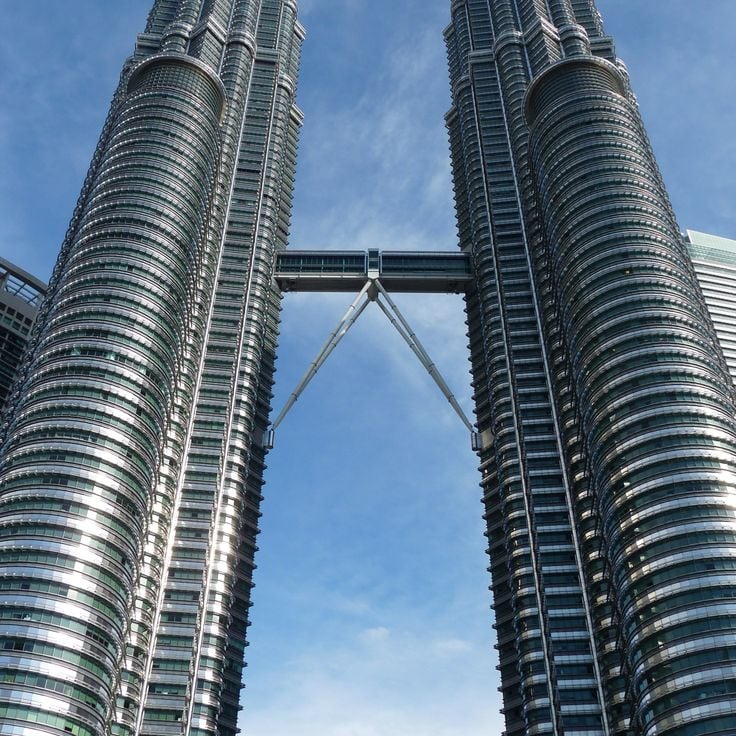
The Petronas Towers in Kuala Lumpur stand like two twin spires reaching 452 meters high. They were designed by architect Cesar Pelli and finished between 1992 and 1998. These buildings show how modern Asian design is shaped by local traditions. Their ground layout uses geometric patterns with an eight-pointed star. The outside combines stainless steel and glass. A two-level bridge connects the towers at the 41st and 42nd floors. Visitors can walk across this bridge to move from one tower to the other and see the city from above. This bridge needed special engineering to handle the movements caused by strong winds. The bases of the towers go down 120 meters into the ground to keep them steady, even though the land is made of hard rock.
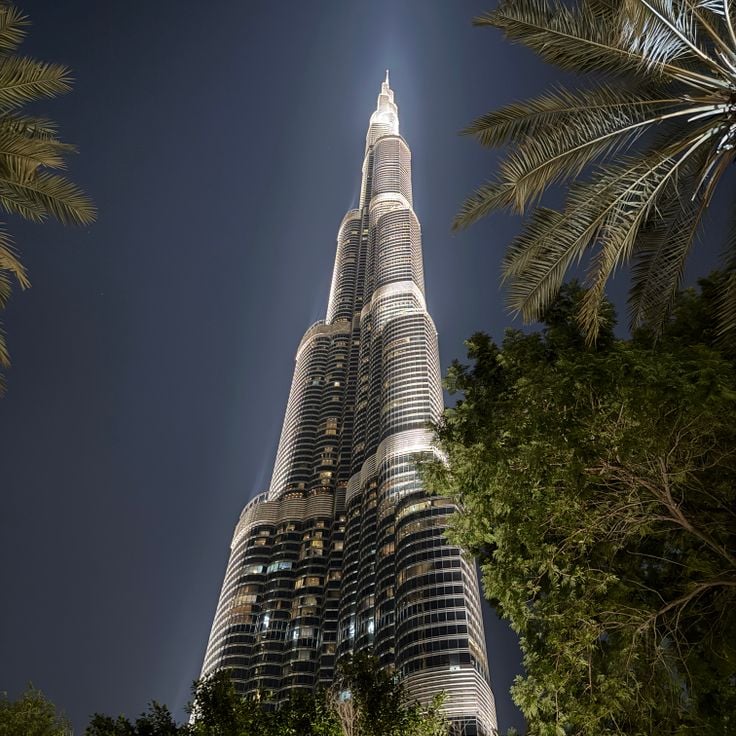
The Burj Khalifa rises to 828 meters above Dubai and remains the tallest completed building in the world. Finished in 2010, this tower has 163 floors built on 192 piles that go 50 meters deep into the desert ground. The outside face is made of glass and stainless steel, reflecting the sunlight and creating a changing play of light that shifts during the day. Strong pumps move water up to the upper floors, while very fast elevators take visitors to three observation decks located on levels 124, 125, and 148. From these platforms, you can see the entire city and the Persian Gulf stretching to the horizon. Inside, the cooling system reuses 56 million liters of water each day to stay efficient. The same water also flows through fountains and the green spaces around the tower. The building was first called Burj Dubai, but it was renamed Burj Khalifa to honor Sheikh Khalifa bin Zayed Al Nahyan, the ruler of Abu Dhabi and the president of the United Arab Emirates. It took about six years to build, from 2004 to 2009, when the outside was finished.
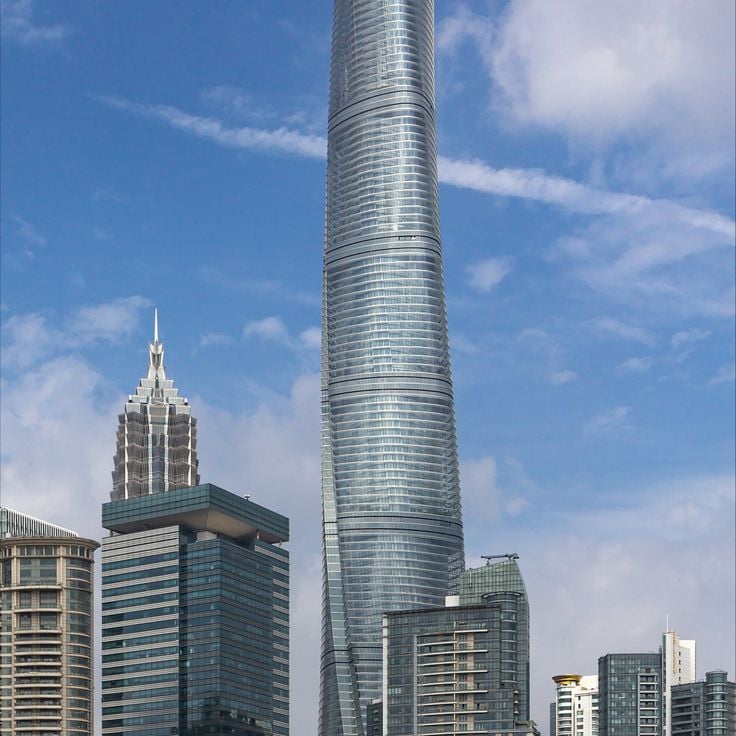
The Shanghai Tower rises 632 meters above Shanghai and is one of the tallest buildings in the world. This office, hotel, and observation tower offers views that stretch across the entire city. Its double-skin façade acts as a heat filter, greatly lowering the building's energy use. The structure uses a spiral piping system that allows wind to slide around it instead of hitting the walls directly, which reduces sway. The elevators move at 10 meters per second, making them among the fastest in the world at the time it opened. The building also has a rainwater collection system that supplies toilets and cooling systems, gathering the equivalent of thousands of cubic meters of water each year.
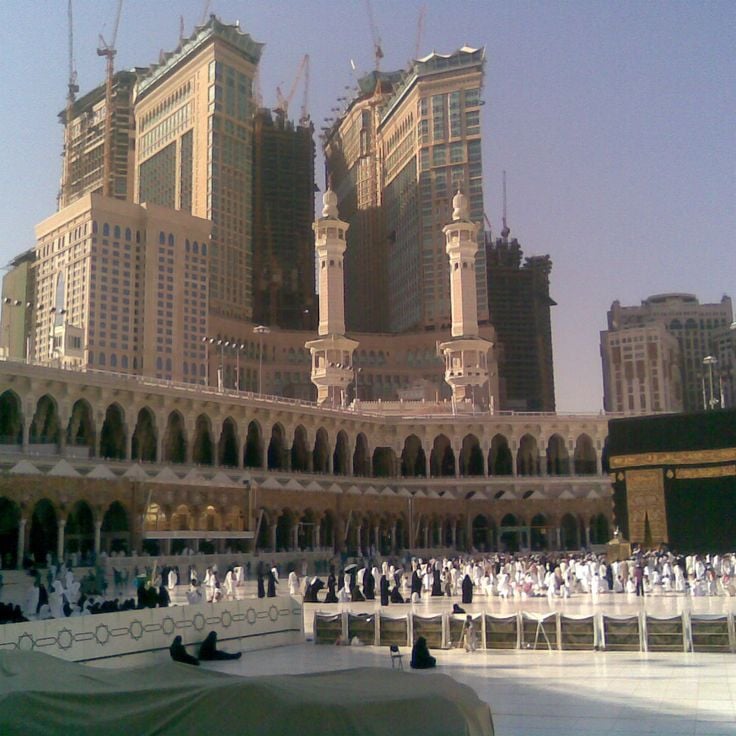
The Abraj Al-Bait Clock Tower rises above the Haram precinct in Mecca, displaying a clock face measuring 141 feet (43 meters) in diameter, among the largest in the world. This 2012 skyscraper stands 1,972 feet (601 meters) tall and forms part of a seven-tower complex that houses hotels, residences and prayer spaces for millions of pilgrims. The illuminated clock face remains visible from 16 miles (25 kilometers) away, serving as a landmark for worshippers approaching the Kaaba.
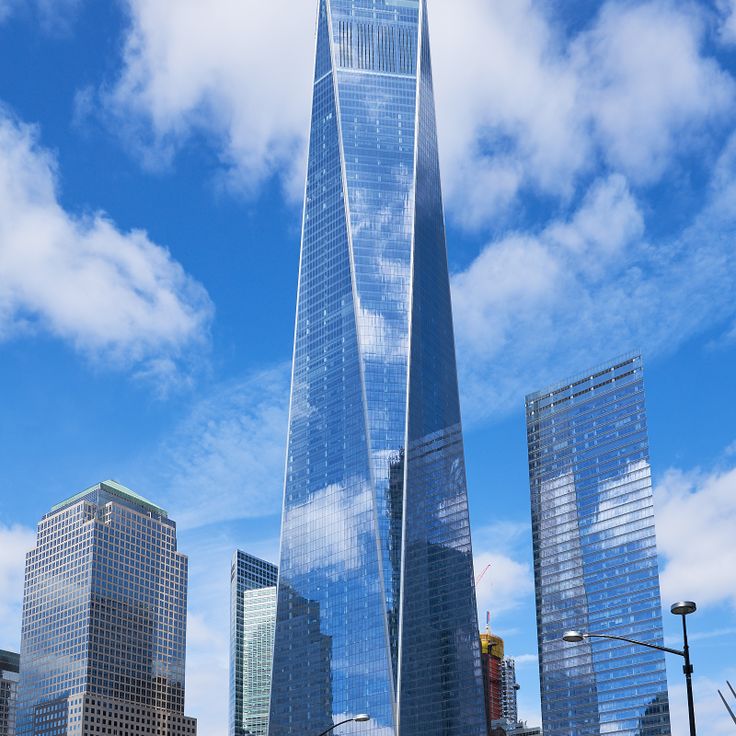
The One World Trade Center is the main building of the rebuilt World Trade Center complex in Lower Manhattan. Its height of 541 meters holds a special meaning for the city. Architect David Childs designed a structure that starts from a square base and gradually becomes narrower as it rises, ending with a glass spire that dominates the skyline. Inside, there are offices spread over more than 100 floors. Two observation decks on levels 100 and 102 allow visitors to see Manhattan, Brooklyn, and New Jersey from above. During construction, engineers added advanced safety systems, including earthquake-resistant structures and a facade designed to withstand strong winds. The building uses innovative materials and energy management systems, earning the LEED Gold certification, which is rare for a tower of this size. The foundations go deep into the rocky ground of Manhattan, and internal suspension cables can support loads equal to several traditional office buildings combined.
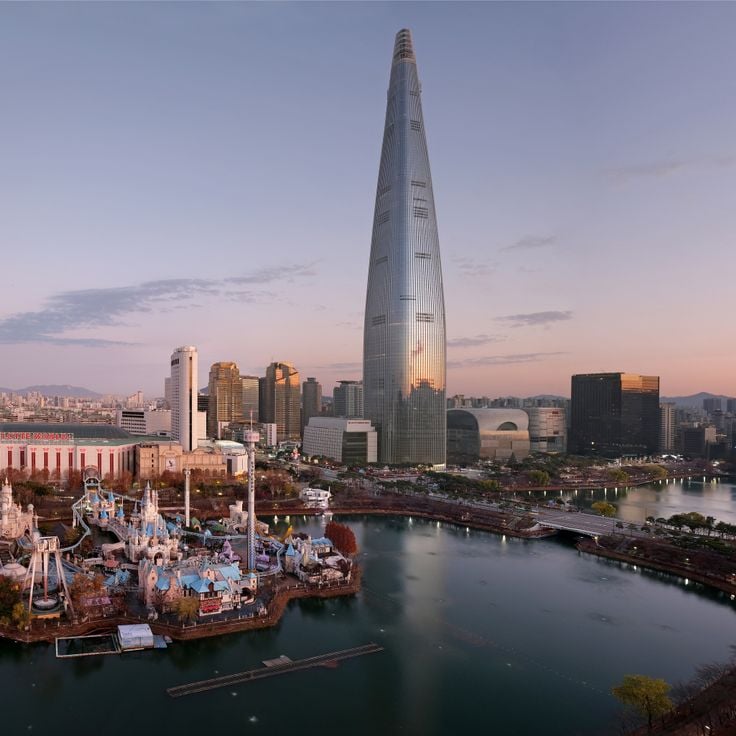
The Lotte World Tower rises 555 meters (1,819 feet) above Seoul, making it the tallest building in South Korea and the fifth tallest in the world. This 123-story skyscraper was completed in 2017 and combines office space, luxury residences, a seven-star hotel, and a public observation deck on the 117th floor. The facade uses double-glazed glass that reflects daylight, giving the tower a constantly changing appearance throughout the day. The structure's design draws from traditional Korean ceramics and calligraphy in its tapered silhouette.
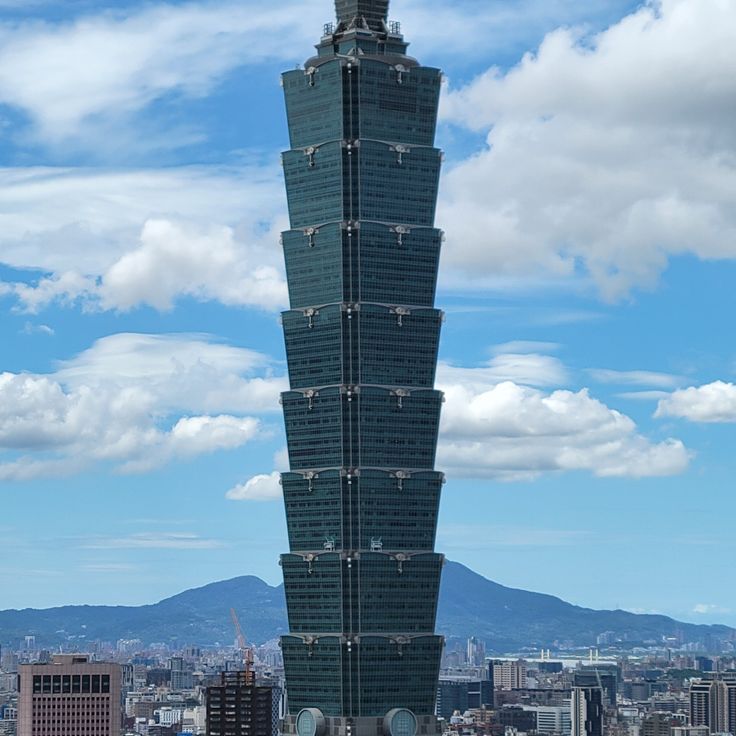
Taipei 101 combines modern engineering with traditional Chinese design elements. Completed in 2004, the 1,671-foot (509-meter) tower features a distinctive pagoda-inspired silhouette with eight stacked segments that reference a Chinese symbol of prosperity. A 730-ton pendulum damper inside stabilizes the structure during typhoons and earthquakes. The design incorporates traditional bamboo motifs into the facade structure, while the observation deck at 1,253 feet (382 meters) is accessible via high-speed elevators.
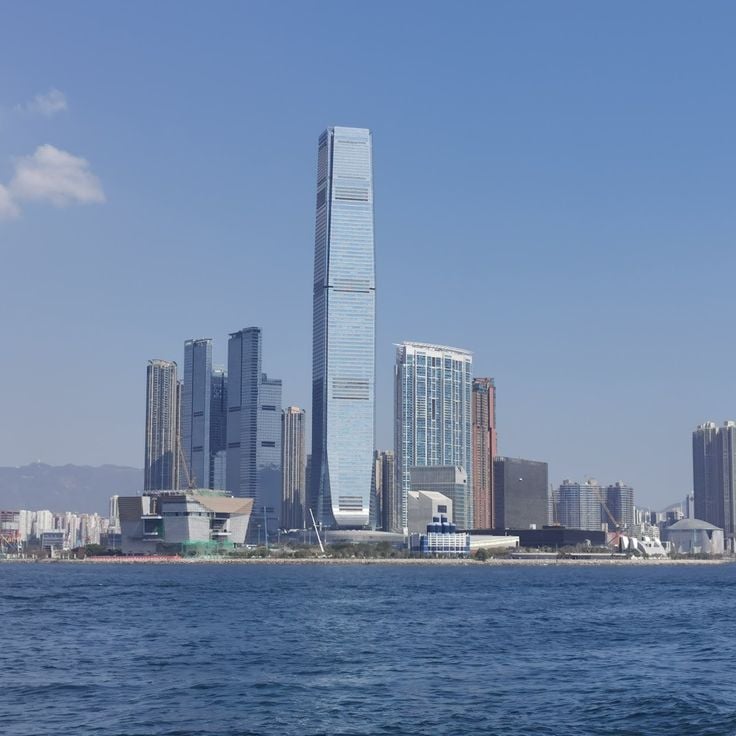
The Kowloon International Commerce Centre rises 484 meters tall with 118 floors of glass and steel, overlooking what was once an industrial zone. At the top, an observation deck offers views of Victoria Harbour and the surrounding area. The building was made with a reinforced central core to resist the frequent typhoons in Hong Kong. The double-skin facades help save energy by creating a layer of insulating air between the glass layers. The tower also has tuned mass dampers, systems of 300 tons that move slightly to balance the wind movements. This is a common technique in tall buildings around here.
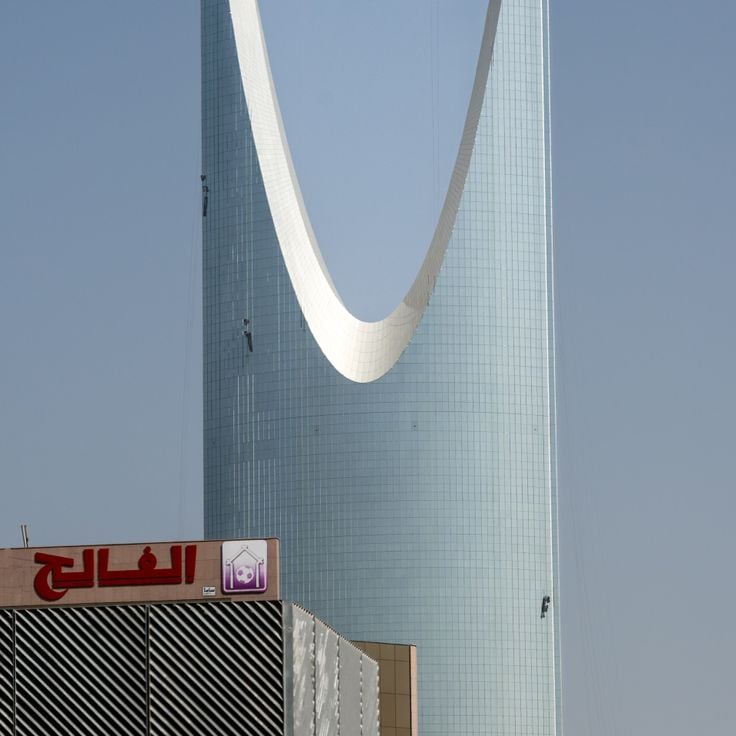
The Centre du Royaume in Riyadh ranks among the most recognizable high-rises in the Arab world. The 302-foot (302-meter) tower, completed in 2002, shapes the skyline of Saudi Arabia's capital with its distinctive parabolic form. The horseshoe-shaped opening at the summit, accessible via a skybridge between the two towers, offers visitors expansive views across the city. The building's architecture combines modern engineering with regional design elements and houses office space, a shopping mall, luxury apartments, and a hotel.
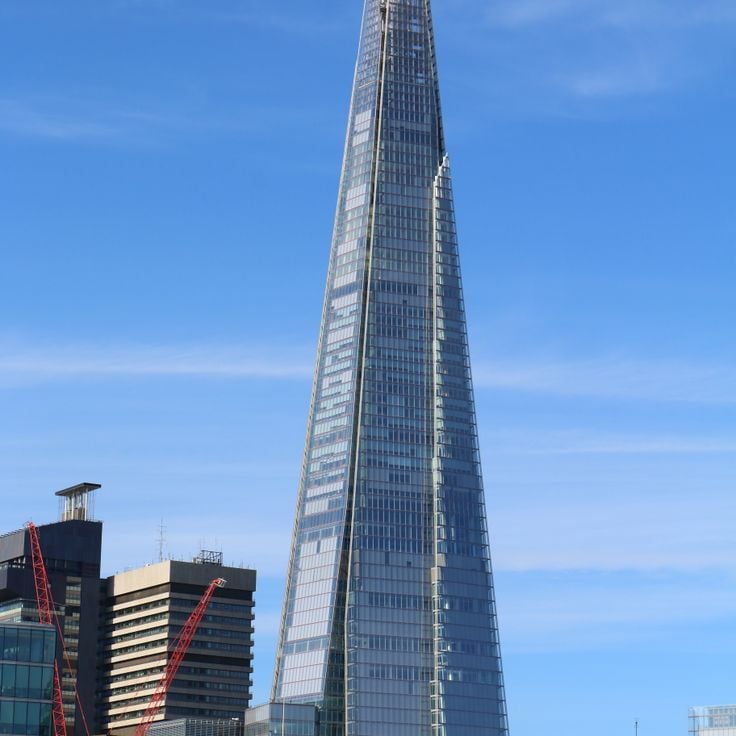
The Shard London, designed by Renzo Piano, rises 1,016 feet (310 meters) above the city and forms a distinctive pyramid shape with its glass facade. The building houses offices, restaurants, a hotel and a public viewing platform on the 72nd floor that provides wide views over the Thames and the surrounding metropolis.
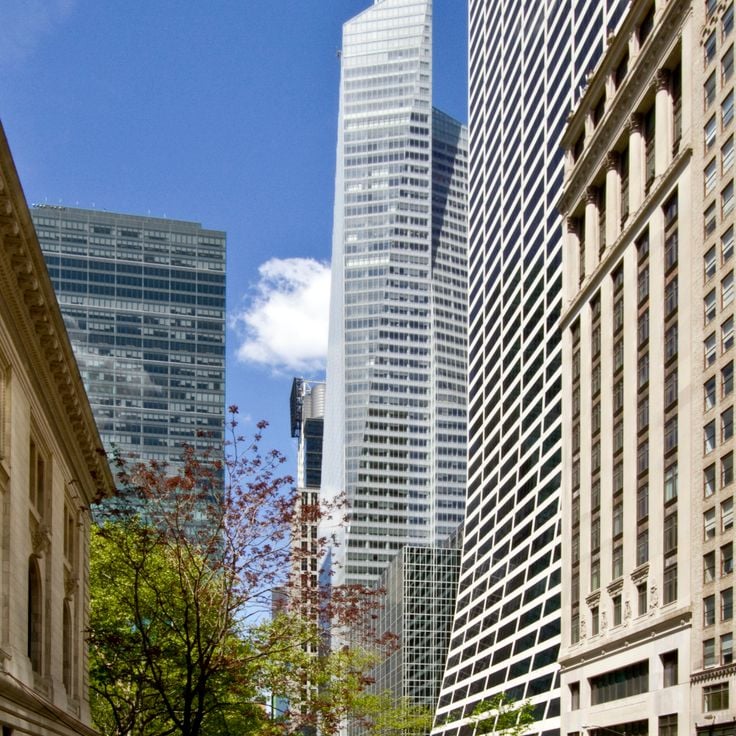
The Bank of America Tower rises 1,200 feet (366 meters) above Midtown Manhattan, distinguished by its prismatic glass facade and asymmetrical spire. Completed in 2009, this building was designed by Cook+Fox Architects and became the first skyscraper in the United States to achieve LEED Platinum certification for environmentally responsible construction. Its design incorporates high-performance glass, ice-water storage for energy efficiency, and an air filtration system that circulates outdoor air throughout the interior spaces. The tower stands at the corner of Sixth Avenue and 42nd Street, providing more than 2.1 million square feet (195,000 square meters) of office space. Its tapered profile and setback spire contribute to the city's skyline while combining structural efficiency with contemporary architectural form.
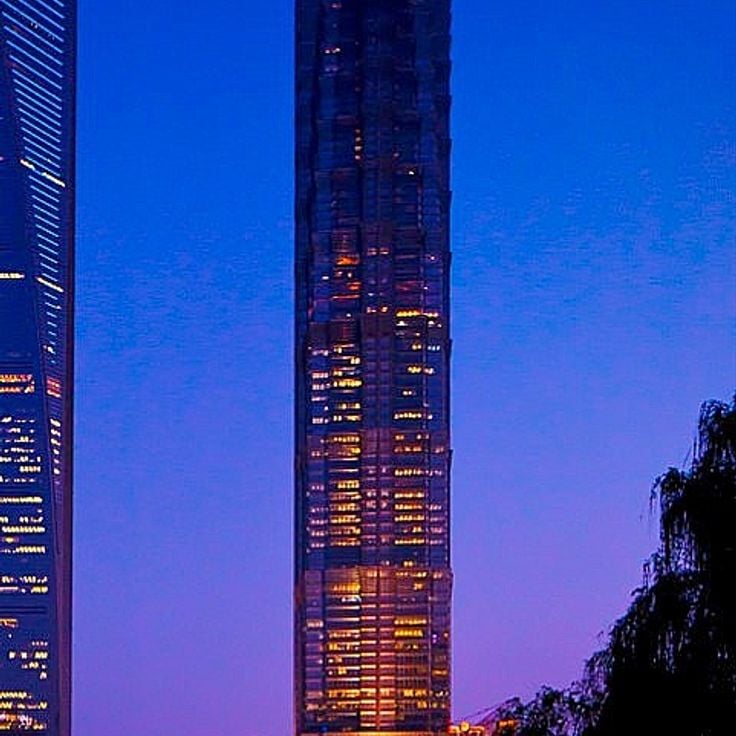
Jin Mao Tower rises in the Pudong financial district and combines traditional Chinese architectural elements with modern engineering techniques. Completed in 1999, this building reaches 1,381 feet (421 meters) across 88 floors and stood as China's tallest building at its opening. The stainless steel and glass facade follows a tiered design that recalls Chinese pagodas, while the number 88 holds special significance in Chinese culture as a symbol of prosperity. The building houses offices, a hotel and a public observation deck on the 88th floor that provides views across Shanghai in all directions.
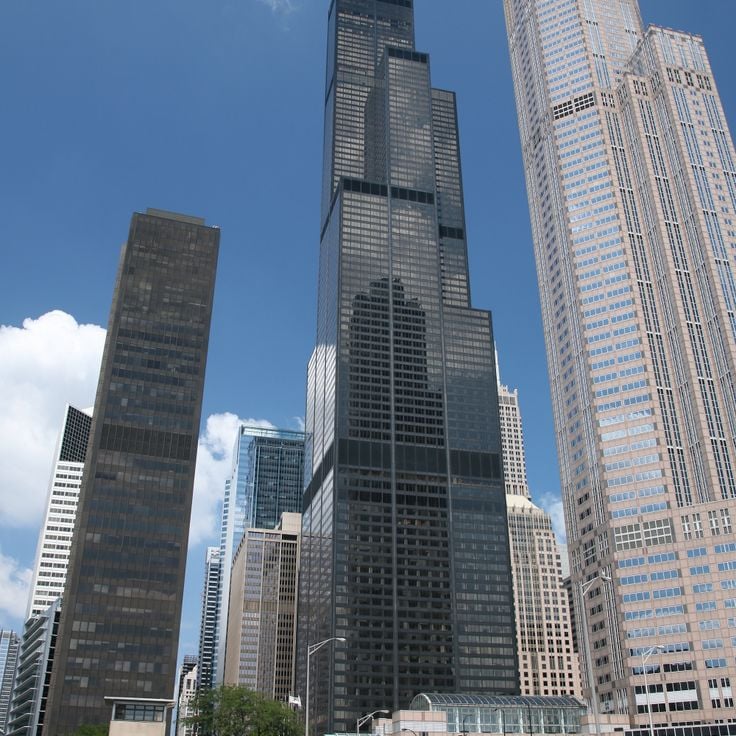
The Willis Tower, formerly known as Sears Tower, dominated Chicago's skyline for decades and held the record as the world's tallest building from 1973 to 1998. Standing 1,450 feet (442 meters) tall, the skyscraper consists of nine interconnected tubes that terminate at varying heights, creating its distinctive stepped silhouette. The Skydeck observation platform on the 103rd floor provides views across four states and features glass balconies that extend 1,353 feet (412 meters) above street level.
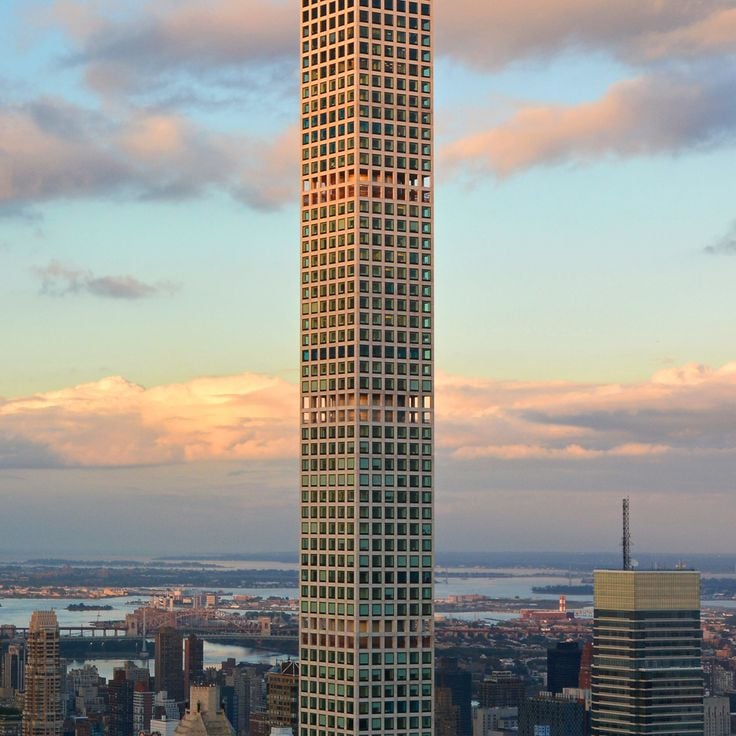
This residential tower rises 1,396 feet (426 meters) above Manhattan and ranks among the tallest buildings in the United States, defining the Midtown skyline with its angular, prismatic form. The 432 Park Avenue encompasses 96 floors and presents a perfect 1:15 aspect ratio, making it the slenderest skyscraper in the Western Hemisphere. The facade displays a grid of six by six windows per floor, interrupted by mechanical venting floors every twelve levels. Viñoly architects designed the building with a square footprint and a deliberate structural system of reinforced concrete that withstands extreme wind loads.
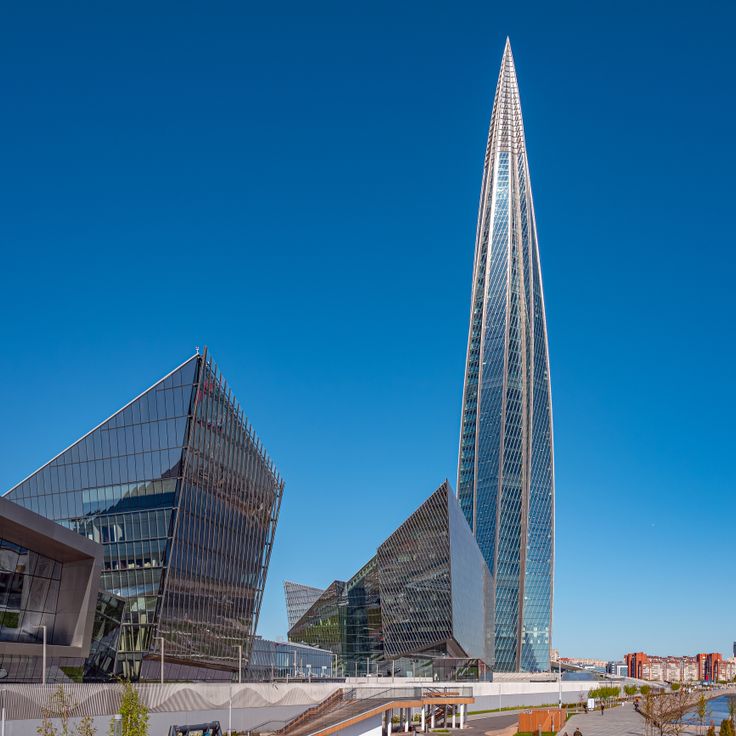
The Lakhta Center rises 462 meters above Saint Petersburg, claiming the title as Europe's tallest skyscraper. Finished in 2019, this building houses Gazprom's headquarters and shapes the city skyline with its rotating profile. The glass exterior has a spiral shape over 87 floors, creating a visual pattern that shifts with the viewing angle. Inside, the building is more than just an office space: it includes a science center and an observation deck at 357 meters where visitors see the city and the Gulf of Finland from above. The Lakhta Center has a double-layer facade system that naturally controls the temperature, lowering energy use significantly. The construction took over five years without stopping, using special foundation techniques to hold the building in the soft ground of the coastal area. The building's quick elevators can go up to 7 meters per second, making them some of the fastest in Europe. They help the 10,000 people who work here each day move quickly through the tower.
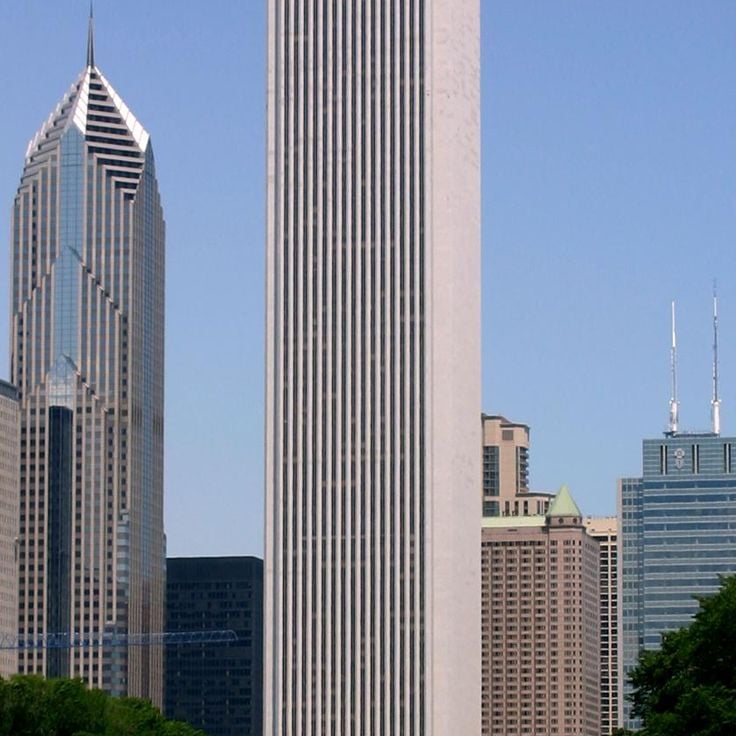
The Aon Center ranks among the tallest structures in Los Angeles, completed in 1973 and rising 860 feet (262 meters) across 62 floors. This office tower employs a steel frame design with prominent white granite columns running along the exterior facade. These vertical structural elements give the building its distinctive appearance while serving as load-bearing components. Located in the downtown financial district, the Aon Center primarily houses commercial office space. Charles Luckman Associates designed the tower, which exemplifies early 1970s architectural principles emphasizing functional design and geometric clarity in high-rise construction.
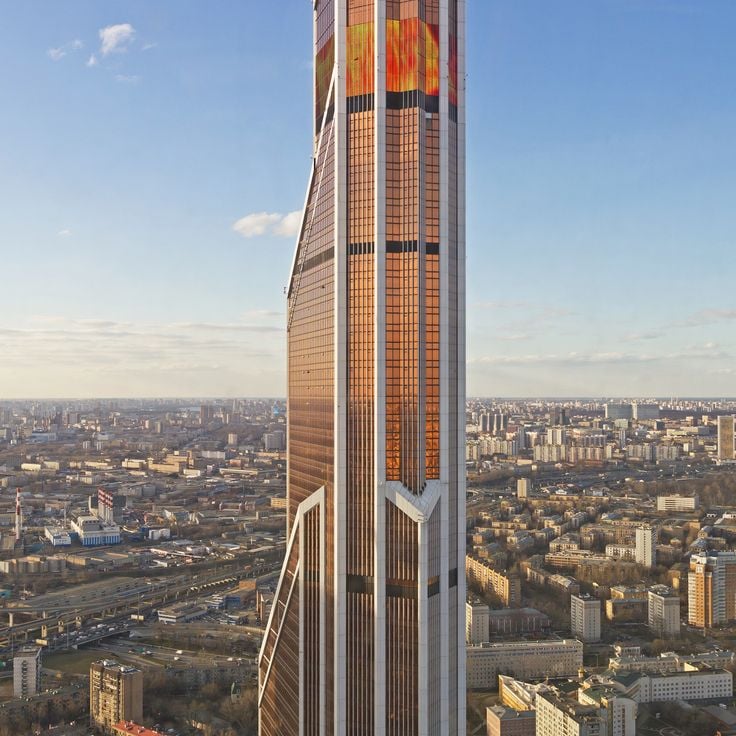
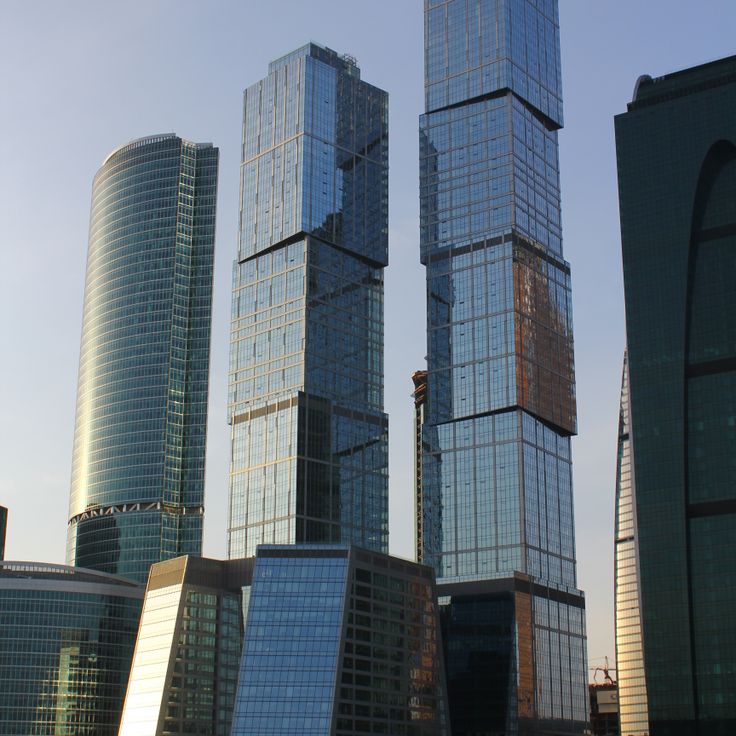
Mercury City Tower rises as a copper-toned skyscraper in the Moscow City business district, reaching a height of 1,112 feet (339 meters). The 75-story building was completed in 2013 and briefly held the title of Europe's tallest building. Its distinctive bronze facade of reflective glass gives the tower its recognizable appearance, while the structure tapers as it ascends toward the top.
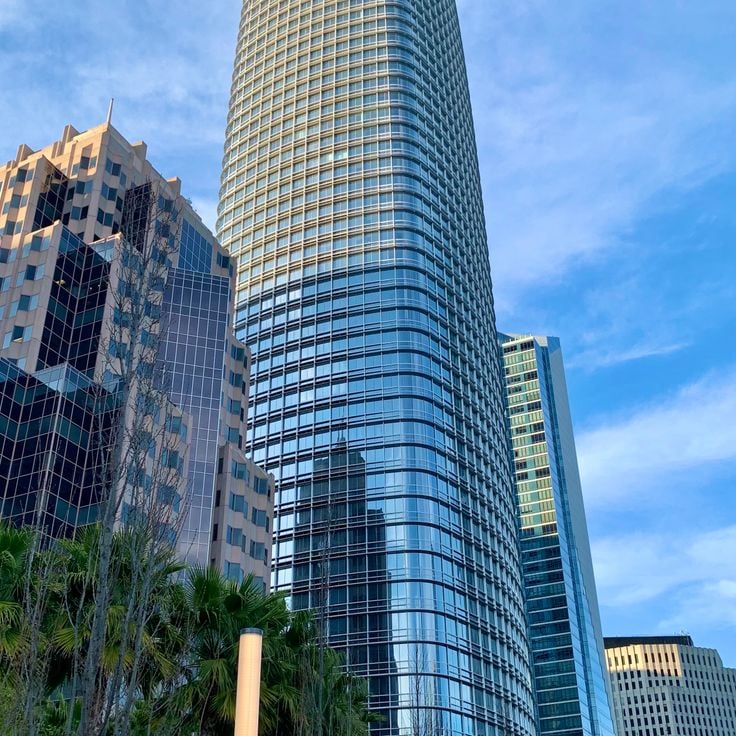
The Salesforce Tower stands as San Francisco's tallest building at 1,070 feet (326 meters), dominating the city's skyline since its completion in 2018. This 61-story office tower was designed by Pelli Clarke Pelli Architects and features a tapered glass facade that reflects daylight throughout the day. The tower houses office spaces and includes a public park at its base that serves both local residents and visitors to the area.
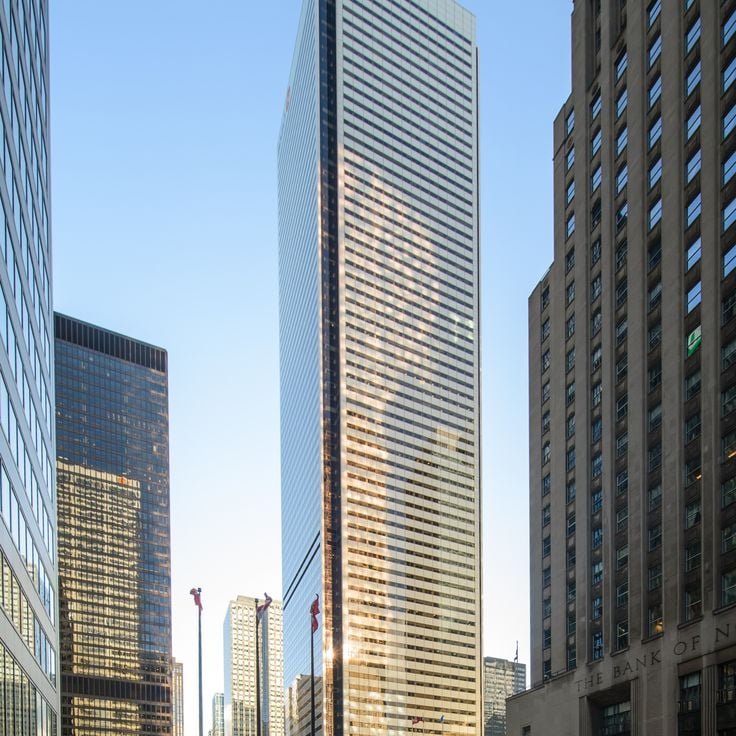
The First Canadian Place stands 978 feet tall, making it the tallest office building in Canada since its completion in 1975. The complex consists of two connected towers rising 72 stories above Toronto's financial district, housing corporate headquarters, banking operations and retail spaces within an underground shopping concourse. Its original white marble cladding was replaced with a modern glass facade during renovations, updating its appearance while maintaining the building's functional purpose. The structure connects to Toronto's PATH network, an underground pedestrian system that provides weather-protected access throughout downtown. The building remains a working office tower that accommodates thousands of employees and serves as a reference point in the city's skyline.
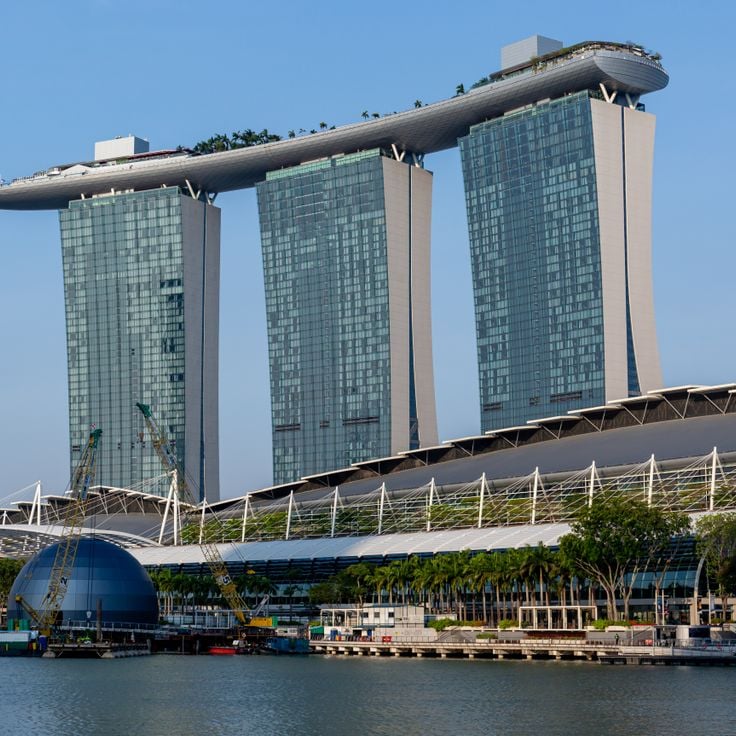
Marina Bay Sands is a prominent complex at the southern end of downtown that connects three 55-story towers with a curved platform. Opened in 2010, the structure houses a 2,561-room hotel, convention center, shops and casino. The 1,115-foot (340-meter) Sky Park terrace at the 57th-floor level features a pool and observation area 627 feet (191 meters) above ground. Designed by Moshe Safdie, the construction represents a technical achievement in modern high-rise building.
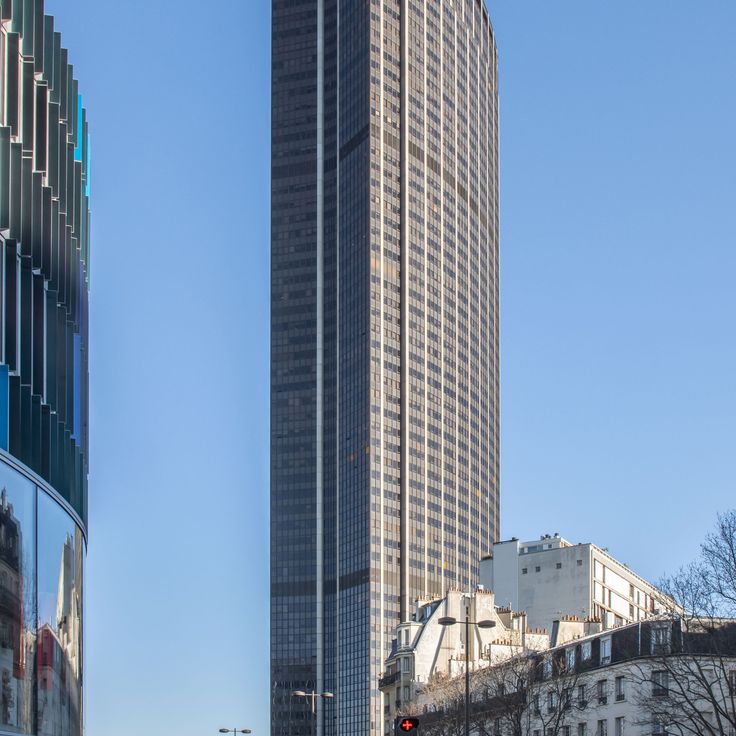
The Tour Montparnasse rises above the Left Bank and held the title of France's tallest office building when it opened in 1973. This 689-foot (210-meter) tower of concrete, glass and steel has shaped the Paris skyline for over five decades and offers panoramic views of the city and its landmarks from its 56th-floor observation deck.
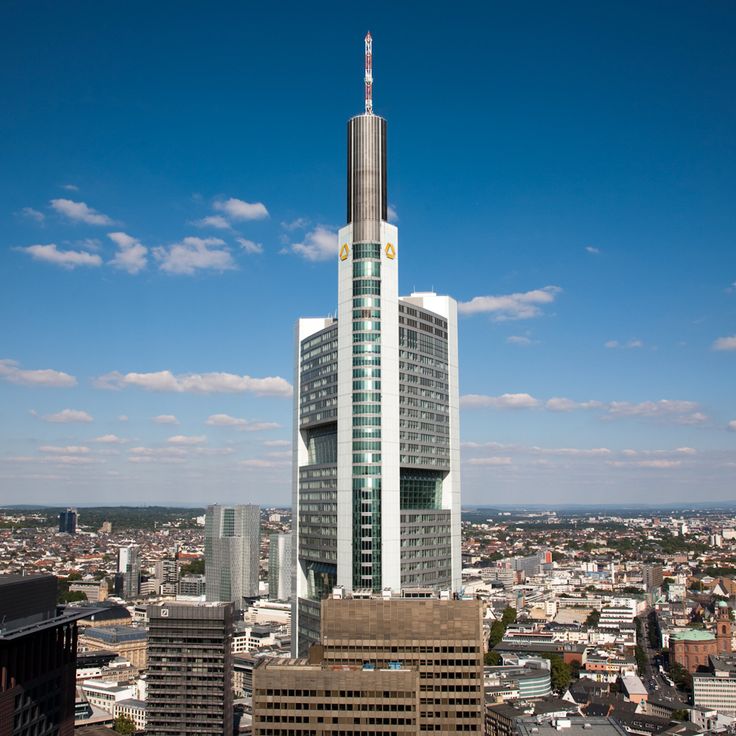
The Commerzbank Tower rises 850 feet (259 meters) above Frankfurt's banking district and held the title of Europe's tallest building when completed in 1997. Designed by Norman Foster, this 56-story structure features an innovative triangular floor plan with nine multi-story sky gardens arranged in a spiral around the building, allowing natural ventilation and daylight to reach deep into the office spaces.
This multifunctional complex consists of two distinct towers in the Moscow City business district. The two buildings were completed in 2009 and reach heights of 990 feet (302 meters) and 840 feet (257 meters). The architecture combines office space, residential units and retail areas in a vertical city concept. The towers are named Moscow and Saint Petersburg, representing Russia's two most important cities. The design comes from the Russian architectural firm NBBJ and integrates modern construction techniques with functional spatial concepts. The facades consist of glass and steel, reflecting the changing light over the Russian capital. City of Capitals ranks among the first completed high-rises in the Moscow City project.
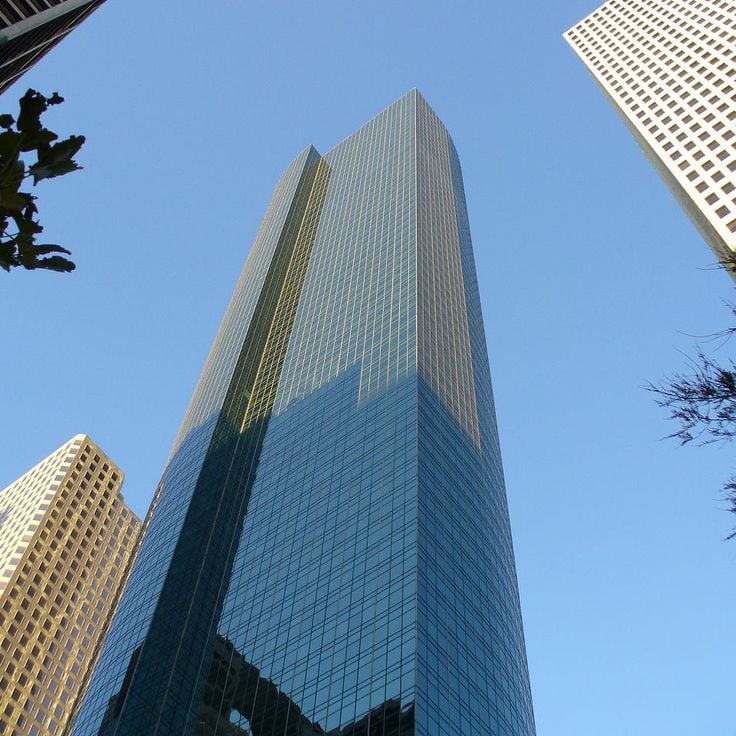
This 992-foot office tower has stood as Houston's second tallest building since 1983. The Wells Fargo Plaza features a distinctive five-tier pyramid roof that lights up at night and contributes to the downtown skyline's character. Philip Johnson and John Burgee designed the 71 floors with an exterior clad in Italian marble and granite. The building houses primarily office space and includes a two-story lobby finished with polished stone surfaces. Its underground pedestrian level connects to the Houston Downtown Tunnel System, which extends across several city blocks.
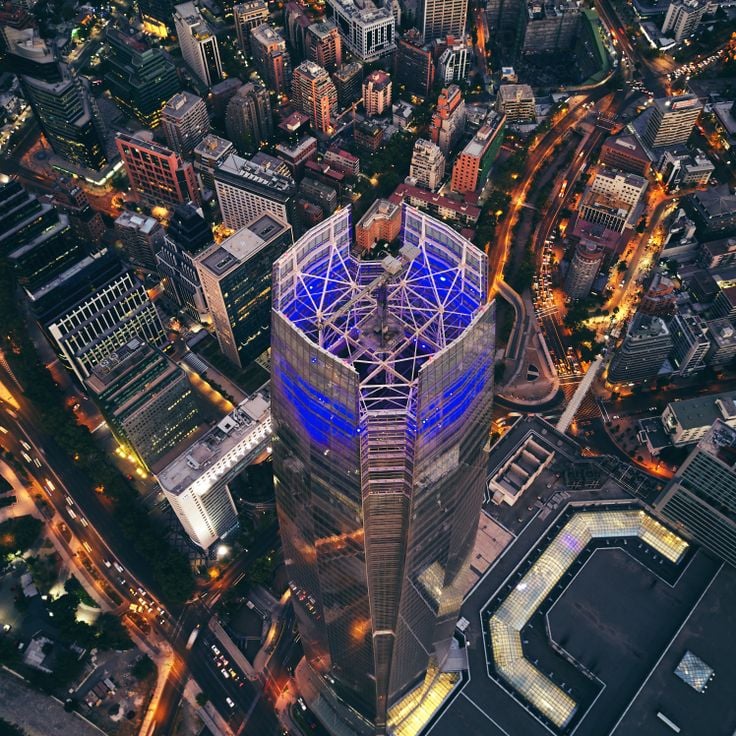
The Gran Torre Santiago has been overlooking Santiago since 2014 and remains the tallest building in Latin America with its 300 meters. This tower combines offices, a hotel, and shops in one structure. Its viewing deck is on floors 61 and 62, where visitors look out over Santiago and the Andes in the distance. The tower has a triangular shape with a glass facade that becomes narrower as it goes up. This narrowing is not just for style: it reduces wind pressure and improves stability. The building has fast elevators that serve its many floors and users. Because Chile often experiences earthquakes, the Gran Torre Santiago was built with some of the strictest earthquake safety standards in the world. Its structure can absorb ground movements and sway safely, adapting directly to the active geology of the region.
The Petronas Towers in Kuala Lumpur stand like two twin spires reaching 452 meters high. They were designed by architect Cesar Pelli and finished between 1992 and 1998. These buildings show how modern Asian design is shaped by local traditions. Their ground layout uses geometric patterns with an eight-pointed star. The outside combines stainless steel and glass. A two-level bridge connects the towers at the 41st and 42nd floors. Visitors can walk across this bridge to move from one tower to the other and see the city from above. This bridge needed special engineering to handle the movements caused by strong winds. The bases of the towers go down 120 meters into the ground to keep them steady, even though the land is made of hard rock.
The Burj Khalifa rises to 828 meters above Dubai and remains the tallest completed building in the world. Finished in 2010, this tower has 163 floors built on 192 piles that go 50 meters deep into the desert ground. The outside face is made of glass and stainless steel, reflecting the sunlight and creating a changing play of light that shifts during the day. Strong pumps move water up to the upper floors, while very fast elevators take visitors to three observation decks located on levels 124, 125, and 148. From these platforms, you can see the entire city and the Persian Gulf stretching to the horizon. Inside, the cooling system reuses 56 million liters of water each day to stay efficient. The same water also flows through fountains and the green spaces around the tower. The building was first called Burj Dubai, but it was renamed Burj Khalifa to honor Sheikh Khalifa bin Zayed Al Nahyan, the ruler of Abu Dhabi and the president of the United Arab Emirates. It took about six years to build, from 2004 to 2009, when the outside was finished.
The Shanghai Tower rises 632 meters above Shanghai and is one of the tallest buildings in the world. This office, hotel, and observation tower offers views that stretch across the entire city. Its double-skin façade acts as a heat filter, greatly lowering the building's energy use. The structure uses a spiral piping system that allows wind to slide around it instead of hitting the walls directly, which reduces sway. The elevators move at 10 meters per second, making them among the fastest in the world at the time it opened. The building also has a rainwater collection system that supplies toilets and cooling systems, gathering the equivalent of thousands of cubic meters of water each year.
The Abraj Al-Bait Clock Tower rises above the Haram precinct in Mecca, displaying a clock face measuring 141 feet (43 meters) in diameter, among the largest in the world. This 2012 skyscraper stands 1,972 feet (601 meters) tall and forms part of a seven-tower complex that houses hotels, residences and prayer spaces for millions of pilgrims. The illuminated clock face remains visible from 16 miles (25 kilometers) away, serving as a landmark for worshippers approaching the Kaaba.
The One World Trade Center is the main building of the rebuilt World Trade Center complex in Lower Manhattan. Its height of 541 meters holds a special meaning for the city. Architect David Childs designed a structure that starts from a square base and gradually becomes narrower as it rises, ending with a glass spire that dominates the skyline. Inside, there are offices spread over more than 100 floors. Two observation decks on levels 100 and 102 allow visitors to see Manhattan, Brooklyn, and New Jersey from above. During construction, engineers added advanced safety systems, including earthquake-resistant structures and a facade designed to withstand strong winds. The building uses innovative materials and energy management systems, earning the LEED Gold certification, which is rare for a tower of this size. The foundations go deep into the rocky ground of Manhattan, and internal suspension cables can support loads equal to several traditional office buildings combined.
The Lotte World Tower rises 555 meters (1,819 feet) above Seoul, making it the tallest building in South Korea and the fifth tallest in the world. This 123-story skyscraper was completed in 2017 and combines office space, luxury residences, a seven-star hotel, and a public observation deck on the 117th floor. The facade uses double-glazed glass that reflects daylight, giving the tower a constantly changing appearance throughout the day. The structure's design draws from traditional Korean ceramics and calligraphy in its tapered silhouette.
Taipei 101 combines modern engineering with traditional Chinese design elements. Completed in 2004, the 1,671-foot (509-meter) tower features a distinctive pagoda-inspired silhouette with eight stacked segments that reference a Chinese symbol of prosperity. A 730-ton pendulum damper inside stabilizes the structure during typhoons and earthquakes. The design incorporates traditional bamboo motifs into the facade structure, while the observation deck at 1,253 feet (382 meters) is accessible via high-speed elevators.
The Kowloon International Commerce Centre rises 484 meters tall with 118 floors of glass and steel, overlooking what was once an industrial zone. At the top, an observation deck offers views of Victoria Harbour and the surrounding area. The building was made with a reinforced central core to resist the frequent typhoons in Hong Kong. The double-skin facades help save energy by creating a layer of insulating air between the glass layers. The tower also has tuned mass dampers, systems of 300 tons that move slightly to balance the wind movements. This is a common technique in tall buildings around here.
The Centre du Royaume in Riyadh ranks among the most recognizable high-rises in the Arab world. The 302-foot (302-meter) tower, completed in 2002, shapes the skyline of Saudi Arabia's capital with its distinctive parabolic form. The horseshoe-shaped opening at the summit, accessible via a skybridge between the two towers, offers visitors expansive views across the city. The building's architecture combines modern engineering with regional design elements and houses office space, a shopping mall, luxury apartments, and a hotel.
The Shard London, designed by Renzo Piano, rises 1,016 feet (310 meters) above the city and forms a distinctive pyramid shape with its glass facade. The building houses offices, restaurants, a hotel and a public viewing platform on the 72nd floor that provides wide views over the Thames and the surrounding metropolis.
The Bank of America Tower rises 1,200 feet (366 meters) above Midtown Manhattan, distinguished by its prismatic glass facade and asymmetrical spire. Completed in 2009, this building was designed by Cook+Fox Architects and became the first skyscraper in the United States to achieve LEED Platinum certification for environmentally responsible construction. Its design incorporates high-performance glass, ice-water storage for energy efficiency, and an air filtration system that circulates outdoor air throughout the interior spaces. The tower stands at the corner of Sixth Avenue and 42nd Street, providing more than 2.1 million square feet (195,000 square meters) of office space. Its tapered profile and setback spire contribute to the city's skyline while combining structural efficiency with contemporary architectural form.
Jin Mao Tower rises in the Pudong financial district and combines traditional Chinese architectural elements with modern engineering techniques. Completed in 1999, this building reaches 1,381 feet (421 meters) across 88 floors and stood as China's tallest building at its opening. The stainless steel and glass facade follows a tiered design that recalls Chinese pagodas, while the number 88 holds special significance in Chinese culture as a symbol of prosperity. The building houses offices, a hotel and a public observation deck on the 88th floor that provides views across Shanghai in all directions.
The Willis Tower, formerly known as Sears Tower, dominated Chicago's skyline for decades and held the record as the world's tallest building from 1973 to 1998. Standing 1,450 feet (442 meters) tall, the skyscraper consists of nine interconnected tubes that terminate at varying heights, creating its distinctive stepped silhouette. The Skydeck observation platform on the 103rd floor provides views across four states and features glass balconies that extend 1,353 feet (412 meters) above street level.
This residential tower rises 1,396 feet (426 meters) above Manhattan and ranks among the tallest buildings in the United States, defining the Midtown skyline with its angular, prismatic form. The 432 Park Avenue encompasses 96 floors and presents a perfect 1:15 aspect ratio, making it the slenderest skyscraper in the Western Hemisphere. The facade displays a grid of six by six windows per floor, interrupted by mechanical venting floors every twelve levels. Viñoly architects designed the building with a square footprint and a deliberate structural system of reinforced concrete that withstands extreme wind loads.
The Lakhta Center rises 462 meters above Saint Petersburg, claiming the title as Europe's tallest skyscraper. Finished in 2019, this building houses Gazprom's headquarters and shapes the city skyline with its rotating profile. The glass exterior has a spiral shape over 87 floors, creating a visual pattern that shifts with the viewing angle. Inside, the building is more than just an office space: it includes a science center and an observation deck at 357 meters where visitors see the city and the Gulf of Finland from above. The Lakhta Center has a double-layer facade system that naturally controls the temperature, lowering energy use significantly. The construction took over five years without stopping, using special foundation techniques to hold the building in the soft ground of the coastal area. The building's quick elevators can go up to 7 meters per second, making them some of the fastest in Europe. They help the 10,000 people who work here each day move quickly through the tower.
The Aon Center ranks among the tallest structures in Los Angeles, completed in 1973 and rising 860 feet (262 meters) across 62 floors. This office tower employs a steel frame design with prominent white granite columns running along the exterior facade. These vertical structural elements give the building its distinctive appearance while serving as load-bearing components. Located in the downtown financial district, the Aon Center primarily houses commercial office space. Charles Luckman Associates designed the tower, which exemplifies early 1970s architectural principles emphasizing functional design and geometric clarity in high-rise construction.
Mercury City Tower rises as a copper-toned skyscraper in the Moscow City business district, reaching a height of 1,112 feet (339 meters). The 75-story building was completed in 2013 and briefly held the title of Europe's tallest building. Its distinctive bronze facade of reflective glass gives the tower its recognizable appearance, while the structure tapers as it ascends toward the top.
The Salesforce Tower stands as San Francisco's tallest building at 1,070 feet (326 meters), dominating the city's skyline since its completion in 2018. This 61-story office tower was designed by Pelli Clarke Pelli Architects and features a tapered glass facade that reflects daylight throughout the day. The tower houses office spaces and includes a public park at its base that serves both local residents and visitors to the area.
The First Canadian Place stands 978 feet tall, making it the tallest office building in Canada since its completion in 1975. The complex consists of two connected towers rising 72 stories above Toronto's financial district, housing corporate headquarters, banking operations and retail spaces within an underground shopping concourse. Its original white marble cladding was replaced with a modern glass facade during renovations, updating its appearance while maintaining the building's functional purpose. The structure connects to Toronto's PATH network, an underground pedestrian system that provides weather-protected access throughout downtown. The building remains a working office tower that accommodates thousands of employees and serves as a reference point in the city's skyline.
Marina Bay Sands is a prominent complex at the southern end of downtown that connects three 55-story towers with a curved platform. Opened in 2010, the structure houses a 2,561-room hotel, convention center, shops and casino. The 1,115-foot (340-meter) Sky Park terrace at the 57th-floor level features a pool and observation area 627 feet (191 meters) above ground. Designed by Moshe Safdie, the construction represents a technical achievement in modern high-rise building.
The Tour Montparnasse rises above the Left Bank and held the title of France's tallest office building when it opened in 1973. This 689-foot (210-meter) tower of concrete, glass and steel has shaped the Paris skyline for over five decades and offers panoramic views of the city and its landmarks from its 56th-floor observation deck.
The Commerzbank Tower rises 850 feet (259 meters) above Frankfurt's banking district and held the title of Europe's tallest building when completed in 1997. Designed by Norman Foster, this 56-story structure features an innovative triangular floor plan with nine multi-story sky gardens arranged in a spiral around the building, allowing natural ventilation and daylight to reach deep into the office spaces.
This multifunctional complex consists of two distinct towers in the Moscow City business district. The two buildings were completed in 2009 and reach heights of 990 feet (302 meters) and 840 feet (257 meters). The architecture combines office space, residential units and retail areas in a vertical city concept. The towers are named Moscow and Saint Petersburg, representing Russia's two most important cities. The design comes from the Russian architectural firm NBBJ and integrates modern construction techniques with functional spatial concepts. The facades consist of glass and steel, reflecting the changing light over the Russian capital. City of Capitals ranks among the first completed high-rises in the Moscow City project.
This 992-foot office tower has stood as Houston's second tallest building since 1983. The Wells Fargo Plaza features a distinctive five-tier pyramid roof that lights up at night and contributes to the downtown skyline's character. Philip Johnson and John Burgee designed the 71 floors with an exterior clad in Italian marble and granite. The building houses primarily office space and includes a two-story lobby finished with polished stone surfaces. Its underground pedestrian level connects to the Houston Downtown Tunnel System, which extends across several city blocks.
The Gran Torre Santiago has been overlooking Santiago since 2014 and remains the tallest building in Latin America with its 300 meters. This tower combines offices, a hotel, and shops in one structure. Its viewing deck is on floors 61 and 62, where visitors look out over Santiago and the Andes in the distance. The tower has a triangular shape with a glass facade that becomes narrower as it goes up. This narrowing is not just for style: it reduces wind pressure and improves stability. The building has fast elevators that serve its many floors and users. Because Chile often experiences earthquakes, the Gran Torre Santiago was built with some of the strictest earthquake safety standards in the world. Its structure can absorb ground movements and sway safely, adapting directly to the active geology of the region.
The Petronas Towers in Kuala Lumpur stand like two twin spires reaching 452 meters high. They were designed by architect Cesar Pelli and finished between 1992 and 1998. These buildings show how modern Asian design is shaped by local traditions. Their ground layout uses geometric patterns with an eight-pointed star. The outside combines stainless steel and glass. A two-level bridge connects the towers at the 41st and 42nd floors. Visitors can walk across this bridge to move from one tower to the other and see the city from above. This bridge needed special engineering to handle the movements caused by strong winds. The bases of the towers go down 120 meters into the ground to keep them steady, even though the land is made of hard rock.
The Burj Khalifa rises to 828 meters above Dubai and remains the tallest completed building in the world. Finished in 2010, this tower has 163 floors built on 192 piles that go 50 meters deep into the desert ground. The outside face is made of glass and stainless steel, reflecting the sunlight and creating a changing play of light that shifts during the day. Strong pumps move water up to the upper floors, while very fast elevators take visitors to three observation decks located on levels 124, 125, and 148. From these platforms, you can see the entire city and the Persian Gulf stretching to the horizon. Inside, the cooling system reuses 56 million liters of water each day to stay efficient. The same water also flows through fountains and the green spaces around the tower. The building was first called Burj Dubai, but it was renamed Burj Khalifa to honor Sheikh Khalifa bin Zayed Al Nahyan, the ruler of Abu Dhabi and the president of the United Arab Emirates. It took about six years to build, from 2004 to 2009, when the outside was finished.
The Shanghai Tower rises 632 meters above Shanghai and is one of the tallest buildings in the world. This office, hotel, and observation tower offers views that stretch across the entire city. Its double-skin façade acts as a heat filter, greatly lowering the building's energy use. The structure uses a spiral piping system that allows wind to slide around it instead of hitting the walls directly, which reduces sway. The elevators move at 10 meters per second, making them among the fastest in the world at the time it opened. The building also has a rainwater collection system that supplies toilets and cooling systems, gathering the equivalent of thousands of cubic meters of water each year.
The Abraj Al-Bait Clock Tower rises above the Haram precinct in Mecca, displaying a clock face measuring 141 feet (43 meters) in diameter, among the largest in the world. This 2012 skyscraper stands 1,972 feet (601 meters) tall and forms part of a seven-tower complex that houses hotels, residences and prayer spaces for millions of pilgrims. The illuminated clock face remains visible from 16 miles (25 kilometers) away, serving as a landmark for worshippers approaching the Kaaba.
The One World Trade Center is the main building of the rebuilt World Trade Center complex in Lower Manhattan. Its height of 541 meters holds a special meaning for the city. Architect David Childs designed a structure that starts from a square base and gradually becomes narrower as it rises, ending with a glass spire that dominates the skyline. Inside, there are offices spread over more than 100 floors. Two observation decks on levels 100 and 102 allow visitors to see Manhattan, Brooklyn, and New Jersey from above. During construction, engineers added advanced safety systems, including earthquake-resistant structures and a facade designed to withstand strong winds. The building uses innovative materials and energy management systems, earning the LEED Gold certification, which is rare for a tower of this size. The foundations go deep into the rocky ground of Manhattan, and internal suspension cables can support loads equal to several traditional office buildings combined.
The Lotte World Tower rises 555 meters (1,819 feet) above Seoul, making it the tallest building in South Korea and the fifth tallest in the world. This 123-story skyscraper was completed in 2017 and combines office space, luxury residences, a seven-star hotel, and a public observation deck on the 117th floor. The facade uses double-glazed glass that reflects daylight, giving the tower a constantly changing appearance throughout the day. The structure's design draws from traditional Korean ceramics and calligraphy in its tapered silhouette.
Taipei 101 combines modern engineering with traditional Chinese design elements. Completed in 2004, the 1,671-foot (509-meter) tower features a distinctive pagoda-inspired silhouette with eight stacked segments that reference a Chinese symbol of prosperity. A 730-ton pendulum damper inside stabilizes the structure during typhoons and earthquakes. The design incorporates traditional bamboo motifs into the facade structure, while the observation deck at 1,253 feet (382 meters) is accessible via high-speed elevators.
The Kowloon International Commerce Centre rises 484 meters tall with 118 floors of glass and steel, overlooking what was once an industrial zone. At the top, an observation deck offers views of Victoria Harbour and the surrounding area. The building was made with a reinforced central core to resist the frequent typhoons in Hong Kong. The double-skin facades help save energy by creating a layer of insulating air between the glass layers. The tower also has tuned mass dampers, systems of 300 tons that move slightly to balance the wind movements. This is a common technique in tall buildings around here.
The Centre du Royaume in Riyadh ranks among the most recognizable high-rises in the Arab world. The 302-foot (302-meter) tower, completed in 2002, shapes the skyline of Saudi Arabia's capital with its distinctive parabolic form. The horseshoe-shaped opening at the summit, accessible via a skybridge between the two towers, offers visitors expansive views across the city. The building's architecture combines modern engineering with regional design elements and houses office space, a shopping mall, luxury apartments, and a hotel.
The Shard London, designed by Renzo Piano, rises 1,016 feet (310 meters) above the city and forms a distinctive pyramid shape with its glass facade. The building houses offices, restaurants, a hotel and a public viewing platform on the 72nd floor that provides wide views over the Thames and the surrounding metropolis.
The Bank of America Tower rises 1,200 feet (366 meters) above Midtown Manhattan, distinguished by its prismatic glass facade and asymmetrical spire. Completed in 2009, this building was designed by Cook+Fox Architects and became the first skyscraper in the United States to achieve LEED Platinum certification for environmentally responsible construction. Its design incorporates high-performance glass, ice-water storage for energy efficiency, and an air filtration system that circulates outdoor air throughout the interior spaces. The tower stands at the corner of Sixth Avenue and 42nd Street, providing more than 2.1 million square feet (195,000 square meters) of office space. Its tapered profile and setback spire contribute to the city's skyline while combining structural efficiency with contemporary architectural form.
Jin Mao Tower rises in the Pudong financial district and combines traditional Chinese architectural elements with modern engineering techniques. Completed in 1999, this building reaches 1,381 feet (421 meters) across 88 floors and stood as China's tallest building at its opening. The stainless steel and glass facade follows a tiered design that recalls Chinese pagodas, while the number 88 holds special significance in Chinese culture as a symbol of prosperity. The building houses offices, a hotel and a public observation deck on the 88th floor that provides views across Shanghai in all directions.
The Willis Tower, formerly known as Sears Tower, dominated Chicago's skyline for decades and held the record as the world's tallest building from 1973 to 1998. Standing 1,450 feet (442 meters) tall, the skyscraper consists of nine interconnected tubes that terminate at varying heights, creating its distinctive stepped silhouette. The Skydeck observation platform on the 103rd floor provides views across four states and features glass balconies that extend 1,353 feet (412 meters) above street level.
This residential tower rises 1,396 feet (426 meters) above Manhattan and ranks among the tallest buildings in the United States, defining the Midtown skyline with its angular, prismatic form. The 432 Park Avenue encompasses 96 floors and presents a perfect 1:15 aspect ratio, making it the slenderest skyscraper in the Western Hemisphere. The facade displays a grid of six by six windows per floor, interrupted by mechanical venting floors every twelve levels. Viñoly architects designed the building with a square footprint and a deliberate structural system of reinforced concrete that withstands extreme wind loads.
The Lakhta Center rises 462 meters above Saint Petersburg, claiming the title as Europe's tallest skyscraper. Finished in 2019, this building houses Gazprom's headquarters and shapes the city skyline with its rotating profile. The glass exterior has a spiral shape over 87 floors, creating a visual pattern that shifts with the viewing angle. Inside, the building is more than just an office space: it includes a science center and an observation deck at 357 meters where visitors see the city and the Gulf of Finland from above. The Lakhta Center has a double-layer facade system that naturally controls the temperature, lowering energy use significantly. The construction took over five years without stopping, using special foundation techniques to hold the building in the soft ground of the coastal area. The building's quick elevators can go up to 7 meters per second, making them some of the fastest in Europe. They help the 10,000 people who work here each day move quickly through the tower.
The Aon Center ranks among the tallest structures in Los Angeles, completed in 1973 and rising 860 feet (262 meters) across 62 floors. This office tower employs a steel frame design with prominent white granite columns running along the exterior facade. These vertical structural elements give the building its distinctive appearance while serving as load-bearing components. Located in the downtown financial district, the Aon Center primarily houses commercial office space. Charles Luckman Associates designed the tower, which exemplifies early 1970s architectural principles emphasizing functional design and geometric clarity in high-rise construction.
Mercury City Tower rises as a copper-toned skyscraper in the Moscow City business district, reaching a height of 1,112 feet (339 meters). The 75-story building was completed in 2013 and briefly held the title of Europe's tallest building. Its distinctive bronze facade of reflective glass gives the tower its recognizable appearance, while the structure tapers as it ascends toward the top.
The Salesforce Tower stands as San Francisco's tallest building at 1,070 feet (326 meters), dominating the city's skyline since its completion in 2018. This 61-story office tower was designed by Pelli Clarke Pelli Architects and features a tapered glass facade that reflects daylight throughout the day. The tower houses office spaces and includes a public park at its base that serves both local residents and visitors to the area.
The First Canadian Place stands 978 feet tall, making it the tallest office building in Canada since its completion in 1975. The complex consists of two connected towers rising 72 stories above Toronto's financial district, housing corporate headquarters, banking operations and retail spaces within an underground shopping concourse. Its original white marble cladding was replaced with a modern glass facade during renovations, updating its appearance while maintaining the building's functional purpose. The structure connects to Toronto's PATH network, an underground pedestrian system that provides weather-protected access throughout downtown. The building remains a working office tower that accommodates thousands of employees and serves as a reference point in the city's skyline.
Marina Bay Sands is a prominent complex at the southern end of downtown that connects three 55-story towers with a curved platform. Opened in 2010, the structure houses a 2,561-room hotel, convention center, shops and casino. The 1,115-foot (340-meter) Sky Park terrace at the 57th-floor level features a pool and observation area 627 feet (191 meters) above ground. Designed by Moshe Safdie, the construction represents a technical achievement in modern high-rise building.
The Tour Montparnasse rises above the Left Bank and held the title of France's tallest office building when it opened in 1973. This 689-foot (210-meter) tower of concrete, glass and steel has shaped the Paris skyline for over five decades and offers panoramic views of the city and its landmarks from its 56th-floor observation deck.
The Commerzbank Tower rises 850 feet (259 meters) above Frankfurt's banking district and held the title of Europe's tallest building when completed in 1997. Designed by Norman Foster, this 56-story structure features an innovative triangular floor plan with nine multi-story sky gardens arranged in a spiral around the building, allowing natural ventilation and daylight to reach deep into the office spaces.
This multifunctional complex consists of two distinct towers in the Moscow City business district. The two buildings were completed in 2009 and reach heights of 990 feet (302 meters) and 840 feet (257 meters). The architecture combines office space, residential units and retail areas in a vertical city concept. The towers are named Moscow and Saint Petersburg, representing Russia's two most important cities. The design comes from the Russian architectural firm NBBJ and integrates modern construction techniques with functional spatial concepts. The facades consist of glass and steel, reflecting the changing light over the Russian capital. City of Capitals ranks among the first completed high-rises in the Moscow City project.
This 992-foot office tower has stood as Houston's second tallest building since 1983. The Wells Fargo Plaza features a distinctive five-tier pyramid roof that lights up at night and contributes to the downtown skyline's character. Philip Johnson and John Burgee designed the 71 floors with an exterior clad in Italian marble and granite. The building houses primarily office space and includes a two-story lobby finished with polished stone surfaces. Its underground pedestrian level connects to the Houston Downtown Tunnel System, which extends across several city blocks.
The Gran Torre Santiago has been overlooking Santiago since 2014 and remains the tallest building in Latin America with its 300 meters. This tower combines offices, a hotel, and shops in one structure. Its viewing deck is on floors 61 and 62, where visitors look out over Santiago and the Andes in the distance. The tower has a triangular shape with a glass facade that becomes narrower as it goes up. This narrowing is not just for style: it reduces wind pressure and improves stability. The building has fast elevators that serve its many floors and users. Because Chile often experiences earthquakes, the Gran Torre Santiago was built with some of the strictest earthquake safety standards in the world. Its structure can absorb ground movements and sway safely, adapting directly to the active geology of the region.