Mei'an Temple, Buddhist temple in Zhaoqing, China
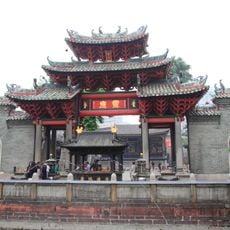
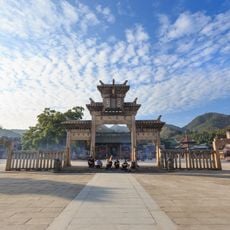
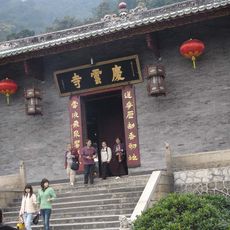
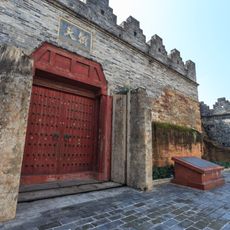
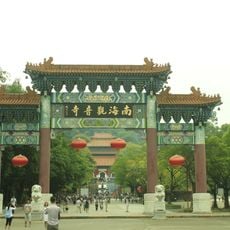
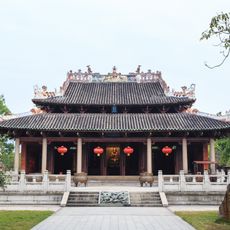
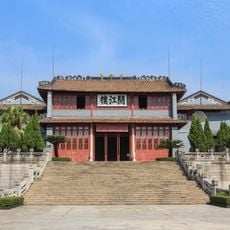
Mei'an Temple is a Buddhist sanctuary in Zhaoqing that features traditional Chinese architectural design with curved roofs and intricate stone carvings throughout its buildings. The grounds consist of multiple structures, courtyards, and quiet areas designed for worship and contemplation.
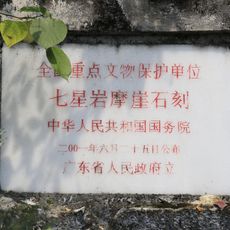
The monk Zhiyuan founded the temple in 996, the second year of the Zhidao era of the Northern Song, on the hill where Huineng is said to have planted a plum tree. It was converted into the Xia Gong ancestral hall during the Jiajing reign of the Ming, then repaired under the Wanli, Kangxi, Qianlong and Daoguang emperors. It was restored again in 1979, listed as a Guangdong provincial heritage site in 1962 and as a Major National Historical and Cultural Site in 1996.
The temple serves as a center where people gather for Buddhist worship and reflection, with monks performing daily rituals that shape the spiritual life of the community. Visitors can observe traditional practices that have remained largely unchanged over generations.
The temple is best explored on foot since the grounds are relatively compact and create a quiet environment for visitors. Comfortable walking shoes are recommended because the pathways involve uneven stone surfaces and small steps throughout the area.
The temple is part of the Zhaoqing Museum and displays an exhibition on the life of Huineng, the sixth patriarch of Chan Buddhism. The name Mei'an means "Plum Nunnery", recalling the plum tree Huineng is said to have planted on the hill where the monk Zhiyuan built the shrine in 996.
The community of curious travelers
AroundUs brings together thousands of curated places, local tips, and hidden gems, enriched daily by 93,646 contributors worldwide.