Qingyun Temple, National Key Buddhist Temple in Dinghu District, China
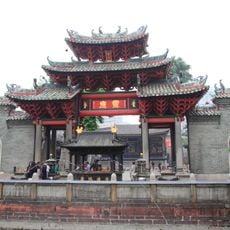
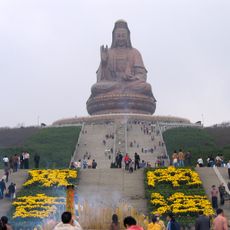
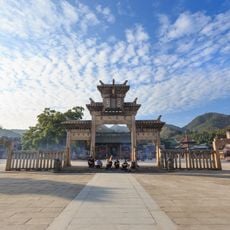
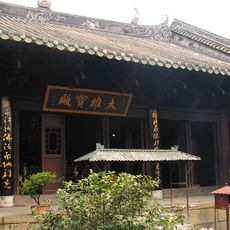
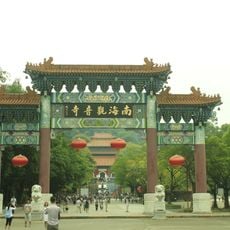
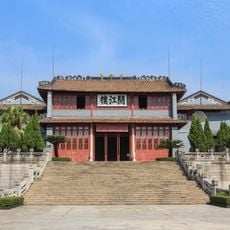
Qingyun Temple is a large Buddhist temple in Dinghu District with multiple halls arranged along a central axis in a traditional pattern. The layout includes several courtyards that guide visitors through different sections of the complex in an organized way.
The temple began in 1633 as Lianhua'an, a thatched hermitage founded by Shi Zaisan on Lotus Peak. Abbot Shi Qihe directed construction of over 100 halls completed in 1636. In 1649 Emperor Yongli of the Southern Ming visited with his mother; in 1893 Empress Dowager Cixi granted the name Wanshou Qingyun Temple and 5,048 sutras.
Qingyun Temple is a National Key Buddhist Temple in Han Chinese Area, a status granted by the State Council in 1983. Its name was honoured by Empress Dowager Cixi, who inscribed "Wanshou Qingyun Temple" in 1893, when master Xianchun brought 5,048 volumes of sutras. Among the relics kept here are a Buddha tooth relic, a large bronze bell and a thousand-monk cauldron.
The complex is easy to walk through and the pathways between courtyards are clearly marked for easy navigation. Wear comfortable shoes as you will walk through multiple areas and climb steps to visit different halls.
The temple holds a set of 5,048 sutras brought by master Xianchun in 1893, during the Guangxu reign. Empress Dowager Cixi responded by inscribing the name "Wanshou Qingyun Temple" for the site. The temple also keeps a seat given by Shang Kexi, the Qing prince of Pingnan.
The community of curious travelers
AroundUs brings together thousands of curated places, local tips, and hidden gems, enriched daily by 93,572 contributors worldwide.