Chen Baisha Temple, Ming Dynasty ancestral hall in Pengjiang, Jiangmen, China
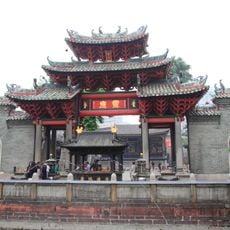
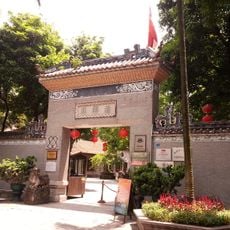
Chen Baisha Temple is a Ming Dynasty structure in Jiangmen featuring multiple pavilions and courtyards arranged in a traditional layout. The buildings display carved pillars, decorative stonework, and wooden architectural details that have survived across centuries of use and maintenance.
The shrine was first decreed in 1574, twelve years after Chen Xianzhang's death, and built with donations from Nanjing Minister of Rites He Weibo and Xinhui magistrate Yuan Kui; it was completed in 1584, the same year the Biyu Tower was rebuilt on the site of Chen's former residence. The complex was repaired repeatedly under the Ming and Qing, used as a granary by villagers after 1949, and placed under Jiangmen's cultural relics office in 1977. It became a Guangdong provincial protected site in 1979 and a national key cultural relic in 2019.
The temple honors a Ming Dynasty scholar whose ideas shaped education throughout the region. You can see how this place served as a center for learning and intellectual exchange, with its layout reflecting the values placed on study and contemplation.
The temple is open to visitors during the day and can be explored at your own pace. Plan enough time to walk through each courtyard and pavilion carefully, as the carved details and architectural features reward close attention.
The complex is not a temple but an ancestral hall, and its frontmost structure is a Ming wooden-and-stone chastity archway decreed in 1477 for Chen Baisha's mother, Lady Lin. Its rear hall, Biyu Lou, stands on the site of Chen's former residence and was rebuilt in 1584; the calligraphy plaque attributed to his pupil Zhan Ruoshui is a modern copy.
The community of curious travelers
AroundUs brings together thousands of curated places, local tips, and hidden gems, enriched daily by 93,222 contributors worldwide.