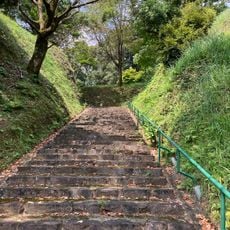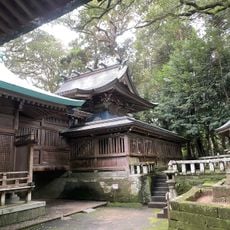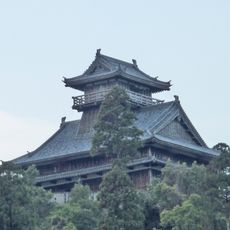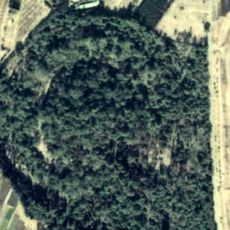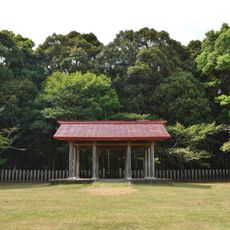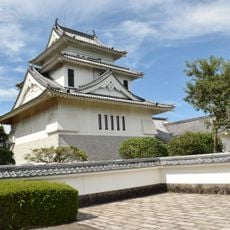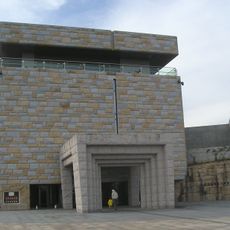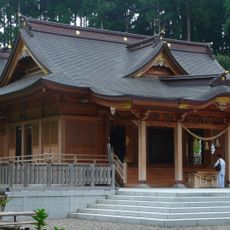
Hyuga-kokubunji, Archaeological remains of Buddhist temple in Saito, Japan.
Hyuga-kokubunji is the site of a former Buddhist temple in Saito, Miyazaki Prefecture, founded between 741 and 756 under Emperor Shomu's decree. Excavations since 1995 have revealed the foundations of a kondō (main hall), a chūmon (middle gate), and a corridor, along with a ditch that once surrounded the complex. The temple was abandoned in 1871.
Records do not give the founding date of Hyuga-kokubunji; the Shoku Nihongi entry for 756 listing Hyuga among 26 provinces places its construction between the 741 decree of Emperor Shomu and 756. The Engi-shiki-era Koen-shiki records its allotted tax revenue at 10,000 bundles. In 1788 the itinerant monk Mokujiki visited the declining temple and became its abbot at local request; after a 1791 fire he rebuilt the halls and made the five Nyorai statues, leaving in 1797. The temple was abolished in 1871 under the anti-Buddhist campaign.
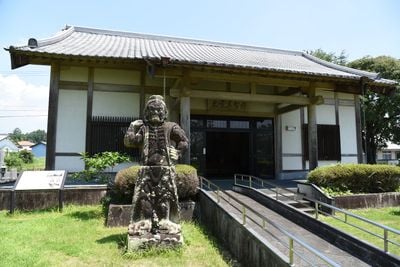
The temple's Honzon was the Five Wisdom Buddhas (Gochi Nyorai). In 1788 the wandering monk Mokujiki visited the then-declining temple and, asked by locals, became its abbot; after a 1791 fire he rebuilt the halls and made the five statues. These were saved by local believers when the temple was abolished in 1871, and are now a prefectural cultural property.
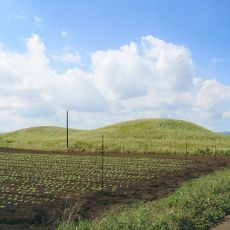
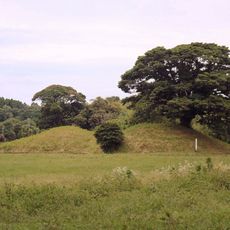
The site lies on low ground just south of the Saitobaru plateau, in the Miyake district of Saito, about 600 m south of the former provincial temple nunnery site now inside the grounds of Miyazaki Prefectural Tsuma High School. Excavations by the Saito City Board of Education from 1995 uncovered the middle gate, a corridor and a ditch, and the grounds are an open field rather than a developed park, so wear shoes suited to grass and soil.
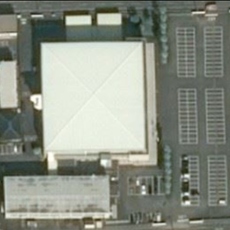
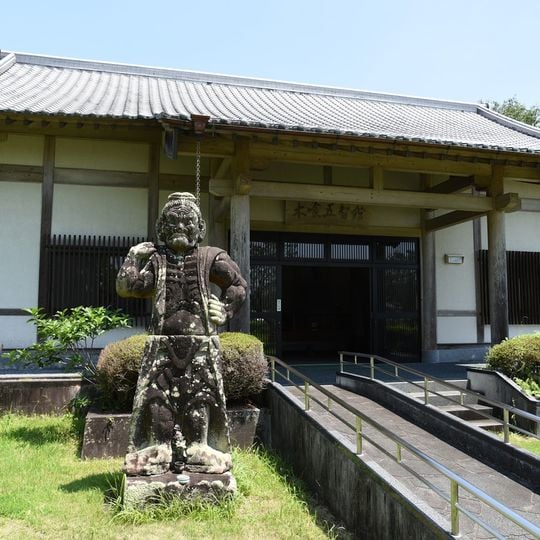
The temple's five Wisdom Buddha statues, made by the itinerant monk Mokujiki in the 1790s, survived the 1871 abolition of the temple through the protection of local worshippers. Rebuilt afterwards, the hall collapsed in a typhoon shortly after the war, and a later reconstruction was removed when the Mokujiki Gochikan hall was built for the statues.
The community of curious travelers
AroundUs brings together thousands of curated places, local tips, and hidden gems, enriched daily by 93,850 contributors worldwide.