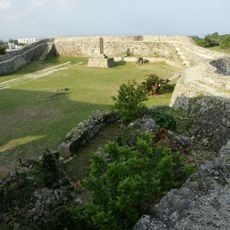
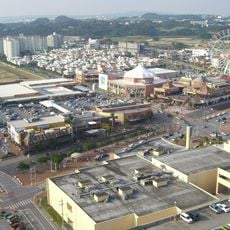
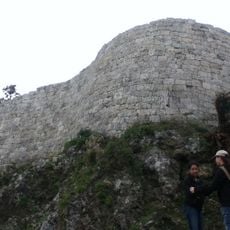
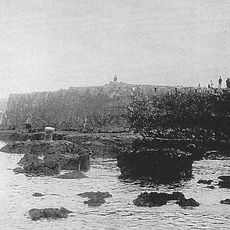
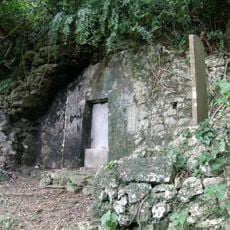
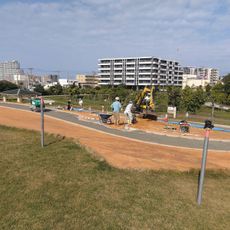
Jingū-ji, Buddhist temple in Futenma, Japan.
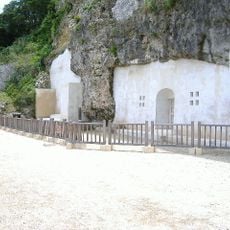
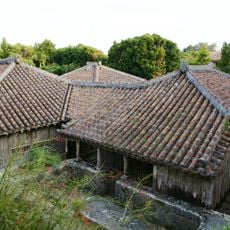
Jingū-ji is a temple of the Tōji Shingon school in Futenma, Ginowan, Okinawa. Its full name is Futenmazan Jingū-ji, and its principal image is Shō Kannon, the bodhisattva of compassion. Until the separation of Buddhism and Shinto in the Meiji period it served as the betsu-ji, the temple attached to the neighbouring Futenma Shrine.
Jingū-ji was founded in the mid-15th century by order of King Shō Taikyū as a place of prayer for local residents; a resting spot used on inspections from Shuri toward the central region was gradually developed into the temple. A separate oral tradition holds that its building materials were carried here from the castle of Gushikawa, whose lord Gosamaru was attacked by Amawari of Katsuren, and that the temple was founded to pray for Gosamaru's soul. Before the separation of Shinto and Buddhism it served as the betsu-ji of the neighbouring Futenma Shrine.
Jingū-ji belongs to the Tōji Shingon school and its main image is Shō Kannon Bosatsu. Until the separation of Buddhism and Shinto in the Meiji period it served as the betsu-ji, the temple attached to neighbouring Futenma Shrine, handling the Buddhist rites for that shrine. The temple's name, Jingū-ji, refers to this role as a shrine temple.
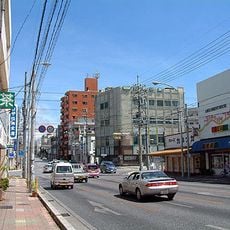
The temple stands next to Futenma Shrine in Futenma, Ginowan, Okinawa. Access is by bus or taxi: get off at the Futenma bus stop, served by routes including 21, 23, 25, 27, 31, 52, 58, 61, 77, 80, 88, 90, 110, 223, 227 and 290.
Before the separation of Shinto and Buddhism, Jingū-ji served as the betsu-ji, the temple attached to neighbouring Futenma Shrine, handling its Buddhist rites. One local tradition credits its founding to the construction materials of Gushikawa Castle, carried here after the castle fell, to pray for the repose of lord Gosamaru.
The community of curious travelers
AroundUs brings together thousands of curated places, local tips, and hidden gems, enriched daily by 94,624 contributors worldwide.