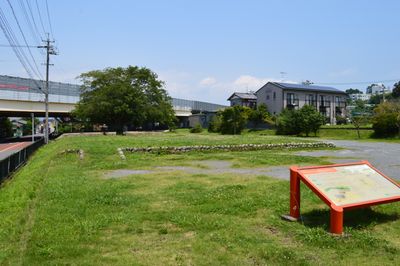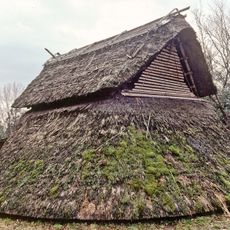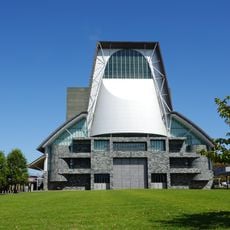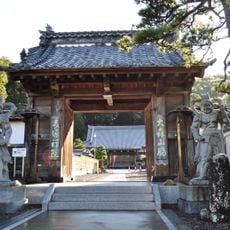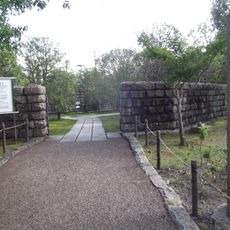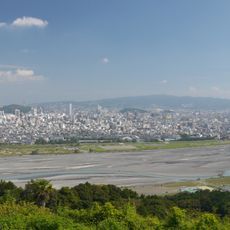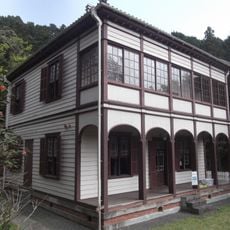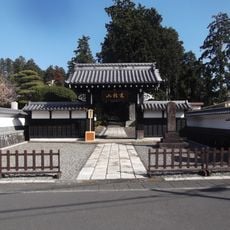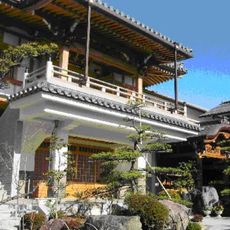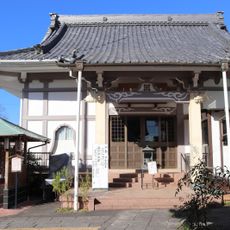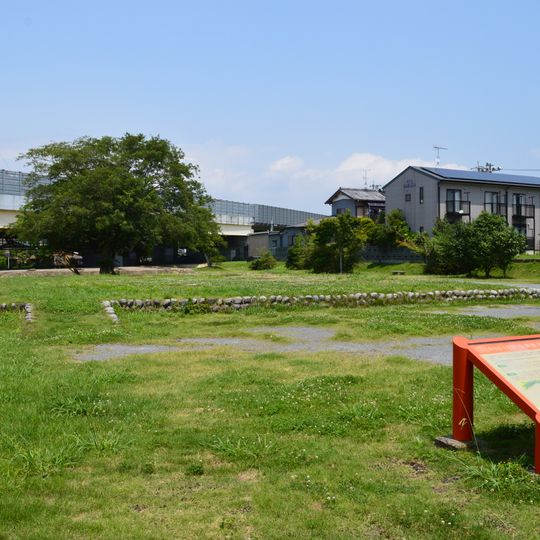
Katayama temple ruins, Buddhist temple archaeological site in Suruga-ku, Japan.
Katayama temple ruins is an archaeological site with foundation stones, earthen platforms, and structural remains from a Buddhist temple complex roughly 160 meters on each side. The excavations reveal how buildings were laid out and what materials were used in their construction.
The ruins date from the late 8th to early 10th century, spanning the Nara and Heian periods, with evidence showing multiple construction phases over time. This timeframe captures a period of active religious architectural development in the region.
Pottery fragments with Kume-hyo inscriptions found here suggest connections to the 7th-century Ritsuryo administrative system that governed the region. These discoveries reveal how the temple functioned within a larger governmental structure.
The site lies about 3.5 kilometers southeast of JR Tokai Shizuoka Station and is partly covered by the Tomei Expressway and a prefectural road. Access to the site may be limited due to this modern infrastructure, so prepare for restricted viewing areas.
Excavations uncovered a large refuse pile 500 meters south of the ruins containing roof tiles and other ceramics. Matching roof tile fragments were also found at the nearby Miyagawa kiln site, revealing a direct craft connection.
The community of curious travelers
AroundUs brings together thousands of curated places, local tips, and hidden gems, enriched daily by 91,839 contributors worldwide.