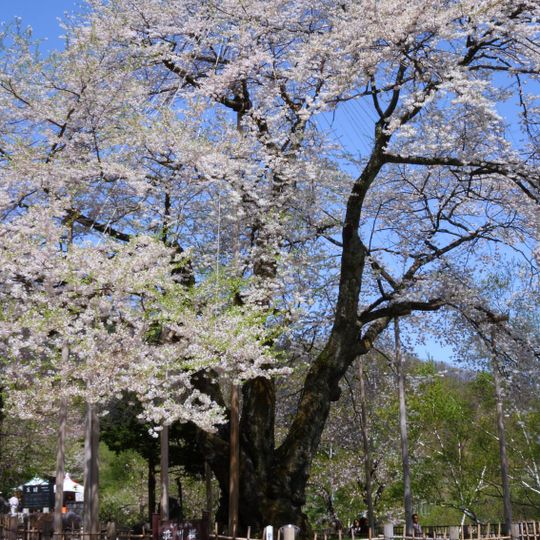
Shōkawa-zakura, Cherry tree in Takayama, Japan.
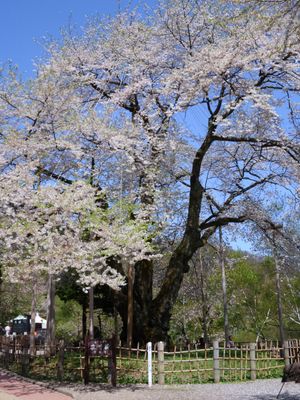
Shōkawa-zakura consists of two ancient Edohigan cherry trees standing about 20 meters (65 feet) tall with pale pink blossoms and thick, gnarled trunks. The trees display the distinctive form of old specimens, with massive branches spreading widely and a broad canopy.
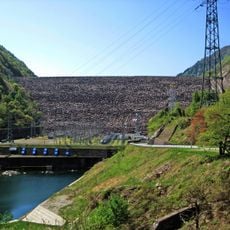
Around 1960, these cherry trees roughly 450 years old were relocated from their original temple sites to prevent submersion during Miboro Dam construction. This rescue was part of broader efforts to protect local heritage from being lost to rising waters.
The trees serve as a memorial for local residents whose village was submerged beneath the dam waters, keeping alive their connection to their former home.
The blossoms can be viewed from late April to early May, with special nighttime illumination events during peak bloom. The best views come during early morning or evening hours when light conditions are most favorable.
The successful transplanting of these ancient trees involved innovative techniques that challenged what experts believed was possible with moving large, mature cherry trees. The project demonstrated that century-old specimens could be relocated and thrive in a new location.
The community of curious travelers
AroundUs brings together thousands of curated places, local tips, and hidden gems, enriched daily by 60,000 contributors worldwide.