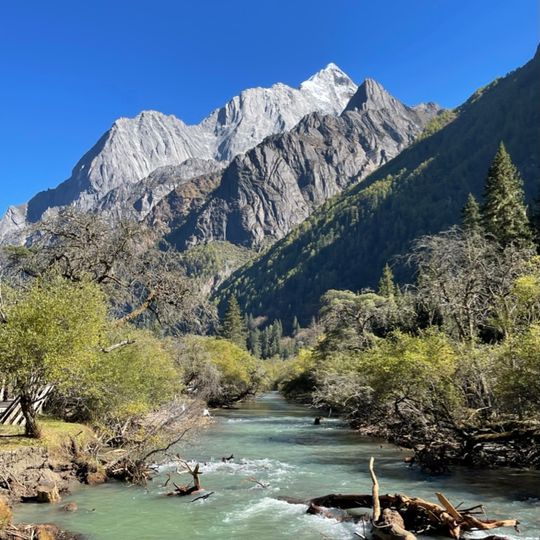
Siguniang Mountain, Mountain range in Ngawa Prefecture, China
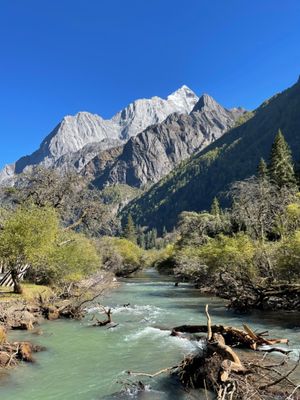
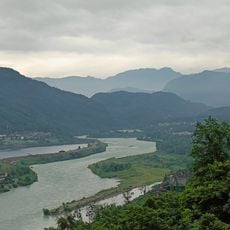
Siguniang Mountain is a massif with four distinct peaks rising to 6,250 meters (20,505 feet) that forms a natural border between Xiaojin County and Wenchuan County in Sichuan Province. The complex encompasses three separate valleys with varying ecosystems, ranging from alpine meadows to birch forests.
The massif remained unclimbed until 1981, when a Japanese expedition team successfully reached the summit of Yaomei Feng via the eastern ridge route. This event opened the mountain to climbing activity and exploration by the international mountaineering community.
The mountain holds deep meaning for Tibetan and Qiang communities who live traditionally in the surrounding grasslands and raise yaks as part of their way of life. These groups have maintained their connection to the landscape for generations through pastoralism and agricultural practices.
Access to the area is from Chengdu by ground transportation to Rilong Town, where permits and licensed guides are required for climbing activities. Visitors should prepare for high altitude and variable weather conditions, as the site sits well above sea level and experiences significant seasonal changes.
Haizi Valley preserves fish species from the Quaternary period, which are otherwise found only in much older geological times. These rare species make the valley a singular place for those interested in natural history and offer insight into the prehistoric past of the region.
The community of curious travelers
AroundUs brings together thousands of curated places, local tips, and hidden gems, enriched daily by 92,547 contributors worldwide.