Ezekiel's Tomb, mausoleum in al-Kifl, Iraq
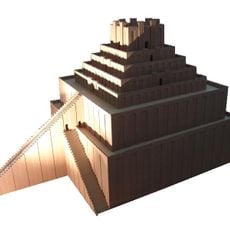
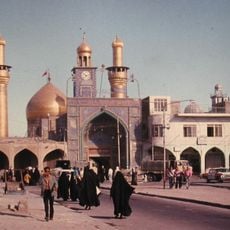
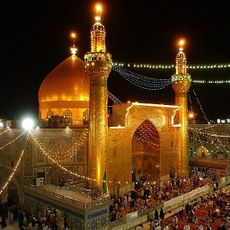
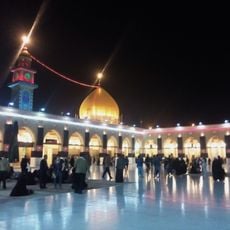
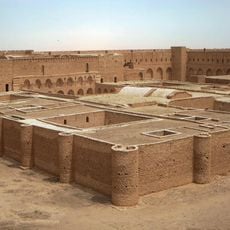
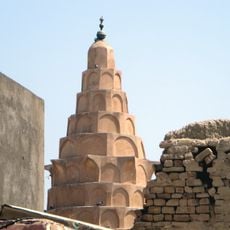
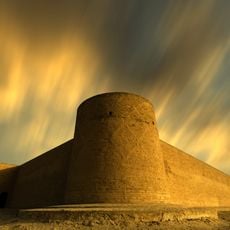
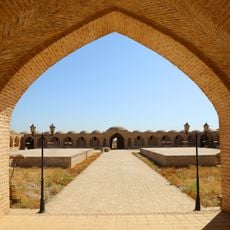
Ezekiel's Tomb is a mausoleum beside the Nukhailah Mosque in al-Kifl, Iraq. Its rectangular hall has four vaulted niches (iwans) whose pointed arches meet beneath muqarnas supporting a conical dome. The current structure dates at least to 1316, when the adjoining mosque was built. A tall tiered tower rises from a pale brick wall with recessed pointed arches.
The site is first mentioned in the 8th-century rabbinical text Pirkei De-Rabbi Eliezer, and the 10th-century sage Sherira Gaon also refers to the tomb. Benjamin of Tudela credits King Jeconiah with building the tomb and its dome. The earliest agreed archaeological date for the present structure is 1316, coinciding with the construction of the adjoining mosque. In 1860 Ottoman viceroy Mustafa Nuri Pasha claimed the site for Muslims, but an emissary from Istanbul ruled in favour of the Jews.
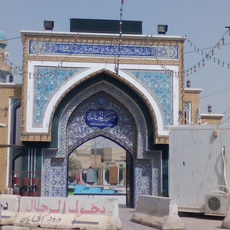
The site is revered by Jews as the tomb of the prophet Ezekiel and by Muslims as that of Dhul-Kifl, an Islamic prophet often identified with him. Until the mid-20th century, over 5,000 Jews came from Baghdad and other cities at Passover; a Hebrew plaque above the doorway, dated 1810, names Ezekiel son of Buzi the Kohen.
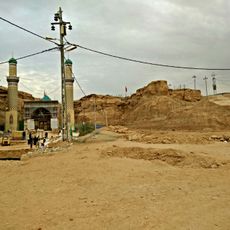
The mausoleum stands beside the Nukhailah Mosque in al-Kifl, in the al-Hillah district of Babylon province, south of Baghdad. The complex was redeveloped after 2003, and the disused synagogue was reportedly being converted into part of the mosque, so parts of the interior may be closed. Visitors should dress modestly and check current access before travelling.
A Hebrew plaque above the doorway, dated 1810, reads: "This is the tomb of our master Ezekiel the Prophet, son of Buzi the Kohen." An adjoining room holds five tombs said to belong to rabbis who transmitted and wrote the Babylonian Talmud.
The community of curious travelers
AroundUs brings together thousands of curated places, local tips, and hidden gems, enriched daily by 92,796 contributors worldwide.