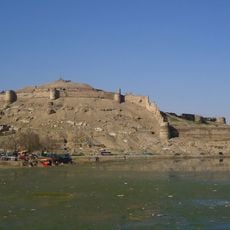
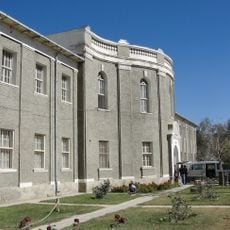
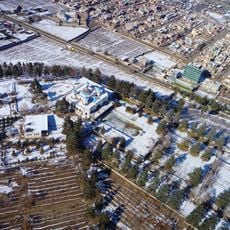
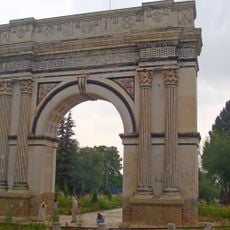
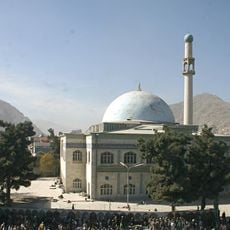
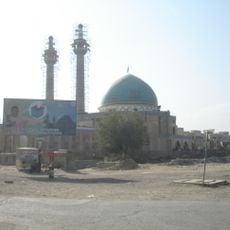
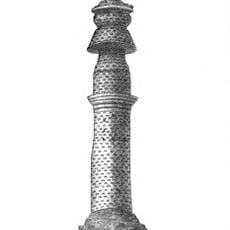
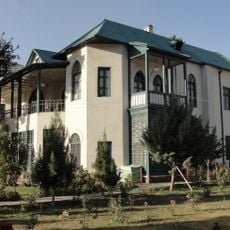
Alexandria on the Caucasus, Ancient archaeological site in Bagram, Afghanistan.
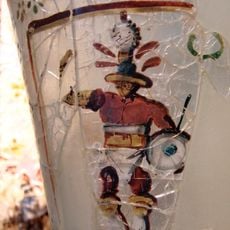
Alexandria on the Caucasus is an ancient city in Bagram, Afghanistan, containing layers of urban structures from different periods. Excavations reveal houses, fortifications, and everyday objects that document life here across several centuries.
Alexander the Great founded the city in March 329 BC at the site of Kapisa, the Achaemenid capital of Gandhara, below the Hindu Kush. He settled 7,000 Macedonians, 3,000 mercenaries and several thousand locals there. Between roughly 180 BC and AD 10 it served as a capital of the Indo-Greek kings, including Hermaeus, and under Menander I it had a Buddhist community led by Greek monks.
The city was one of the capitals of the Indo-Greek kings from 180 BC to AD 10 and was ruled by Hermaeus, who is closely tied to it. Under Menander I it had a Buddhist community led by Greek monks. The Mahāvaṃsa says the monk Mahadhammarakkhita came from "Alasandra" with 30,000 monks to Anuradhapura.
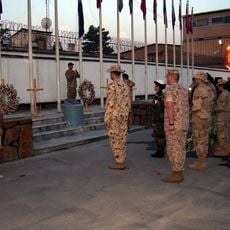
Access to the excavation site is limited due to its proximity to military installations and special permits are required. Visitors should check with local authorities beforehand and follow all safety guidelines on location.
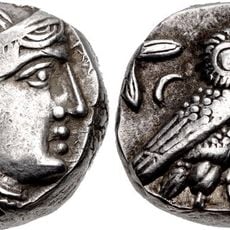
The site is identified with Kapisa, the Achaemenid capital of Gandhara that Alexander refounded; his forts replaced those Cyrus the Great had raised nearby around 500 BC. Coins of the Greco-Bactrian king Eucratides suggest the city's deity was Zeus.
The community of curious travelers
AroundUs brings together thousands of curated places, local tips, and hidden gems, enriched daily by 92,739 contributors worldwide.